La Roche à Sept Heures
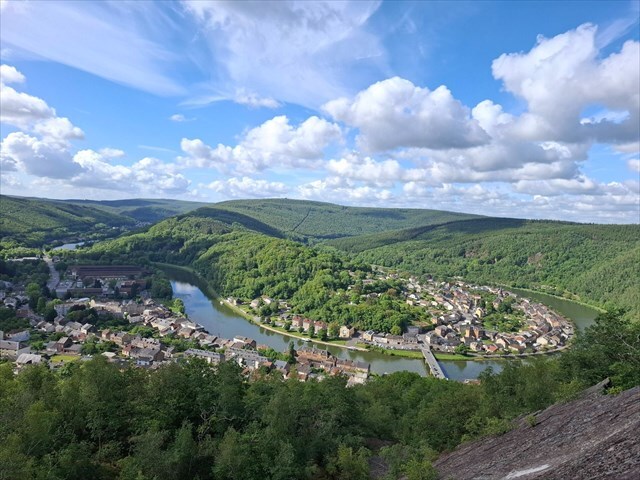
La Roche à 7 Heures permet d’observer des roches très anciennes, formées dans des mers il y a près de 500 millions d’années. Transformées par le métamorphisme, puis sculptées par l’érosion, elles racontent une partie de l’histoire géologique des Ardennes.
Le site appartient au Cambrien moyen vers 496 millions d’années.
La Roche à 7 Heures makes it possible to observe very ancient rocks that were formed in seas nearly 500 million years ago. Transformed by metamorphism and later shaped by erosion, these rocks reveal part of the geological history of the Ardennes.
The site dates from the Middle Cambrian, approximately 496 million years ago.
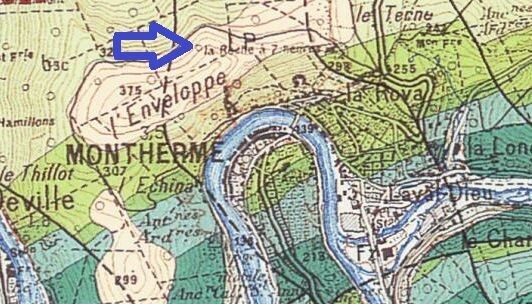
ksb. Revinien inférieur : Formation de la Roche à Sept-Heures (massif de Rocroi) ou de la Chapelle (massif de Givonne). Cette assise est constituée par un ensemble de roches plus quartzitiques que phylladeuses : des quartzites gris sombre en bancs de 1 à 4 m d'épaisseur alternent avec des phyllades noirs ardoisiers. La partie supérieure est constituée par une veine ardoisière noire, d'une dizaine de mètres de puissance, admettant des lits de quelques décimètres d'épaisseur de quartzites gris ; cette veine était exploitée autrefois à Monthermé (massif de Rocroi) et à Olly (massif de Givonne). L'épaisseur de cette formation est.de 170 m environ à Château-Regnault dans le massif de Rocroi et de plus de 100 m dans le massif de Givonne où sa base n'est pas connue.
ksb – Lower Revinian: La Roche à Sept-Heures Formation (Rocroi Massif) or La Chapelle Formation (Givonne Massif)This geological unit is composed of a sequence of rocks that are more quartzitic than phyllitic. It consists of: Dark gray quartzites occurring in beds 1 to 4 meters thick, Alternating with black slate-bearing phyllites. The upper part of the formation is made up of a black slate seam about 10 meters thick, containing thin layers of gray quartzite a few decimeters thick. This slate seam was formerly quarried in Monthermé (in the Rocroi Massif) and in Olly (in the Givonne Massif).The total thickness of this formation is approximately: 170 meters at Château-Regnault-Bogny in the Rocroi Massif, More than 100 meters in the Givonne Massif, where the base of the formation is not exposed.
Sur ce site on trouve 2 types de roche
1) Les schistes : appelés également phyllades sont des roches feuilletées qui se cassent en fines plaques.
Caractéristiques :
- Couleur souvent sombre.
- Structure en couches.
- Formés à partir d’argiles transformées sous l’effet de la pression.
2) Les quartzites sont des roches très dures et résistantes.
Caractéristiques :
- Constitués principalement de quartz.
- Très résistants à l’érosion.
- Souvent clairs ou brillants.
- Ils proviennent de sables qui ont été compactés puis transformés par la pression.
At this site, two main types of rocks can be observed.
1) Schists also known as phyllites, are foliated rocks that split into thin sheets.
Characteristics:
- Usually dark in color.
- Layered structure.
- Formed from clay-rich sediments that were transformed under pressure.
2) Quartzites are very hard and resistant rocks.
Characteristics:
- Composed mainly of quartz.
- Highly resistant to erosion.
- Often light-colored or shiny.
They originate from sandy sediments that were compacted and later transformed under pressure.
Rappel concernant les « Earthcaches »: Il n'y a pas de conteneur à rechercher ni de logbook à renseigner. Il suffit de se rendre sur les lieux et de répondre aux questions posées.
Loguez cette cache "Found it" et envoyez-moi vos réponses soit via mon profil, soit via la messagerie, je vous contacterai en cas de problème.
Reminder concerning "Earthcaches": There is no container to search or logbook to complete. All you have to do is go to the scene and answer the questions asked.
Log this "Found it" cache and send me your answers either via my profile or via messaging, I will contact you in case of problem.
Questions
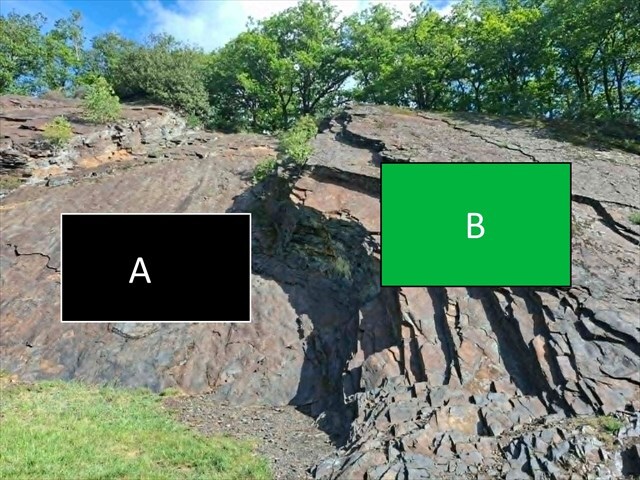
1) Sur la photo spoiler, indiquez quelle roche est en zone A et quelle roche est en zone B
2) Prenez une photo devant le n°1 de la Roche à sept heure, de vous, de votre GPS, ou de tout objet attestant de votre passage.
Questions
1) On the annotated photo, identify which rock type is found in Zone A and which rock type is found in Zone B.
2) Take a photo at Stop No. 1 of La Roche à Sept Heures showing yourself, your GPS device, or any object that can serve as proof that you visited the site.