
 FTF :
STF :
TTF :

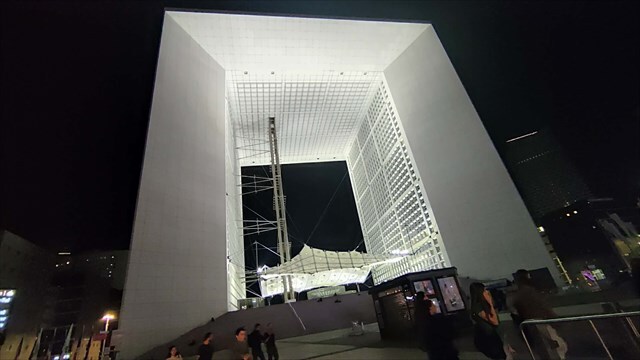
La Grande Arche en 2023
Pour valider votre découverte, vous devrez :
1. Loguer cette cache "Trouvée" en joignant la photo demandée (obligatoire).
2. M'envoyer vos propositions de réponses aux questions ci-dessous soit par email soit via la messagerie geocaching.com (Message Center).
Q1. Quel principal problème a-t-on rencontré avec le marbre gris utilisé pour la construction de la Grande Arche ?
Q2. Citez deux caractéristiques du granite SPI qui en font une roche particulièrement appréciée en architecture.
Q3. Question d’observation sur place avec l’aide de la description : comparez visuellement et au toucher une dalle de granite gris SPI (façades Nord et Sud) et une dalle de granite blanc Bethel White (façades intérieures). Quelle finition a été retenue : polie, adoucie, flammée ou bouchardée ?
3. Joindre une photo de vous ou de votre pseudo montrant en arrière plan la Géode (Ecartez-vous un peu en direction de l’esplanade pour cela. Montrer votre visage n'est pas obligatoire).


Je vous contacterai en cas de problème. Tout log non suivi des réponses dans un délai raisonnable sera effacé sans préavis.
Cette description est illustrée par des infographies générées par IA. Celles-ci peuvent présenter des imperfections. Veuillez vous référer au texte pour des informations plus précises.
Réfection des parements de la Grande Arche
À la construction de la Grande Arche (1989), l'architecte Johan Otto von Spreckelsen a initialement utilisé du marbre gris pour habiller ces façades extérieures longitudinales. Cependant, comme le marbre blanc des autres façades (voir https://coord.info/GCBXNAZ), ce matériau a très mal résisté aux agressions climatiques et à la pollution parisienne, se bombant et se décollant précocement.
Dès la fin des années 1990, des chutes alarmantes de plaques de marbre gris d'origine ont montré la fragilité des revêtements Nord et Sud de l’édifice. Dès 2010, bien avant la rénovation complète des façades blanches (qui a eu lieu entre 2015 et 2018 avec du granite blanc américain), la façade sud — gérée par le Ministère de l'Écologie — a été traitée en priorité. Face a ux défauts structurels du revêtement en marbre gris, et afin d'assurer la pérennité et la sécurité de l'édifice, celui-ci a été intégralement remplacé par du granite gris de type SPI Alpalhão. Les architectes ont sélectionné ce granite pour sa très haute densité, sa faible porosité et sa résistance extrême aux intempéries et à la pollution parisienne, garantissant qu'il ne se déformerait pas comme le marbre initial.
Description Générale et Pétrographie
Le granite gris de type SPI Alpalhão est une roche magmatique plutonique de haute qualité, principalement réputée dans le domaine de l'architecture contemporaine pour sa robustesse et son homogénéité esthétique. Il a été mis en lumière lors de grands chantiers de rénovation urbaine et monumentale, notamment en France à la Grande Arche de la Défense. Ce matériau combine des propriétés mécaniques exceptionnelles à une genèse géologique intéressante.
Le granite d'Alpalhão, commercialement et scientifiquement abrégé sous le sigle SPI, se distingue par son aspect visuel particulièrement sobre et élégant.
- Aspect visuel : Il présente une couleur gris bleuté très homogène. Contrairement à d'autres granites aux contrastes très marqués, le SPI offre une texture régulière qui limite les variations de teintes sur les grandes surfaces architecturales.
- Texture : C'est une roche à grain fin et équigranulaire (les cristaux ont globalement tous la même taille). Elle est parsemée de phénocristaux de feldspath disséminés de manière subtile.
- Composition minéralogique : Comme tout granite au sens géologique strict, sa matrice tridimensionnelle repose sur trois minéraux majeurs :
- Le Quartz : Qui apporte la translucidité et une dureté extrême.
- Les Feldspaths (Alcalins et Plagioclases) : Qui dictent sa couleur de fond grise et sa structure cristalline.
- Les Micas (Biotite et Muscovite) : Qui se manifestent sous forme de petites paillettes sombres et brillantes.

Formation Géologique
La formation du granite SPI Alpalhão s'inscrit dans l'histoire tectonique de la péninsule Ibérique, liée à l'orogenèse varisque (ou hercynienne).
- Magmatisme et Fusion : Il y a plusieurs centaines de millions d'années, des forces tectoniques massives ont provoqué la fusion partielle de la croûte terrestre, générant un magma visqueux et riche en silice.
- Refroidissement Intrusif : Ce magma n'a pas atteint la surface. Il est resté piégé dans des chambres plutoniques à grande profondeur. C'est ce confinement qui a permis un refroidissement extrêmement lent. Les atomes ont eu le temps de s'organiser pour former des cristaux fins mais parfaitement définis et imbriqués, conférant à la roche sa texture grenue et compacte.
- Érosion et Exhumation : Au fil des ères géologiques, les mouvements de surrection de la croûte et l'érosion continue des couches de roches supérieures ont fini par exposer ce massif granitique à la surface, le rendant accessible à l'exploitation humaine.

Propriétés pour une Utilisation en Architecture
Le choix du granite SPI Alpalhão pour des revêtements extérieurs ou des infrastructures urbaines repose sur ses caractéristiques techniques de premier ordre, mesurées selon les normes européennes de la pierre naturelle :
- Porosité et absorption d'eau : Très faible. Bloque les infiltrations, empêchant le gel d'éclater la pierre et limitant l'adhérence de la pollution urbaine.
- Dureté (Échelle de Mohs) : Environ 6 à 7. Haute résistance aux rayures, aux chocs et au vandalisme.
- Résistance à la compression : Exceptionnelle. Supporte des charges structurelles lourdes sans déformation.
- Inaltérabilité géométrique : Contrairement aux marbres qui peuvent subir le phénomène de "bombement" (déformation sous l'effet des cycles thermiques), le SPI conserve sa planéité.
Grâce à sa finesse de grain, le granite d'Alpalhão réagit admirablement à divers traitements de surface qui déterminent le toucher, l’éclat, la couleur et la résistance au glissement de la pierre.

- Finition polie : la pierre subit un ponçage mécanique progressif à l'aide de meules diamantées aux grains de plus en plus fins. La surface devient parfaitement lisse, brillante et réfléchissante avec un effet miroir intense.
- Finition adoucie : le polissage est volontairement interrompu avant la phase finale de lustrage, à un grain abrasif intermédiaire. La surface est plane, très douce et soyeuse au toucher, mais présente un rendu mat ou légèrement satiné sans aucun reflet.
- Finition flammée : la surface de la pierre est soumise à un choc thermique intense au moyen d'un chalumeau à très haute température. La chaleur fait éclater les cristaux de quartz en surface. Cela crée un relief brut, irrégulier aux arêtes fondues.
- Finition bouchardée : la pierre est martelée mécaniquement avec une boucharde, un outil doté de têtes métalliques à pointes de diamant. Le martelage produit une surface uniformément piquetée, marquée par une trame régulière de petits impacts, de creux et de bosses.
Le Flammé ou le Bouchardé sont idéaux pour les sols extérieurs et les parvis car ils créent une rugosité antidérapante tout en blanchissant légèrement la couleur de la pierre.
L'Adouci ou le Poli sont préférés pour les parements de façades ou les aménagements intérieurs afin de faire ressortir la profondeur de sa teinte gris-bleu.
Gisements et Zones d'Extraction en Europe
Bien que le granite soit extrait dans de nombreuses régions d'Europe (comme la Galice en Espagne, la Bretagne en France, ou la Scandinavie), la variété spécifique SPI Alpalhão possède une origine géographique exclusive.
Le gisement unique se situe au Portugal, dans la province de l'Alentejo (district de Portalegre). Les carrières historiques se concentrent autour de la petite ville d'Alpalhão (municipalité de Nisa). Les études géologiques locales sectorisent l'extraction sur trois affleurements principaux à fort potentiel commercial :
- Pinheiral : La zone la plus exploitée industriellement pour la production de blocs massifs et homogènes.
- Ribeira de Sor : Un autre secteur d'extraction de blocs ornementaux.
- Carvalhal : Un secteur plus complexe en raison d'une fracturation naturelle intense de la roche.
Exemples de Monuments et Projets Célèbres
Le granite SPI Alpalhão s'est imposé comme une pierre de restauration de prestige et d'aménagement de grands espaces publics :
- La Grande Arche de la Défense (Paris, France) : C'est son utilisation la plus emblématique. Lors des travaux de réfection de la paroi Sud, les dalles de marbre gris d'origine, qui menaçaient de s'effondrer, ont été intégralement remplacées par 5 700 dalles de granite SPI Alpalhão, couvrant près de 2 800 m⊃2;. L'édifice a ainsi retrouvé sa sécurité tout en préservant le contraste architectural sombre voulu par Johan Otto von Spreckelsen.
- Aménagements urbains et parvis en Europe : En raison de sa résistance au trafic lourd et aux variations climatiques, il est fréquemment utilisé sous forme de pavés, de bordures et de dalles de revêtement pour les tramways, les places publiques et les zones piétonnes à forte fréquentation dans les grandes métropoles européennes.
Références Bibliographiques
- Lopes, L., Martins, R., & Carrilho, J. (2012). The “Alpalhão Granite” (Alentejo, Portugal) as a Potential Ornamental Stone: Lithofacies and Joint Characterization. Base de données ResearchGate / LNEG.
(Cette étude détaille la cartographie, l'analyse des joints de fracturation et la pétrographie des différents affleurements de Pinheiral, Carvalhal et Ribeira de Sor).
- Laboratório Nacional de Energia e Geologia (LNEG). Recursos Geológicos de Portugal: Rochas Ornamentais. Lisbonne.
(Publications officielles de l'État portugais classifiant les propriétés physiques du granite SPI pour les normes d'exportation européennes).
- Spreckelsen, J. O. v., & Équipe d'architecture de la Grande Arche. Dossiers techniques de restauration des façades de la Grande Arche de la Défense (Période 2010 - Paroi Sud). Ministère de l'Écologie, du Développement durable et de l'Énergie. France.
(Rapports de chantiers explicitant les raisons mécaniques du choix du granite portugais SPI en remplacement du marbre).
Pourquoi "VERT" ?
Ma première cache posée (GC3VHY2) était une boîte verte, avec un stylo vert, un log book vert et des objets d'échange verts. Ainsi est née l'idée de placer les caches qui ont suivi sous le signe du "VERT" et de proposer un défi consistant à y déposer de préférence des objets "VERTs". Ce défi ne peut malheureusement pas concerner les earthcaches.

Carrière de granite SPI - Granite SPI quarry
Photo Stone Contact
------------oOo------------

Note: some parts are written with the help of automatic translator. Tecnical vocabulary issues may occure
Requirements to validate your find
1. Log this cache as "Found it" and attach the requested photo (mandatory).
2. Send me your proposed answers to the questions below either by email or via the geocaching.com messaging system (Message Center).
Q1. What main issue was encountered with the grey marble used in the construction of the Grande Arche?
Q2. Name two characteristics of SPI granite that make it a particularly appreciated rock in architecture.
Q3. On-site observation question using the description: visually and tactilely compare a slab of grey SPI granite (North and South facades) with a slab of white Bethel White granite (interior facades). Which finish was selected: polished, honed, flamed, or bush-hammered?
3. Attach a photo of yourself or your username showing the Geode in the background (Step back a bit towards the esplanade for this. Showing your face is not mandatory).
I will contact you in case of any issues. Any log not followed by the answers within a reasonable timeframe will be deleted without prior notice.
This description is illustrated by AI-generated infographics. These may contain imperfections. Please refer to the text for more precise information.
Refurbishment of the cladding of the Grande Arche
During the construction of the Grande Arche (1989), architect Johan Otto von Spreckelsen initially used grey marble to clad its longitudinal exterior facades. However, like the white marble on the other facades (see https://coord.info/GCBXNAZ), this material aged very poorly under climatic weathering and Parisian pollution, warping (bowing) and detaching prematurely.
As early as the late 1990s, alarming falls of the original grey marble slabs revealed the fragility of the building's North and South claddings. By 2010, well before the complete renovation of the white facades (which took place between 2015 and 2018 using American white granite), the South facade—managed by the Ministry of Ecology—was treated as a priority. Facing the structural defects of the grey marble cladding, and to ensure the longevity and safety of the building, it was entirely replaced with Alpalhão SPI-type grey granite. The architects selected this granite for its very high density, low porosity, and extreme resistance to weathering and Parisian pollution, guaranteeing that it would not deform like the initial marble.
General Description and Petrography
Alpalhão SPI-type grey granite is a high-quality plutonic igneous rock, primarily renowned in contemporary architecture for its robustness and aesthetic homogeneity. It came into prominence during major urban and monumental renovation projects, notably in France at the Grande Arche de la Défense. This material combines exceptional mechanical properties with an interesting geological genesis.
Alpalhão granite, commercially and scientifically abbreviated as SPI, is distinguished by its particularly understated and elegant visual appearance:
- Visual aspect: It exhibits a very homogeneous bluish-grey color. Unlike other granites with sharply contrasting tones, SPI offers a uniform texture that minimizes color variations across large architectural surfaces.
- Texture: It is a fine-grained, equigranular rock (crystals are generally all of the same size) subtly interspersed with feldspar phenocrysts.
- Mineralogical composition: Like any granite in the strict geological sense, its three-dimensional matrix relies on three major minerals:
- Quartz: Provides translucency and extreme hardness.
- Feldspars (Alkali feldspars and Plagioclases): Dictate its grey background color and crystalline structure.
- Micas (Biotite and Muscovite): Appear as small, dark, shiny flakes.

Geological Formation
The formation of SPI Alpalhão granite is part of the tectonic history of the Iberian Peninsula, linked to the Variscan (or Hercynian) orogeny:
- Magmatism and Partial Melting: Hundreds of millions of years ago, massive tectonic forces caused the partial melting of the Earth's crust, generating a viscous, silica-rich magma.
- Intrusive Cooling: This magma did not reach the surface. It remained trapped in deep plutonic chambers. This confinement allowed for extremely slow cooling. Atoms had time to organize into fine yet perfectly defined and interlocking crystals, imparting a granitic (grained) and compact texture to the rock.
- Erosion and Exhumation: Over geological eras, crustal uplift movements and continuous erosion of the overlying rock layers eventually exposed this granitic pluton at the surface, making it accessible for human exploitation.

Properties for Architectural Applications
The choice of SPI Alpalhão granite for exterior claddings or urban infrastructure relies on its top-tier technical characteristics, measured according to European natural stone standards:
- Porosity and water absorption : Very low. Blocks water infiltration, preventing frost weathering from spalling the stone and reducing the adhesion of urban pollution.
- Hardness (Mohs Scale) : Approximately 6 to 7. High resistance to scratching, impact, and vandalism
- Compressive strength : Exceptional. Supports heavy structural loads without deformation.
- Dimensional stability : Unlike marbles, which can undergo bowing (deformation induced by thermal cycling), SPI maintains its flatness.
Thanks to its fine grain size, Alpalhão granite responds admirably to various surface treatments that determine the stone's feel, luster, color, and slip resistance:Polished finish: The stone undergoes progressive mechanical grinding using diamond grinding wheels of increasingly fine grain sizes. The surface becomes perfectly smooth, glossy, and reflective with an intense mirror effect.
- Polished finish: the stone undergoes a gradual mechanical sanding using diamond grinding wheels with increasingly fine grains. The surface becomes perfectly smooth, shiny and reflective with an intense mirror effect.
- Honed finish: Grinding is intentionally stopped before the final buffing stage at an intermediate abrasive grain size. The surface is flat, very soft, and silky to the touch, presenting a matte or slightly satin finish with no reflections.
- Flamed finish: The stone's surface is subjected to intense thermal shock using a high-temperature torch. The heat causes surface quartz crystals to spall/burst, creating a rough, irregular texture with soft, fused edges.
- Bush-hammered finish: The stone is mechanically hammered with a bush-hammer, a tool equipped with diamond-pointed metal heads. Hammering produces a uniformly pitted surface marked by a regular pattern of small indentations, recesses, and ridges.
Flamed or Bush-hammered finishes are ideal for exterior paving and plazas because they create anti-slip roughness while slightly lightening the color of the stone.
Honed or Polished finishes are preferred for facade claddings or interior designs to highlight the depth of its bluish-grey hue.
Deposits and Extraction Areas in Europe
Although granite is quarried in many regions across Europe (such as Galicia in Spain, Brittany in France, or Scandinavia), the specific SPI Alpalhão variety has an exclusive geographical origin.
The unique deposit is located in Portugal, in the Alentejo province (Portalegre district). Historical quarries are concentrated around the small town of Alpalhão (municipality of Nisa). Local geological surveys divide the extraction into three main outcrops with high commercial potential:
- Pinheiral: The area most heavily exploited industrially for the production of massive, homogeneous blocks.
- Ribeira de Sor: Another sector for extracting dimensional/ornamental stone blocks.
- Carvalhal: A more complex sector due to intense natural fracturing of the rock mass.
Examples of Famous Monuments and Projects
SPI Alpalhão granite has established itself as a stone of choice for prestigious restoration projects and large-scale public realm design:
- Grande Arche de la Défense (Paris, France): This is its most emblematic application. During the renovation of the South wall, the original grey marble slabs—which threatened to fall—were completely replaced with 5,700 SPI Alpalhão granite slabs covering nearly 2,800 m⊃2;. The building regained its structural safety while preserving the dark architectural contrast intended by Johan Otto von Spreckelsen.
- Urban landscaping and plazas in Europe: Due to its resistance to heavy traffic and climate variations, it is frequently used as setts (cobblestones), kerbs, and paving slabs for tramways, public squares, and high-footfall pedestrian zones in major European cities.
Bibliographical References
- Lopes, L., Martins, R., & Carrilho, J. (2012). The “Alpalhão Granite” (Alentejo, Portugal) as a Potential Ornamental Stone: Lithofacies and Joint Characterization. ResearchGate database / LNEG. (This study details mapping, joint/fracture analysis, and petrography of the Pinheiral, Carvalhal, and Ribeira de Sor outcrops).
- Laboratório Nacional de Energia e Geologia (LNEG). Recursos Geológicos de Portugal: Rochas Ornamentais. Lisbon. (Official Portuguese government publications classifying the physical properties of SPI granite for European export standards).
- Spreckelsen, J. O. v., & Architectural Team of the Grande Arche. Restoration Technical Files for the Facades of the Grande Arche de la Défense (2010 Period - South Wall). Ministry of Ecology, Sustainable Development, and Energy. France. (Site reports outlining the mechanical reasons for choosing Portuguese SPI granite to replace the marble).
Why "VERT"
My first geocache ( GC3VHY2) was a green box, with a green pen, a green log book and green items for exchange. So was born the idea to place the caches which followed under the sign of the "VERT" ("GREEN" in French) and to propose a game consisting in depositing there rather "VERT" objects. This game cannot unfortunately concern the earthcaches.
La Grande Arche en 2026