Location information
The origin of the name 'Elham' is still a matter for debate, it was listed in the Domesday Book of 1086 as Alham. There is a rumour that this may have derived from Ulaham, which it is referred to in an Anglo Saxon charter of 855 AD and the suffix "ham" originates from the German word "heim", which means 'home'.
It is easy to see how 'Ulaham' means homestead of a person named Ula, but another idea is that the name originates from the presence of eels once found in the Nailbourne centuries ago.
A discovery of hundreds of Neolithic hand axes, scrapers and worked flints at Dreal's Farm on the chalk plateau to the east of the village is the earliest evidence of human activity in the Parish and Bronze Age remains have also been discovered indicating continuity of settlement.
There is also a cluster of Bronze Age tumuli in Elham Park Wood and there is a further tumulus on the hillcrest between Ottinge and Rhodes Minnis.
Further evidence of Roman occupation is limited to discoveries of coins and pottery and there is little Anglo Saxon archaeological evidence although the Anglo Saxon cemetery at Lyminge may actually extend over the parish boundary.
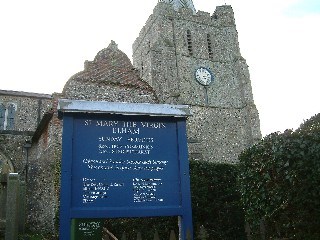
Elham Church
St Mary's Church dates from about 1200 whilst the Abbot's Fireside Restaurant on the high street is of Tudor origin (which was built in 1641). This was reputed to have been the headquarters of the Duke of Wellington during the times when there was a threat from the Napoleonic invasion. In the centre of the Elham village is The Square. This dates from 1251 when the village was granted a market by Edward I and was in use until the early 19th century. The village once had two windmills but both now no longer exist.
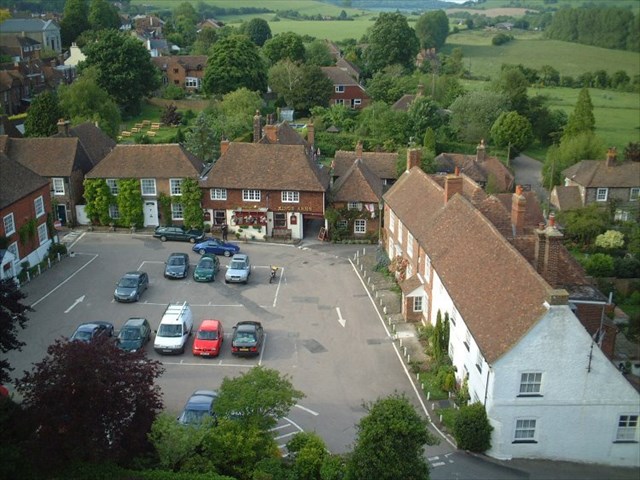
View from the top of the tower
In 1881 the population was just 1,192 and travel could be made on the Elham Valley Railway which opened in 1889 but alas finally closed in 1947. Traces still remain of its existence throughout the parish and some remnants of the station platform can be seen at the bottom of Duck Lane.
Until the early 1900s a brickworks existed within the village, called the 'Elham Valley Brick and Tile Company' with kilns situated on the east side of the valley.
*****************************************************
If you would like to add to the Church Micro series yourself then please visit
http://churchmicro.co.uk/
There is also a Church Micro Stats & Information page that can be found at
http://www.15ddv.me.uk/geo/cm/index.html
*******************************************************
Please DO NOT climb on the gate post - USE THE HINT IF NEEDED - TWEEZERS REQUIRED
Cache originally placed by the 'Oompaloompas' in 2003.