Bathing in Hévíz
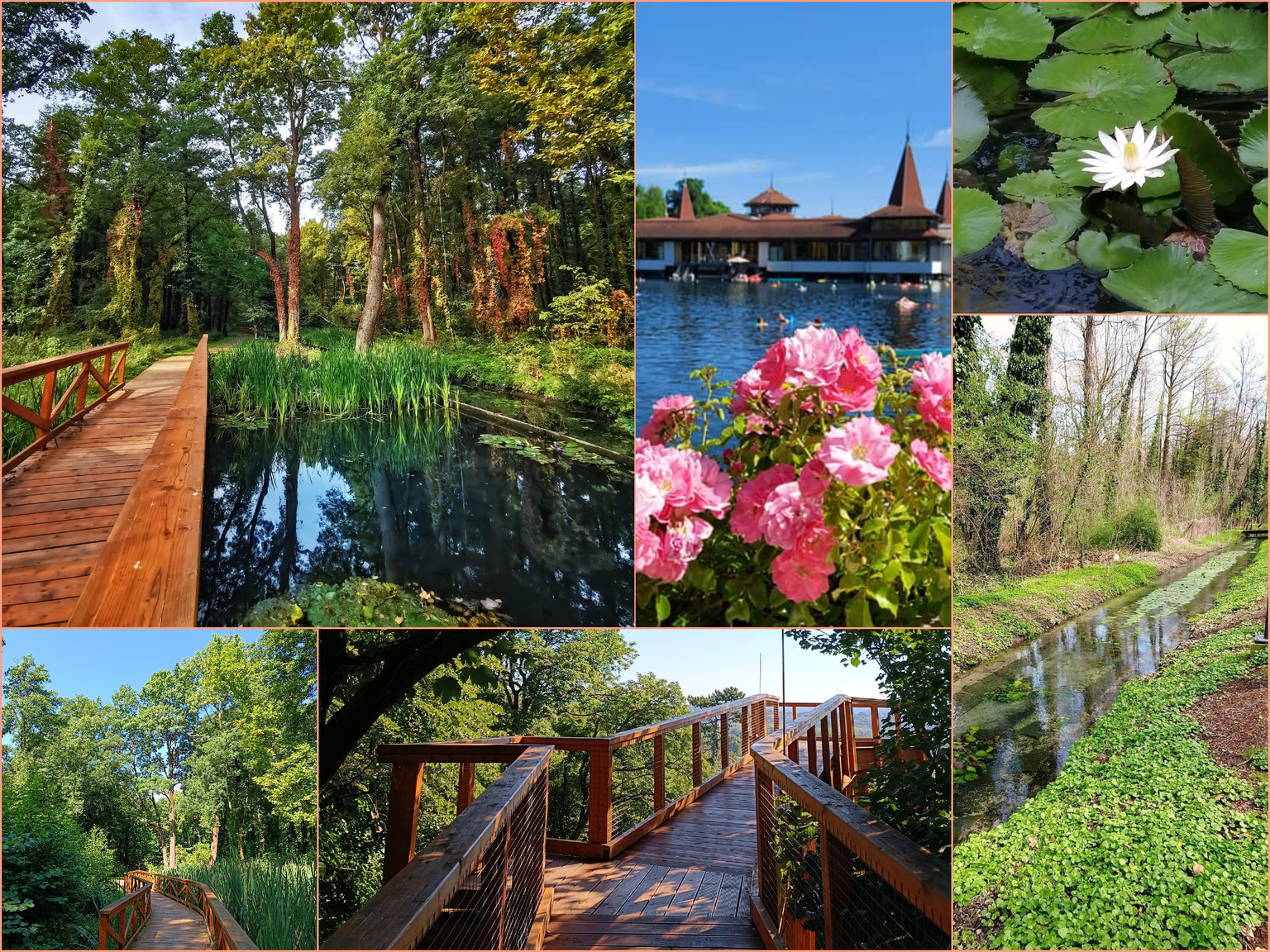
Lombkorona kilátó, véderdő és a Tavirózsa tanösvény
A Hévízi-tótól nyugatra egy erdővel borított domboldal maradt beépítetlenül, része annak a véderdőnek, amely a természetes mikroklímát hivatott megtartani az egyedülálló hévizes ökoszisztéma környezetében. A lombhullatókkal és örökzöldekkel vegyesen fedett domboldal megannyi sétánnyal átszőtt, igazi jóléti parkerdőt rejt, ami a helyiek és a termálvízben pihenni, gyógyulni vágyó vendégek kedvelt célpontja. Még a terület reformkori tulajdonosa, Festetics Tasziló létesített itt angolparkot az 1870-es években, az addigi fás legelőt erdősítve. A tó körüli véderdővel kívánta annak kedvező, páradús, enyhe klímáját az év nagy részén megtartani. Az erdőben máig fellelhető matuzsálemi gyertyánok terebélyes koronája még a XIX. századi szellős, nyitott térség emlékét őrzik.
Ebben a mesterségen teremtett, de a környékre jellemző, gyertyános tölgyeseken alapuló erdei környezetben épült 2021-ben az a faszerkezetes, 15 méter magasba vezető kilátó, amely lehetőséget nyújt a lombkorona szintjeit tanulmányozni, a fák csúcsáig sétálni, fölöttük kitekinteni. A lombkorona kilátó nagy népszerűségnek örvend mind a helyiek, mind a fürdővendégek körében, hiszen a fapallókból épített, fakorlátos ösvény alig meredekebb, mint a környező sétányok, ám pont a legnagyobb terepletörés fölé vezet, ahol már résnyire kilátunk az alattunk lezökkenő erdő nyiladékán. A fák lombjai között nyíló szűk kilátás épp a tóra, keleti irányba tekint, a csúcstetős fürdőépület déli része sejlik fel, felette pedig a Keszthelyi-hegység nyugati, erdős nyúlványai. Pont szemközt áll az a kilátó, amely a legtágabb perspektívát nyitná Hévíz és Cserszegtomaj között a zalai tájra, ám életveszélyes állapota miatt évek óta le van zárva.
A rámpáról oldalra teraszok nyúlnak. Ezeken kézzelfogható távolságra érünk a fák ágaihoz, lombjaihoz, és testközelből látjuk az ott pihenő madarakat, rovarokat, élelmet kereső mókusokat. A fák zöme a környező dombokon és a Keszthelyi-hegységben jellemző feketefenyő, kőris, juhar, gyertyán és tölgy, de még a cserjeszinten látunk kecskerágót, mogyorót is, így ősszel beleshetünk az erdei állatok éléskamrájába. Tavasszal a rügyfakadást, nyáron a napsütés elől oltalmat nyújtó árnyékot élvezhetjük, míg ősszel a vegyes erdő nyújtotta színkavalkád, télen pedig a legtágabbra nyíló panoráma vonzza a magasba a környéken sétálókat.
A 4,44 ha nagyságú Hévízi-tavat nagyjából 50 hektár nagyságú véderdő veszi körül. Ennek egy része a Tófürdőtől Északra, a kórházépületek és a Kossuth Lajos utca között helyezkedik el, egy része a tótól Nyugatra a Dobogómajor irányába, egy része pedig a tó Déli oldalán található az Ady Endre utca két oldalán.
A Véderdő fáinak egy része nem őshonos fafaj. Amikor a Festetics család elhatározta, hogy fürdőhellyé alakítja hévízi birtokát, a mocsárral is kezdeni kellett valamit. A mocsarat elkezdték részben lecsapolni, a megközelíthetőség érdekében utakat kialakítani, az elfolyó gyógyvizet patakokba terelni, és természetesen fásítani. Ennek a fásítási folyamatnak kiemelkedő időszaka az 1920-as, 30-as évekre tehető, amikor gróf Ambrózy Migazzi István felügyelte a fásítási munkákat. A mocsárciprusok mellett más fafajok is helyet kaptak az erdőben. Jellegzetes, mára termetes faóriásokká növekedett platánok, kőrisek, bükkök, tölgyek és a különlegességnek számító kínai ősfenyők. Természetesen maradtak a tájra jellemző fajok is, mint a gyertyán, fagyal, som, mogyoró. Van itt vackor, tehát vadkörte és kökény is.
Az erdőnek több funkciója is van: Védi a tavat a szelektől és így a gyors kihűléstől. Védenek továbbá a levegőben terjedő szennyeződésektől, árnyékot adnak, megszűrik a város zaját és nem utolsó sorban oxigént termelnek. E mellett számos kis erdei állatnak nyújtanak élőhelyet és menedéket.
A 2,2 kilométer hosszú Tavirózsa tanösvény, mely a Hévízi termáltó véderdejében található, egy nagyon meditatív és emellett a gyerekek számára is nagy élményt nyújtó sétát ígér. A tanösvény bemutatja az erdőt, mely két jól elkülöníthetően más jellegű területből áll. A szárazabb Nyugati véderdőt és a nedvesebb Észak láperdőt. A tanösvény kiváló lehetőséget nyújt arra, hogy az emberek megismerjék az erdő életét, élővilágát, valamint megértsék az erdők fontosságát a természet és az ember számára.
Foliage crown lookout, forest and water lily nature trail
To the west of Lake Hévíz, a forest-covered hillside remained undeveloped, part of the protected forest, which is intended to maintain the natural microclimate in the environment of the unique Hévíz ecosystem. The hillside, covered with a mixture of deciduous and evergreen trees, hides a real well-being park forest interwoven with many walkways, which is a popular destination for locals and guests who want to relax and heal in the thermal water. Even the owner of the area during the Reformation, Festetics Tasziló, established an English park here in the 1870s, reforesting the previously wooded pasture. With the protective forest around the lake, he wanted to maintain its favorable, humid, mild climate for most of the year. The sprawling crown of Methuselah candles that can still be found in the forest dates back to the 19th century. they preserve the memory of the airy, open area of the 19th century.
In 2021, the wood-framed, 15-meter-high observation deck was built in 2021 in a forest environment created by this craft, but based on the oak trees typical of the area. The canopy lookout is very popular among both locals and spa guests, as the path built of wooden planks and with a wooden railing is barely steeper than the surrounding walkways, but it leads right above the biggest break in the terrain, where we can already see a gap in the opening of the forest below us. The narrow view that opens between the leaves of the trees looks east to the lake, the southern part of the spa building with a peaked roof rises up, and above it the western, forested reaches of the Keszthely Mountains. Directly opposite is the lookout point that would open the widest perspective between Hévíz and Cserszegtomaj on the Zala landscape, but it has been closed for years due to its life-threatening condition.
Terraces extend from the ramp to the sides. On these, we come within a tangible distance of the branches and leaves of the trees, and we can see the birds, insects, and squirrels looking for food up close. Most of the trees on the surrounding hills and in the Keszthely Mountains are typical black pine, ash, maple, hornbeam and oak, but even at the level of the bushes we can see goat's chew and hazelnut, so in autumn we can fall into the food pantry of forest animals. In the spring, we can enjoy the budding, in the summer the shade provides protection from the sun, while in the fall, the color of the mixed forest, and in the winter the widest panorama attracts those walking in the area.
The 4.44 ha Hévíz lake is surrounded by a roughly 50 hectare protected forest. A part of it is located north of Tófürdő, between the hospital buildings and Kossuth Lajos utca, a part is located west of the lake in the direction of Dobogómajor, and a part is located on the south side of the lake on both sides of Ady Endre utca.
Some of the trees in the Protected Forest are non-native tree species. When the Festetics family decided to turn their estate in Hévíz into a spa, something had to be done with the marsh. They started partially draining the swamp, creating roads for accessibility, diverting the healing water that flows into streams, and of course planting trees. The outstanding period of this afforestation process can be attributed to the 1920s and 30s, when count István Ambrózy Migazzi supervised the afforestation works. In addition to swamp cypresses, other tree species were also found in the forest. Sycamores, ash trees, beeches, oaks, and the Chinese ancient pines, which are considered a specialty, have grown into characteristic, now large tree giants. Of course, the species characteristic of the landscape also remained, such as the candle, ice cream, som, hazel. There is also wild pear and quince here.
The forest has several functions: It protects the lake from the winds and thus from rapid cooling. They also protect against airborne contamination, provide shade, filter the noise of the city and, last but not least, produce oxygen. In addition, they provide habitat and shelter for many small forest animals.
The 2.2 kilometer long Tavirózsa nature trail, which is located in the protected forest of the Hévíz thermal lake, promises a very meditative and also a great experience for children. The nature trail introduces the forest, which consists of two distinctly different areas. The drier Western Protected Forest and the wetter Northern Swamp Forest. The educational trail provides an excellent opportunity for people to get to know the life and wildlife of the forest, as well as to understand the importance of forests for nature and people.