Welcome to my tour of Nashville, not as it is now, but the Nashville that was. Some of these locations live on with a different purpose and some are gone forever, but if you grew up in the City of Music then you will always remember many of these quintessentially Nashville locations that helped to define the city.
This is a puzzle cache and as such there is no container at the posted coordinates. The posted coordinates are for the new Nashville Civic Square, a green area in the heart of the city that is dedicated to the history of Nashville and as such I thought it an appropriate location to start this journey from. It is not necessary to visit this site, although you may find information on the many historical displays there that may aid you along your journey.
In order to solve the final coordinates of this cache you are going to have to do a little research, on the Nashville that I and many others remember. I have checked all of these and the information is easy to find either on the web or by visiting the old locations. If you go through the following descriptions of these places and things from Nashville's past you will find red letters replacing some of the numbers, all you must to do find the appropriate number and replace that letter in these coordinates:
N AB CD.EFG
W HI JK.LMN
I hope you enjoy this stroll down memory lane as I take you on tour of Nashville that was...

"Top Floor: Toys, Monkey Bar"
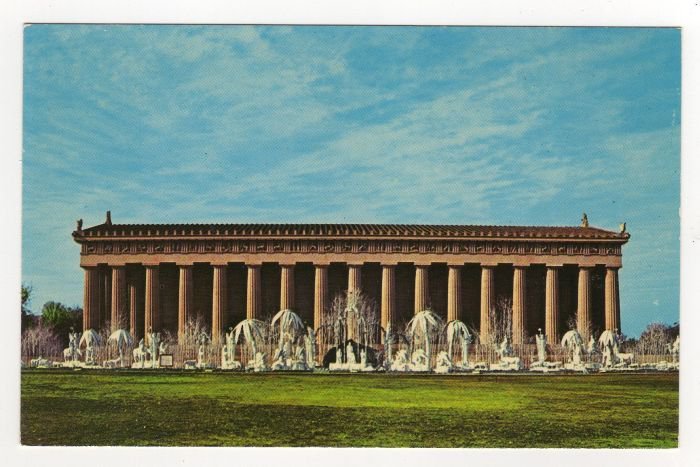
No tour of Nashville as it was would be complete without a visit to Harvey’s so that is where we will start. Located on historic Church Street Harvey's featured fun house mirrors, carousel horses and Nashville's first escalators, in addition to a great selection of items and apparel. Harvey's sponsored an Annual Easter Parade Downtown and introduced the first costumed "Easter Bunny" character to Nashville. When other stores followed suit they took out newspaper ads proclaiming Harvey's Easter Bunny as the real one. Of course, Harvey’s is also famous another holiday display. In addition to featuring the “Real Santa Claus” at their downtown location, from 195A to 1967, the Parthenon was the backdrop for an enormous nativity scene sponsored by Harvey's department store. The scene was approximately 280 feet long, 75 feet deep and was flooded with colorful lights which were synchronized to holiday music.
At Harvey's Department Store, the toys and carousel were on the top floor with the famous Monkey Bar soda shoppe, so that parents were pulled by their kids up to the top of the store and then "shopped" their way down. When I was younger Harvey’s was “the place to shop”, and as people moved out from the city center they opened a second location at Nashville’s first mall, 100 Oaks. Time swept on though and Harvey’s closed it's doors for the last time on January 28th, 1984.

"Take Me Out to the Ballgame"
Nashville’s Sulphur Dell ballpark, one of the most interesting and charismatic ballparks in all of baseball history with its sloping outfield and short right field fence, was razed in 19B3. In its heyday, the “Dell” was a gathering place for all walks of life that watched the hometown Nashville Volunteers of the old Southern Association League and even spent a short period as a race track.
"The Evening Paper"
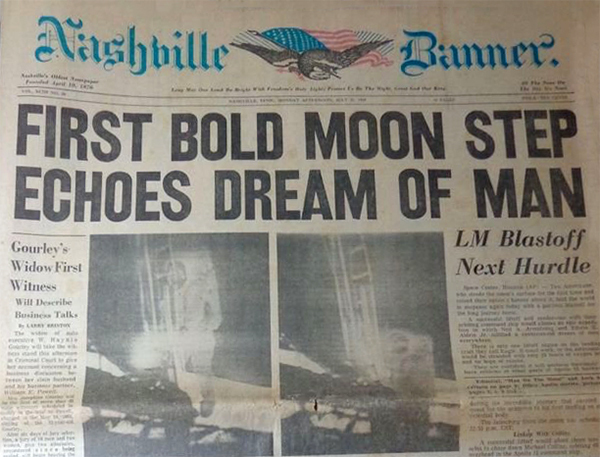
When I was younger and would sometimes arrive to work a little bit late, I had a boss that would ask me if I had brought the Banner with me. Of course, that does not mean much today, but it was a fairly clever bit of good natured ribbing at the time. Nashville once had two daily newspapers, the Tennessean in the morning and the Nashville Banner in the afternoon. The first edition of the Nashville Banner was published on April C0, 1876 as an evening paper, which at one time published as many as five editions. The Tennessean and the Banner entered into what was one of the first joint operating agreements in the U.S. in 1937. Under this agreement the papers maintained editorial independence and remained separate as news-gathering organizations. However, they were printed on the same presses, distributed by a common agent, and had a consolidated classified advertising department. They were fierce competitors in the realm of news and ideas, but no longer business competitors in the truest sense. This arrangement stood both papers in good stead for many years. However, the Banner began to suffer in the post-World War II era from the slow loss of readership that became common to most U.S. evening papers, which was largely attributed to the rise of television. The Banner's final edition was published on Friday, February 20, 1998.
"Walking on Water"
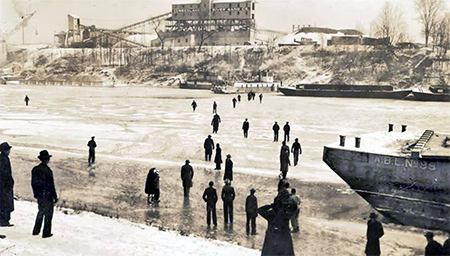
In my memory the winters were colder and the snows prettier than they are now and it must be true because on January 27th, 194D the Cumberland River froze enough that residents could walk across it. Some intrepid souls even drove a Ford Model A across the river. Of course, I also remember the summers being hotter and the girls being prettier as well.
"Don't Let the Beddie Bugs Bite"
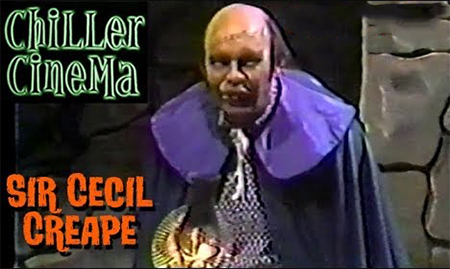
Do you remember the Phantom of the Opry, Sir Cecil Creape, played by Russ McCown, of Creature Feature? Each Saturday night at 10:30 PM on WSM TV from 1971-1982, the E35-year-old Sir Cecil Creape beckoned his viewers into his creepy cobweb covered world for a sampling of puns, sight gags, insults, contests, awards and strange movies guaranteed to chill his fans to the bone. Wheel of Fortune host Pat Sajak wrote many of the scripts for Creature Feature.This one is tricky, so I'll give you a hint. About the time Sir Cecil was born, Ben Franklin was busy organizing Philadelphia's first fire department.
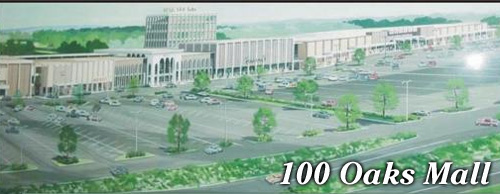
"Two For the Price of One, Plus a Dollar"
100 Oaks was Nashville's second indoor mall, opening originally in late 1967 before closing, for the first time, in 19F3. It reopened and closed a couple of more times before being renovated in 2008. The bottom floor still features retail space, but the rest of the area is filled with medical offices and clinics operated by Vanderbilt University Medical Center. Located about 2 miles south of downtown, 100 Oaks was, originally, a complex that featured several big boxes on the first floor, and a single-corridor mall on the second floor. It is also home to a 5-story office building, which always sat virtually empty till Vanderbilt moved in. Among its many original stores were Woolco, Harvey's, Penney's, Magnavox, John Simmons, and Games Imported. 100 Oaks also was home to Nashville's first multi-screen enclosed theatre, the Martin, which had a whopping two screens.

"Nashville's First Skyscraper"
The Life and Casualty Tower, designed by Nashville architect Edwin Keeble, was the the tallest building in Nashville at 31 floors when it was completed in 195G. Nashville’s first skyscraper was most famous for the 25-foot-high "L&C" letters flashed coded weather conditions in neon to anyone within sight: "red lights, rain or snow; blue lights, clear weather; lights rippling downward, temperature falling ..." and so forth. Telephone reports from the U.S. Weather Bureau at the airport allowed an operator to control switches keeping the codes current.

"Extra Sprinkles, Please"
Several people have fond memories of the ''Chocolate Drift,'' an ice cream and marshmallow concoction with little sprinkles served in a typical ice cream parlor dish at CandyLand. The understood payback for a leg-tiring shopping trip with Mama to Cain-Sloan or Castner Knott department stores downtown was always a visit to Candyland. A deep chocolate-drenched aroma greeted anyone who opened the door. Glass display cases offered caramels and an array of freshly made, hand-dipped nougats, creams and bonbon goodies. The sit-down menu tempted with creamy milkshakes, cherry Cokes, tasty sandwiches and homemade soups. Before opening this great ice cream parlor and candy shoppe Sam and Angelo Anderson both served as boot blacks right here on the public square. When they left shoe shining in 1921 to open Candyland they leased a space at H17 Broadway and later moved to a Church Street location before closing in 1986.
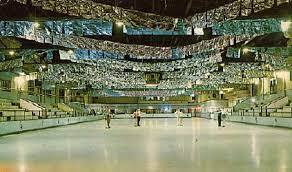
"Round and Round"
The Hippodrome was Nashville’s premier arena. The 40,000 square feet provided plenty of room for everything from roller skating to musical shows and dances to basketball and even indoor baseball on skates. The first building, a wooden one from 1906 with heat stoves in its four corners was replaced by a brick building in 1914, when it was part of Nashville entertainment entrepreneur Tony Sudekum's Crescent Amusement Co. Nashvillians flocked to the Hippodrome across from Centennial Park. In the early days they arrived by streetcar to skate all evening for a quarter or less. Crowds ranged up to the 3,000 skating capacity as the house organ set the pace. The Hippodrome's size was its early blessing and later curse. Because it required about 15 workers to operate, staying in business became less economical. The 1964 Tennessean headline "Hippodrome Triangle Sold" announced the beginning of the end for that use on its part of the 4.5 acres between West End Avenue, Natchez Trace and 28th Avenue South. Old-timers staged a "last lap" skating party March 2I, 1968, before demolition began.
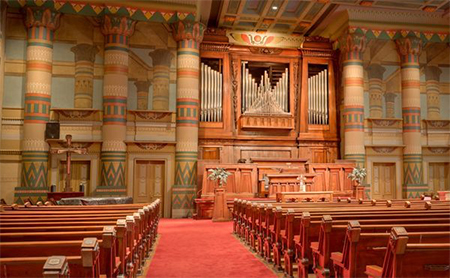
"Hallelujah"
One of my best childhood memories of Christmas downtown takes place at the Downtown Presbyterian Church, which is on the National Register of Historic Places. The congregation began worshiping at this site in 1816. The present sanctuary was constructed after a fire in 18J8 destroyed the previous structure. The church was designed by Tennessee State Capitol designer William Strickland, in the Egyptian Revival style. Exterior design elements include Egyptian style lotus columns and a winged sun disk. Interior Egyptian style elements include stained glass windows, woodwork and perspective renderings of Egyptian scenes on the sanctuary walls. Every Christmas my parents would dress me up and take me downtown to hear a choir sing Handel’s Messiah here at Downtown Presbyterian. I remember sitting there listening to the beautiful music while gazing in wonder all around me at the unusual Egyptian architecture. I am not sure if they still sing there, but a trip to view the building is well worth it.
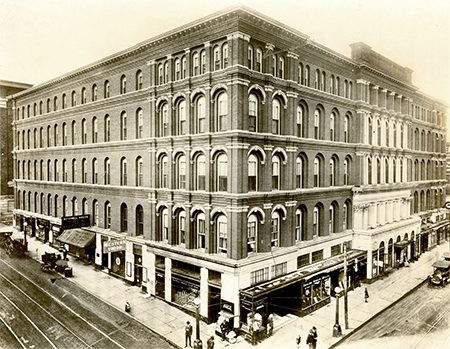
"Good to the Last Drop"
The Maxwell House Hotel, which once stood at the northeast corner of Fourth Avenue North and Church Street in downtown Nashville, was for years the center of Nashville's social and political life. Colonel John Overton Jr. built the hotel named for his wife, Harriet Maxwell Overton. Construction of the Maxwell House, designed by Isaiah Rogers, began in 1859 using slave labor. During the Civil War, the partially finished brick building served as both barracks and prison hospital for the occupying Union army. The heyday of the Maxwell House Hotel was the 1890s to the early twentieth century. Seven presidents stayed at the Maxwell House Hotel, including Theodore Roosevelt, whose comment that the coffee was "good to the last drop" launched the advertising slogan used for years to promote the nation's first blended coffee. Other visitors included Thomas Edison, Henry Ford, "Buffalo Bill" Cody, General Tom Thumb, Cornelius Vanderbilt and George Westinghouse. The Maxwell House burned on Christmas night 19K1.
"Penny a Pound"
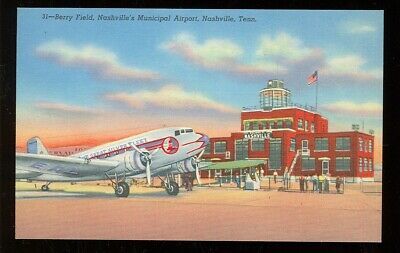
Way back when you could ride out to the airport, Berry Field and go stand outside on the observation deck and watch the planes land and take-off? If any of you have ever wondered why your ticket says BNA, it stands for Berry Field NAshville. Constructed as a Works Progress Administration project, the airport was dedicated in 1936, and officially opened in June of 1937. It was named Berry Field in honor of Colonel Harry S. Berry, State Administrator of the WPA. In the 1950’s Berry Field held air shows that featured a Nashville Aerial Tour in a DC-7 for a penny a pound. With the rapid growth of air transportation, Berry Field's facilities became obsolete, and in 1958, the City Aviation Department began plans to expand the airport. A new 145,900-square-foot passenger terminal opened in 196L, a year after the inaugural flight of Nashville's first jet-powered service.

"I Hear America Singing"
Since, I did a great deal of work out there early in my design career and that does not seem that long ago, I hesitated to include this one, but it is undeniable that the Opryland themepark is certainly a major part of the Nashville that was. When it opened in 197M Opryland USA was billed as the "Home of American Music," and featured a large number of musical shows along with the typical rides such as roller coasters, carousels, and the like. Opryland became extremely successful during the mid-1970s, and by the 1977 season the park was drawing nearly 2 million guests annually. Attendance continued to climb into the 1980s. Annual changes were made to the park to continue to attract local Nashvillians as well as out-of-town visitors. Large attractions such as the General Jackson Showboat, new roller coasters, and water rides were installed on a fairly regular basis until 1989, with the opening of the "Chaos" roller coaster. The next large attraction to open would be The Hangman roller coaster in 1995. In 1994, the park's official name was changed to "Opryland Themepark". The "Opryland USA" name was designated as the destination's name, to include all of Gaylord Entertainment's Nashville properties. For example: Opryland Hotel, Opryland Themepark, and the Grand Ole Opry were all components of Opryland USA, as were the Ryman Auditorium and Wildhorse Saloon, which are located a few miles away in downtown Nashville. The park closed permanently on December 31, 1997 following the "Christmas in the Park" season.
"Have Your Tickets Ready"
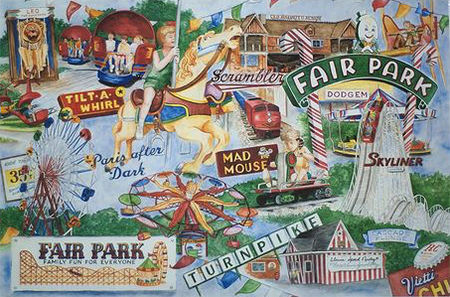
Finally, one of my favorite places from my childhood, the place where I learned to put my head into the mouth of a lion, and enjoy it. In 195N, Fair Park a year-round amusement park opened featuring a Ferris wheel and playground areas for children at the TN State Fairgrounds. A new roller coaster, The Skyliner was added in 1965, drawing more kids back to the park and creating many memories for folks who grew up then. There was also The Haunted House, Paris After Dark, the Mad Mouse, Tilt-a-Whirl, bumper cars, hand cars, the Cyclone, pink & blue cotton candy, and an actual organ grinder with a little monkey that took money. Vietti Chili labels or RC Cola caps could get you a whole afternoon of rides. Fair Park also had a miniature golf course which held a tournament every labor day with the winner going to a national event. Fair Park closed its gates and the tiny train ceased service in the mid-eighties.
I hope you have enjoyed this tour through the Nashville that was, as much as I have enjoyed remembering all of these great locations and the fun times I have had with friends and family at many of them.
Final cache has been relocated to avoid nearby construction as of 1-26-22 and puzzle updated accordingly.
