Un site unique (FR)
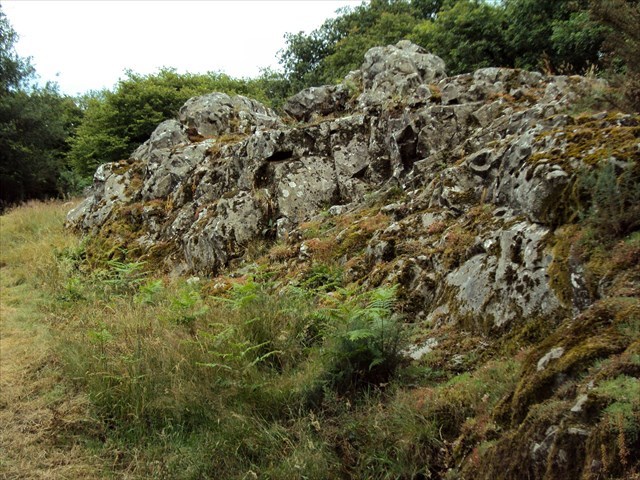
Quelfennec est un site unique en France, voire en Europe. Ce site archéologique a été découvert par Charles-Tanguy Leroux en 1964, il a été ensuite fouillé jusqu'en 1976. Il montre l'exploitation par nos ancêtres de la dolérite qui se trouvait là. On estime que cette exploitation a duré près de 2000 ans lors de l'époque du Néolithique, aussi appelée époque de la pierre polie.
La production de haches polies a été estimée par de nombreux experts à environ 5000 haches par an. Elles étaient polies par une quinzaine de spécialistes, ce nombre pouvant monter à 50 à certaines périodes. On évalue le total des haches polies fabriquées dans ce lieu entre 1 et 3 millions, ce qui est phénoménal. Les haches, dont la signature géologique indiquait qu'elles venaient de ce site, ont été retrouvées dans tout l'ouest de la France mais aussi à l'étranger, en Grande-Bretagne et dans beaucoup d'autres pays européens.
La production de haches a progressivement disparu à partir de 2000 avant JC, lors de la naissance de l'âge du bronze.
La Dolérite
La dolérite est une roche magmatique dense, dure et massive, finement grenue, s'étant solidifiée lentement dans un filon magmatique. Elle est intermédiaire entre les gabbros et les basaltes. Cette roche compacte se forme dans des conduits reliant la chambre magmatique profonde à l'appareil volcanique de surface.
Questions
1 - Quel phénomène a fait apparaître la Dolérite au lieu dit Quelfennec sur la commune de Plussulien ?
Questions subsidiaires
2 - A quoi servit cette roche et pourquoi ? Vous trouverez la réponse dans le petit musée ouvert dans une des salles de la mairie
3 - Sur le site d'excavation, trouvez la cuvette dans laquelle les anciens polissaient les pierres, une photo de vous ou une photo du site avec un objet perso devant cette cuvette sera la bienvenue
Merci, après avoir logué votre cache found it de m'envoyer les réponses soit via mon profil, soit via la messagerie geocaching.com. Je vous contacterai en cas de problèmes.
A unique site (EN)
Quelfennec is a unique site in France, even in Europe. This archaeological site was discovered by Charles-Tanguy Leroux in 1964, it was then excavated until 1976. It shows the exploitation by our ancestors of the dolerite which was there. It is estimated that this exploitation lasted nearly 2000 years during the Neolithic era, also called the polished stone era. The production of polished axes has been estimated by many experts at around 5000 axes per year. They were polished by about fifteen specialists, this number being able to rise to 50 at certain times. The total number of polished axes made in this place is estimated to be between 1 and 3 million, which is phenomenal. The axes, whose geological signature indicated that they came from this site, have been found throughout western France but also abroad, in Great Britain and in many other European countries. The production of axes gradually disappeared from 2000 BC, when the Bronze Age was born.
Dolerite
Dolerite is a dense, hard and massive, fine-grained igneous rock that has slowly solidified in a magmatic vein. It is intermediate between gabbros and basalts. This compact rock forms in conduits connecting the deep magma chamber to the surface volcanic apparatus.
Questions
1 - What phenomenon caused the Dolerite to appear at a place called Quelfennec in the town of Plussulien?
Subsidiary questions
2 - What was this rock used for and why? You will find the answer in the small open museum in one of the halls of the town hall
3 - On the excavation site, find the basin in which the ancients polished the stones, a photo of you or a photo of the site with a personal object in front of this basin will be welcome
Thank you, after logging your found it cache, send me the answers either via my profile or via geocaching.com messaging. I will contact you if there are any problems.