CZ:
Přijměte pozvání do prostor
stanice metra Dejvická. Je zde možné pozorovat vícero zajímavých geologických jevů, nás však pro tuto EC budou zajímat především
zkameněliny Goniatitů a jejich význam pro určování stáří hornin. Do metra sestupte jedním z vchodů (viz. waypointy), přičemž pokud potřebujete výtah, použijte vchod z waypointu 1. Přímo u vchodu můžete splnit jeden z úkolů EC (viz. níže), poté pokračujte dolů do horního (neplaceného) vestibulu metra. Pokud jste metrem přijeli, do vestibulu se dostanete z nástupiště buď elevátory na jedné straně nebo schodištěm na straně druhé. Ve vestibulu nás budou zajímat zejména obklady ze
Sliveneckého mramoru. I přes svůj název jde ve skutečnosti o vápenec a je skutečně velmi dekorativní. V metru je snadno rozpoznatelný, jde o červenohnědý kámen zachycený dále v listingu na fotografiích fosilií goniatitů. To, že jde o vápenec, je z našeho pohledu jedině dobře. Ve skutečném mramoru, tedy metamorfované hornině, se zkameněliny většinou nevyskytují.
EN:
Welcome at the
Dejvická metro station. It is possible to observe several interesting geological phenomena here, but for this EC we will be mainly interested in the
Goniatite fossils and their importance for determining the age of rocks. Go down to the metro through one of the entrances (see waypoints). If elevator is needed, use the entrance from waypoint 1. Right at any of the entrances you can complete one of the EC tasks (see below), then continue down to the upper (unpaid) vestibule of the metro. If you arrived by metro, you can get to the vestibule by using one of the escalators on one side or a staircase on the opposite side of the platform. We will be particularly interested in the tiles made of
Slivenec marble in the vestibule. Despite its name, it is actually a limestone and it is a very decorative stone. It is easily recognizable in the metro - it is the reddish-brown stone captured further in the listing in the photos of the Goniatite fossils. It is fortunate that it is limestone. Fossils are rarely found in true marble as it is a metamorphic rock.
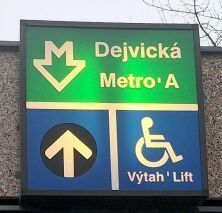
Stanice metra Dejvická / Dejvická metro station
CZ:
Metro je v Praze základem sítě městské hromadné dopravy, na jeho stanice pak navazují linky tramvají, trolejbusů, autobusů a vlaků. Metro bylo od počátku budováno i jako výkladní skříň tehdy existujícího režimu, proto se na jeho výstavbě nešetřilo. Dokladem je interiér jednotlivých stanic, které jsou většinou obloženy leštěnými kamennými obklady z nejrůznějších hornin a pocházející z mnoha koutů České republiky či Evropy. Nezřídka můžeme v jedné stanici pozorovat i pět či více různých hornin. Stanice Dejvická zahájila provoz v roce 1978 pod jménem Leninova. Vzhledem ke svému jménu dostala bohatou umělecko-ideologickou výzdobu, která je dnes (za mne naštěstí) skryta za novými obchody a dalšími prvky.
EN:
The metro forms the backbone of Prague’s public transport network, with tram, trolleybus, bus, and train lines connecting to its stations. From the very beginning, the metro was built to serve as a showcase for the regime of the time, so no expense was spared in its construction. This is evident in the interiors of the individual stations, which are largely clad in polished stone originating from various parts of the Czech Republic and Europe; it is not uncommon to see five or more different types of stone in a single station. Dejvická station opened in 1978 under the name Leninova. Reflecting its name, it originally featured elaborate artistic and ideological ornamentation—elements that are now (fortunately, in my view) concealed behind new shops and other additions.
Goniatiti / Goniatites
CZ:
Goniatiti jsou vyhynulí hlavonožci, kteří jsou charakterističtí svým stočeným tvarem schránky. Jsou blízce příbuzní pozdějších a známějších amonitů. Zemi obývali během prvohor od středního devonu až po perm, tedy cca před 390-250 miliony let.
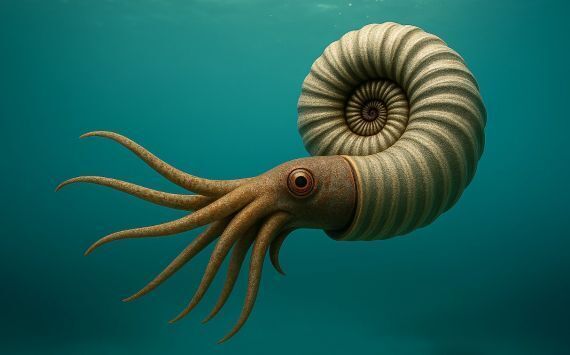 Možná podoba živého goniatita, představa ownera cache a AI. Osm ramen živočicha je čistě osobní preference ownera, existují i silné důvody pro domněnku, že těchto ramen bylo ve skutečnosti 10 (jako u dnešních olihní)
Největší goniatiti dosahovali velikosti asi 15cm. Přesný způsob jejich obživy není v současné době s jistotou znám. Šlo výhradně o mořské životy s preferencí mělčích vod a tropického či subtropického podnebí. Jejich schránka byla produktem jejich životního cyklu. Je rozdělená do většinou jasně patrných komor, přičemž poslední schránka byla vždy největší a byla obývána samotným živočichem. V případě dalšího růstu goniatit prostě "přidal další patro" tedy vlastně komůrku, kterou od předchozí oddělil stěnou zvanou septum. Všechny komory byly propojeny sifonální trubicí, která umožňovala regulovat tlak plynu v komůrkách a tím i nadnášení ve vodním sloupci. Další možnou funkcí bylo naplnění trubice vodou a její následné prudké vytlačení, čímž mohl živočich dosáhnout rychlého pohybu vzad – podobně jako současné chobotnice či sépie. Příklady zkamenělin goniatitů ze stanice Dejvická:
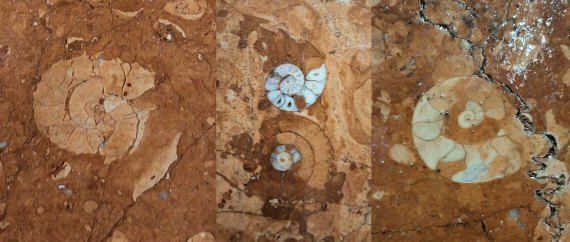 Zkameněliny goniatitů na Dejvické.
Goniatiti náleží mezi amonoidy.
Amonoidi (Ammonoidea) jsou vyhynulá skupina mořských bezobratlých s vnějším krunýřem. Byli to hlavonožci, a proto byli blízce příbuzní moderním sépiím, olihním a chobotnicím. Amonoidi žili zhruba v období před 410 - 65 miliony let. Ve fosilních záznamech se obvykle nacházejí pouze jejich schránky, vzácné jsou nálezy vnitřních forem. Schránky dospělých amonoidů mají průměr od přibližně 5 milimetrů do 2 metrů. Pravděpodobně měli širokou škálu životních způsobů a reprodukčních strategií.
Fosilní záznam amonoidů je neobyčejně rozmanitý a rozsáhlý. Souvisí to s vysokým počtem a variabilitou jejich druhů, schopností osídlit většinu mořského prostředí tehdejšího světa a vysokým počtem jedinců.
Nejrozšířenější a tím nejznámější druhy amonoidů měly stočenou schránku, tak jak to můžeme pozorovat u goniatitů nebo pozdějších amonitů. Nicméně nebyl to jediný možný tvar u amonoidů, ve skutečnosti se vyskytovaly i schránky rovné, nebo třeba i stočené, ale s jednotlivými "závity" nepřiléhajícími k sobě, takže vznikala jakási otevřená spirála.
Kolik těch amonoidů bylo?
Myšleno tedy ve smyslu počtu druhů. Už jsme tak nějak zmínili, že hodně. Hodně jich je už při pohledu na v současnosti známý (a uznávaný) počet druhů. A když vezmeme v úvahu, kolik těch druhů ještě neznáme...no každopádně si aktuální situaci můžete ověřit sami. Běžte na https://people.ucsc.edu/~mclapham/specieslist.html a zkuste vyhledávat "Ammonoidea". Podle údajů https://www.digitalatlasofancientlife.org/ by jste takto měli získat přes 8 000 výsledků. Na mne jich ale vypadlo skoro 11 500. Zřejmě bouřlivě se vyvíjející obor. A je to pro Čecha docela zajímavé čtení. Druhy jsou seřazeny od nejstarších a na první stránce je u objevitelů uveden zejména "Barrande", občas tedy vystřídán "Chlupáč a Turek".
EN:
Goniatites are extinct cephalopods characterized by their coiled shells. They are closely related to the later and better-known ammonites. They inhabited the Earth during the Paleozoic Era, from the Middle Devonian to the Permian—approximately 390 to 250 million years ago.
A possible depiction of a living goniatite, based on the CO's vision and AI. The creature's eight arms reflect the CO's personal preference, though there are also reasons to believe it actually had ten of them (like modern squid).
The largest goniatites reached a size of about 15 cm. Their exact feeding habits are not currently known with certainty. They were exclusively marine creatures that preferred shallower waters and tropical or subtropical climates. Their shell was a product of their life cycle. It is divided into chambers—usually clearly visible—with the final chamber being the largest and inhabited by the animal itself. As the goniatite grew, it simply "added another level"—essentially a new chamber—separating it from the previous one with a wall known as a septum. All chambers were interconnected by a siphuncle tube, which allowed the animal to regulate gas pressure within the chambers and thus control its buoyancy in the water column. Another possible function involved filling the tube with water and then rapidly expelling it, enabling the animal to move quickly backwards—much like modern octopuses or cuttlefish. Examples of goniatite fossils from the Dejvická station:
Goniatite fossils from the Dejvická station.
Goniatites belong to the ammonoids.
Ammonoids (Ammonoidea) are an extinct group of marine invertebrates with an external shell. They were cephalopods and were therefore closely related to modern cuttlefish, squid, and octopuses. Ammonoids lived roughly between 410 and 65 million years ago. Only their shells are typically found in the fossil record; finds of internal soft-tissue structures are rare. The shells of adult ammonoids range in diameter from approximately 5 millimeters to 2 meters. They likely exhibited a wide range of lifestyles and reproductive strategies.
The fossil record of ammonoids is extraordinarily diverse and extensive. This is due to the high number and variability of their species, their ability to inhabit most marine environments of the time, and their high population numbers.
The most widespread - and therefore best-known—types of ammonoids possessed coiled shells, such as those seen in goniatites or later ammonites. However, this was not the only possible shape; straight shells also existed, as did coiled ones where the individual whorls did not touch, creating an open spiral.
How many species of ammonoids were there?
We’ve already mentioned that there are a lot of them. There are really many even when looking at the currently known (and recognized) number of species. And when you consider how many species remain unknown... well, in any case, you can check the current situation for yourself. Go to https://people.ucsc.edu/~mclapham/specieslist.html and try searching for "Ammonoidea." According to data from https://www.digitalatlasofancientlife.org/, you should get over 8,000 results. However, I got nearly 11,500. It is evidently a rapidly evolving field...
Goniatiti coby nástroj biostratigrafie / Goniatites as a tool of biostratigraphy
CZ:
Biostratigrafie je jednou z metod stratigrafie, tedy vědy o tom, jak jsou jednotlivé geologické objekty staré (buď relativně k jiným objektům) nebo absolutně (v letech). To "bio" na začátku názvu asi celkem i napovídá, že tím objektem, který je používán k určování jsou stopy života. Typicky fosilie organismů nebo nebo nějakých jejich projevů (cestičky, výkaly,...). Ne každá zkamenělina se ale pro biostratigrafii hodí. Ideální je taková, která patří živočichovi, jenž:
- byl velmi početný (velké množství jedinců)
- dokázal obydlit co nejširší spektrům prostředí
- vykazoval výrazné morfologické změny v čase (tj. jedinci z jednoho období jsou snadno rozlišitelní od jedinců z období jiného)
Živočich tyto podmínky splňující se pak považuje za tzv.
indexovou fosilií. Velmi známou indexovou fosilií jsou např. trilobiti.
No a další významnou indexovou fosilií jsou právě amonoidi, mezi nimi pak samozřejmě i goniatiti. Že byly splněny první dvě podmínky ze seznamu výše, to by už mělo být jasné z předchozí části listingu. Ale jak je tomu s těmi morfologickými odlišnostmi? Je jich samozřejmě více, my se zde zaměříme na jednu z těch nejdůležitější, tj. na
tvar jejich "švů".
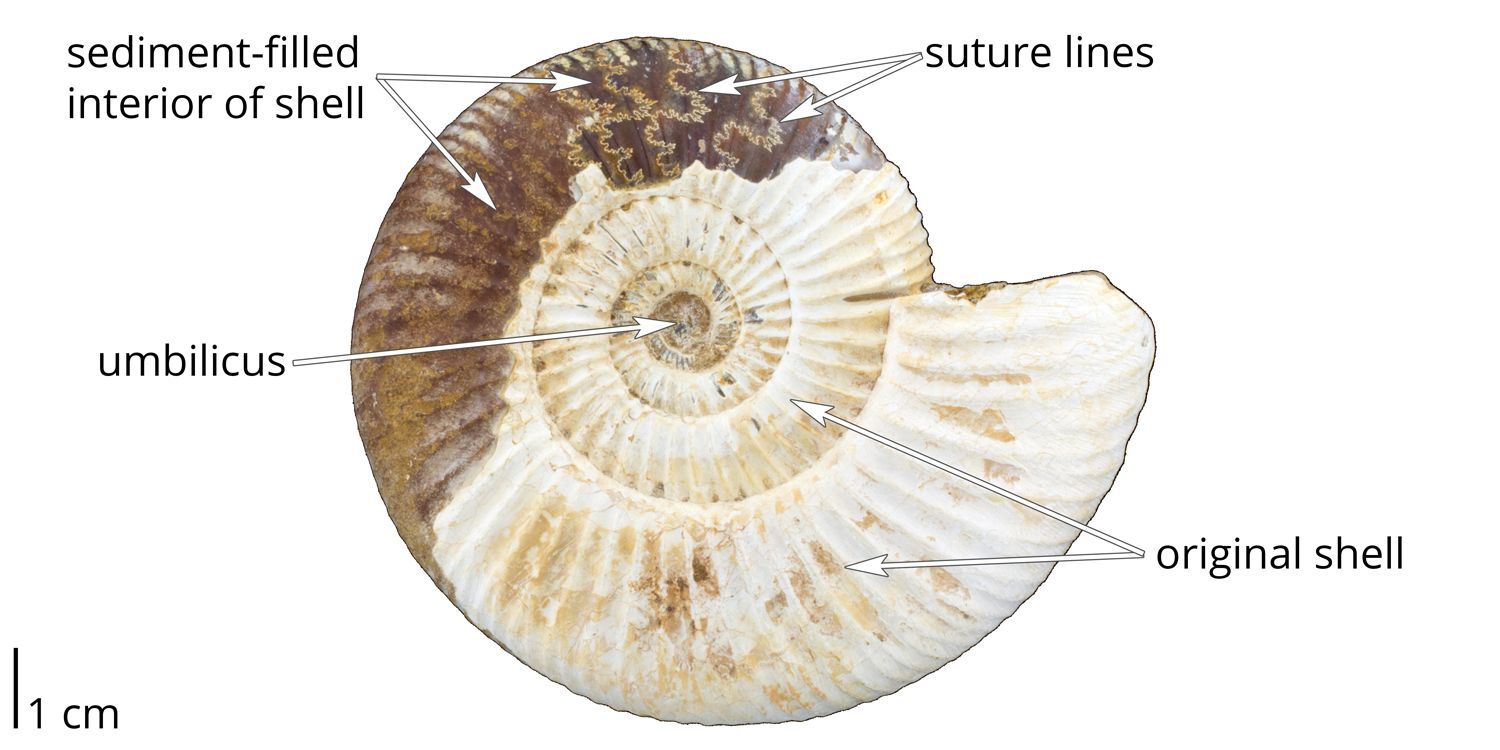
Již víme, že amonoidi měli schránku rozdělenou přepážkami na komory. Místo, kde se tyto vnitřní přepážky napojovaly na vnější stěnu ulity, se nazývá
šev (sutura). O čem to mluvíme, včetně další terminologie týkající se ulity by mělo být zřejmé z následujícího obrázku.
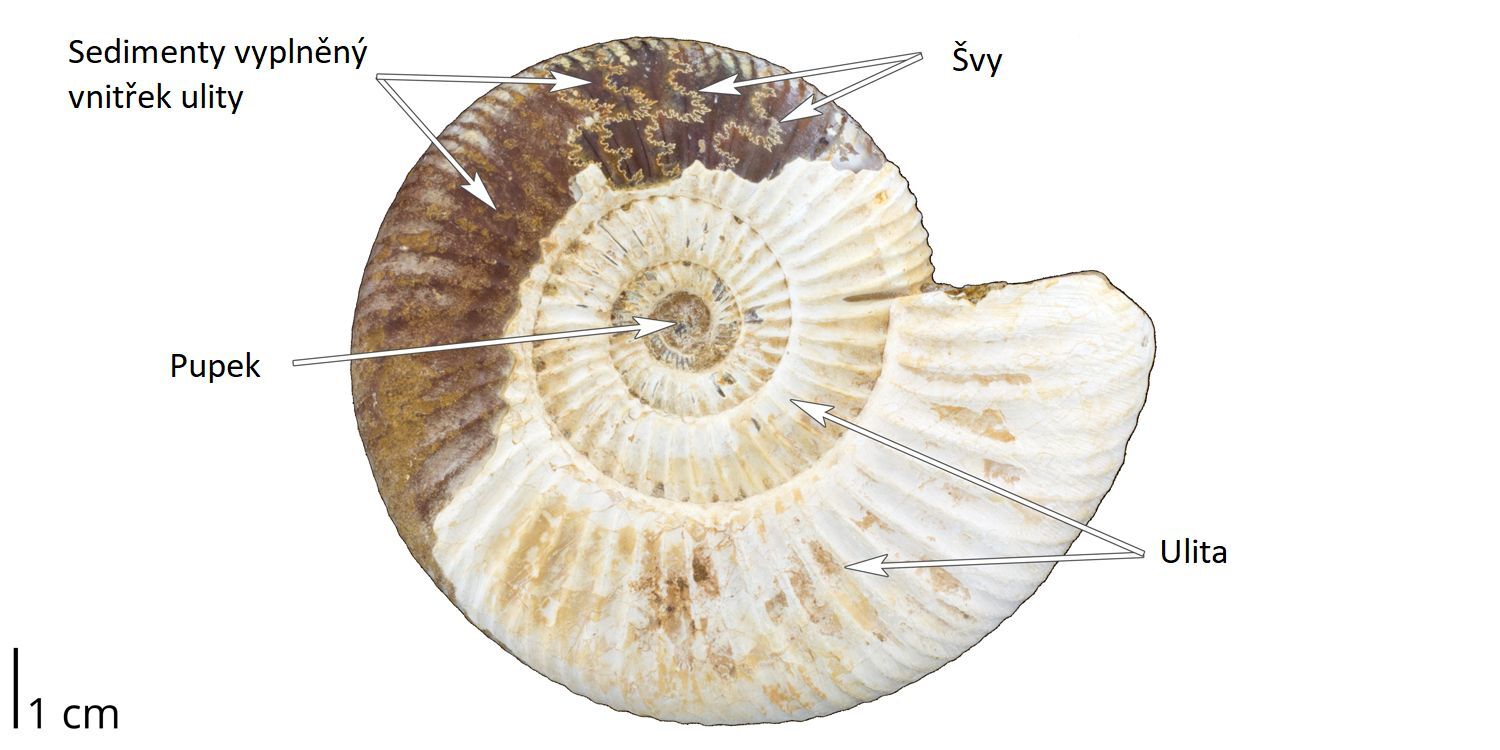 Amonit druhu Prososphinctes virguloides. Šev je viditelný na místě, kde je původní ulita rozbitá a je vidět vnitřek. Nebyl tedy viditelný za života jedince. Obrázek Jonathan R. Hendricks, www.digitalatlasofancientlife.org, přeloženo do češtiny.
Tvar švů se v průběhu geologických epoch poměrně zřetelně vyvíjel a slouží tak jako jeden ze základních nástrojů pro určování jednotlivých druhů a geologického období, do nějž náleží. Jen maličko zjednodušeně (a ignorujíce výjimky, které jsou a budou všude) lze říci, že
vývoj zde směřoval od jednoduchého ke složitému. Tedy od jednoduchého tvaru švů k nakonec velmi složitému tvaru. Tak složitému, že když ho chcete rozumně matematicky modelovat, sáhnete po fraktálech, o nichž česká verze wikipedie odvážně tvrdí, že se "jeví coby nejsložitější geometrické objekty, které současná matematika zkoumá".
Zaveďme si nyní pojmenování, že tu
část švu, která je vypouklá směrem k otvoru (tj. místu poslední komůrky, kde žije živočich), budeme nazývat
sedlem. No a té, která je vypouklá na druhou stranu, té budeme říkat
lalok. Jasné by to mělo být z následujícího obrázku:
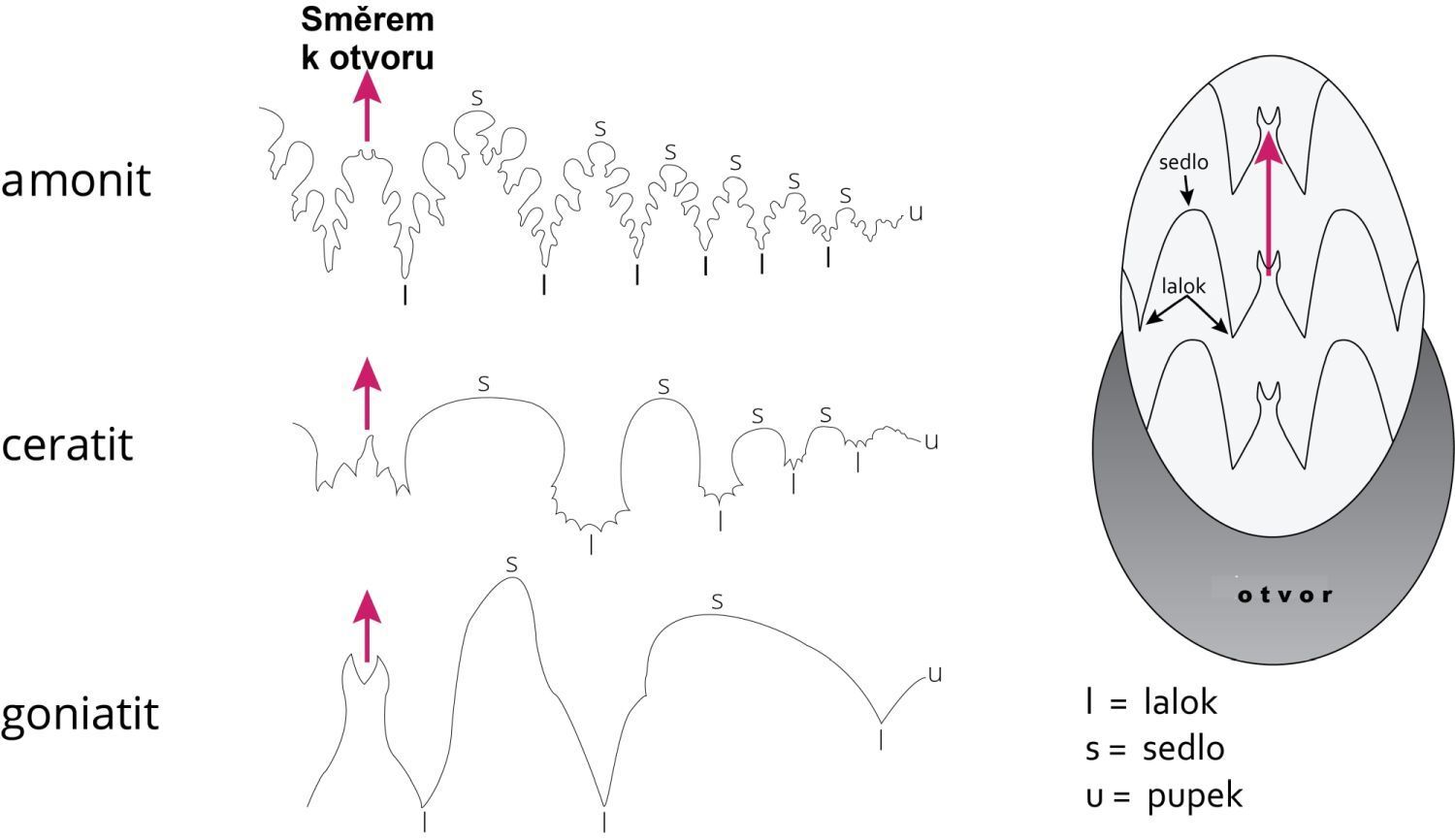 Typy švů u amonoidů. Obrázek Jonathan R. Hendricks, www.digitalatlasofancientlife.org, přeloženo do češtiny.
Většinou se rozlišují 3 základní typy švů:
- Goniatitový: nejstarší, jednoduché oblouky pro laloky i sedla.
- Ceratitový: mladší, hladká sedla a pilovité laloky. Ceratiti byli jedněmi z amonoidů žijících v období mezi goniatity a amonity.
- Amonitový: velmi složitě rozvětvené.
Pokud máte to štěstí, že v hornině naleznete amonoida s rozpoznatelným švem, pouze na základě tohoto švu by mělo být zhruba určitelné, z jakého období zkamenělina i hornina pocházejí. Tedy alespoň teoreticky, pokud máte příslušné zkušenosti, v praxi to nemusí to být tak snadné, jak to na první pohled zní.
A proč se ten šev v průběhu času tímto způsobem "zesložiťoval"?
Tahle otázka po přečtení výše napsaného asi napadne nejednoho kačera. Nějakou představu o tom máme. Na druhou stranu, je vždy třeba mít na paměti, že jde do jisté míry o teorie. Ve skutečnosti může být vysvětlením kombinace více faktorů a nelze ani s úplnou jistotou vyvrátit to, že to žádný význam nemělo, jen to prostě ničemu nevadilo a konkrétní vývoj byl jen výsledkem náhody. Ale vzhledem ke konzistenci celého procesu v průběhu času je toto vysvětlení přece jen krajně nepravděpodobné.
Pravděpodobně nejdůležitějším faktorem tak bylo, že
složitá struktura švu zvyšovala pevnost a odolnost schránek. Amonoidi totiž oproti jiným konkurenčním skupinám vsadili na relativně tenké schránky. To má určité výhody, přinejmenším na sobě pak taháte menší váhu. Na druhou stranu zase máte problémy s odolností takové schránky a jakékoliv její posílení přijde velmi vhod. A toto zesílení mohlo být v pozdějších dobách důležitější než v dobách starších. Oni totiž ani predátoři nejsou tak úplně neměnní a v čase se vyvíjejí. A lépe vyvinutý predátor třeba dokáže hravě rozlousknout schránku, se kterou by si jeho (vývojový) dědeček vůbec neporadil. No a pak se fakt hodí, když zrovna zmutujete tak, že máte schránku pevnější. Na rozdíl od ostatních kolegů okolo nejste sežrán, což vám dává přinejmenším příležitost se rozmnožit. No a protože ti ostatní okolo sežráni byli, tak vaše potomstvo postupně v okolí převládne.
EN:
Biostratigraphy is a method of stratigraphy — the science of determining the age of geological features, either relatively (in relation to other objects) or absolutely (in years). The "bio" prefix suggests that the objects used for this dating are traces of life — typically fossils of organisms or evidences of their activity (such as tracks or droppings). However, not every fossil is suitable for biostratigraphy. The ideal fossil comes from an organism that:
- was very numerous (large numbers of individuals)
- managed to inhabit the widest possible range of environments
- exhibited significant morphological changes over time (i.e., individuals from one period are easily distinguishable from those of another)
An organism meeting these criteria is considered an
index fossil. Trilobites, for example, are very well-known index fossils.
Another significant group of index fossils consists of ammonoids—which, of course, include goniatites. It should already be clear from the previous section of the listing that the first two criteria on the list above were met. But what about the morphological differences? There are, of course, several; here, we will focus on one of the most important: the
shape of their "sutures."
We already know that ammonoids had shells divided into chambers by internal partitions. The line where these internal partitions joined the outer shell wall is called the
suture. The following image should clarify what we are discussing, as well as other terminology related to the shell.
 Anmonite of the species Prososphinctes virguloides. The suture is visible where the original shell is broken and the interior is exposed; thus, these features were not visible during the animal's lifetime. Image by Jonathan R. Hendricks, www.digitalatlasofancientlife.org.
The shape of the sutures evolved quite distinctly over geological epochs, serving as a fundamental tool for identifying specific species and the geological periods to which they belong. To put it only slightly simply—and setting aside the inevitable exceptions—one can say that
evolution here progressed from the simple to the complex: from simple suture shapes to forms that eventually became highly intricate. Indeed, they are so complex that any attempt at a meaningful mathematical model requires the use of fractals—objects which the Czech version of Wikipedia boldly describes as "appearing to be the most complex geometric objects studied by contemporary mathematics."
Let us now establish the terminology: we will call the
part of the suture that curves towards the aperture (i.e., the location of the final chamber where the animal lives) the
saddle. The part that curves in the opposite direction, we will call the
lobe. This should be clear from the following image:
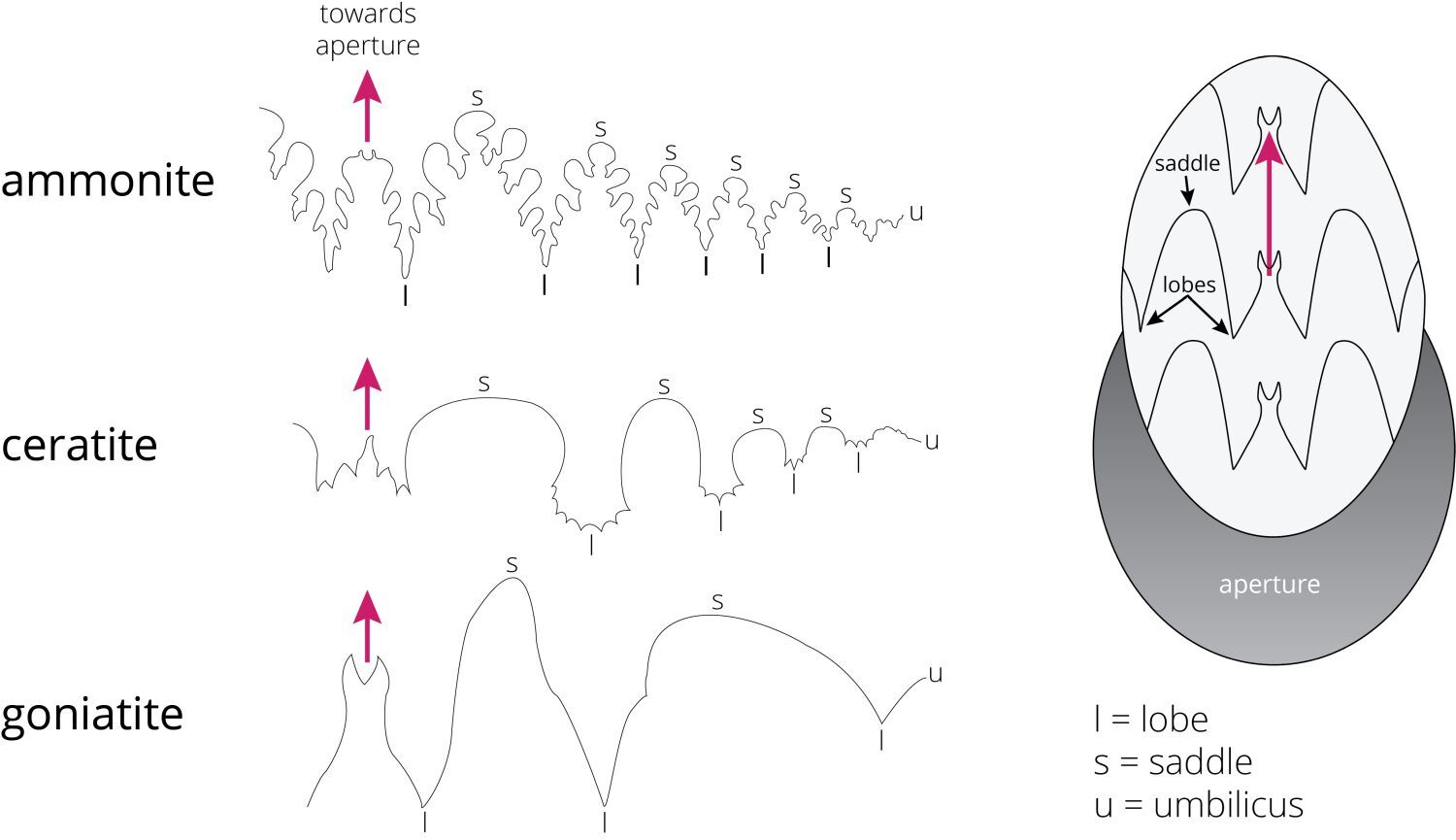 Suture patterns in ammonoids. Image by Jonathan R. Hendricks., www.digitalatlasofancientlife.org.
Three basic types of sutures are generally distinguished:
- Goniatitic: the oldest type, featuring simple curves for both lobes and saddles.
- Ceratitic: a later type, characterized by smooth saddles and saw-toothed lobes. Ceratites were a group of ammonoids that lived during the period between goniatites and ammonites.
- Ammonitic: highly complex and branching.
If you are fortunate enough to find an ammonoid with a discernible suture in the rock, the suture alone should allow for a rough determination of the geological period from which the fossil and the rock originate. At least in theory—provided you have the necessary expertise—though in practice, it may not be as easy as it sounds.
And why did that suture become increasingly "complex" over time?
After reading the above, this question will likely occur to many of you. We have some idea about it. On the other hand, one must always bear in mind that these are, to some extent, theories. In reality, the explanation might be a combination of several factors; nor can we rule out with absolute certainty the possibility that it had no significance at all — that it simply didn't get in the way, and the specific evolutionary path was merely a matter of chance. However, given the consistency of the entire process over time, that explanation seems highly unlikely.
The most important factor was likely that the
complex suture structure increased the strength and durability of the shells. Unlike competing groups, ammonoids relied on relatively thin shells. This has certain advantages—for one thing, you aren't carrying around as much weight. On the flip side, however, shell durability becomes an issue, so any form of reinforcement is highly beneficial. And this reinforcement may have become more critical in later periods than in earlier ones. After all, predators do not remain static; they evolve over time. A more advanced predator might easily crack open a shell that its (evolutionary) grandfather couldn't have managed at all. That is precisely when it pays to mutate in a way that yields a stronger shell. Unlike your peers, you avoid being eaten, which gives you at least a chance to reproduce. And since the others around were eaten, your offspring will gradually come to dominate the area.
Co lze dále na Dejvické vidět / What else is there to see at Dejvická?
CZ:
Další zkameněliny
Hlavním motivem této kešky jsou goniatiti, je však jasné, že v moři nežili sami a že tu tedy zřejmě budou zkameněliny i dalších živočichů. Skutečně je zde možné najít třeba zkameněliny mlžů a zejména pak krásné exempláře orthocerase. Jako "
Orthoceras" se obecně označují vyhynulí nautiloidní hlavonožci s přímou, kuželovitou schránkou (ortokonem) žijící zhruba před 500-200 milióny let. I přes vnější podobnost nicméně tito hlavonožci patřili do celé řady různých čeledí či dokonce řádů. Tvar schránky orthocerasů je přímo zachycen v jejich jméně, protože "orthoceras" znamená "rovný roh". Jsou v zásadě podobní amonoidům tím, že jejich schránka byla produktem jejich životního cyklu. Je rozdělená do většinou jasně patrných komor, přičemž poslední schránka byla vždy největší a byla obývána samotným živočichem. Říkal jsem "podobní amonoidům"? No, při té definici, kterou jsem uvedl výše, vlastně někteří orthocerasové mohli být amonoidy. I mezi amonoidy byly totiž druhy s rovnou ulitou.
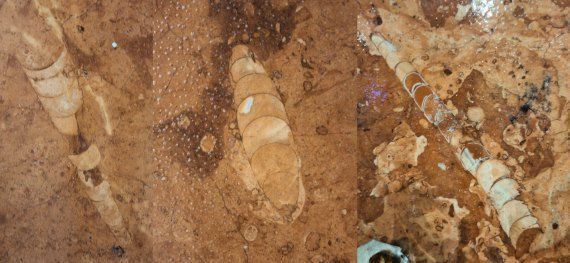 Několik fosilií orthocerase z Dejvické
Granáty
Ano, i tyhle minerály je možná nalézt ve stanici Dejvická. Jsou na obkladech dnes již zřejmě nepoužívané budky dozorčího stanice uprostřed nástupiště. V té části, co není obložená brekcií. Ale pozor, toto je již v placené části metra a pro splnění úkolů této EC není návštěva nástupiště nutná.
EN:
Other fossils
The main theme of this geocache is goniatites; however, it is clear that they did not live alone in the sea and that fossils of other creatures are likely to be found here as well. Indeed, one can find fossils of bivalves and, in particular, beautiful specimens of Orthoceras. The term "Orthoceras" is generally used to refer to extinct nautiloid cephalopods with a straight, conical shell (an orthocone) that lived roughly 500 to 200 million years ago. Despite their outward resemblance, however, these cephalopods belonged to a wide range of different families or even orders. The shape of the Orthoceras shell is reflected in its name, as "Orthoceras" means "straight horn." They are fundamentally similar to ammonoids in that their shell was a product of their life cycle. It is divided into chambers—usually clearly visible—with the final chamber being the largest and the one inhabited by the animal itself. Did I say "similar to ammonoids"? Well, given the definition I provided earlier, some Orthoceras specimens could actually have been ammonoids; after all, there were species among the ammonoids that possessed straight shells.
Several orthoceras fossils from Dejvická
Garnets
Yes, these minerals can also be found at Dejvická station. They are located on the cladding of the station supervisor’s booth — which appears to be no longer in use — situated in the middle of the platform; specifically, on the section not clad in breccia. However, please note that this area lies within the paid zone of the metro, and visiting the platform is not required to complete the tasks for this EarthCache.
Zdroje / Referencies
https://www.digitalatlasofancientlife.org/learn/mollusca/cephalopoda/ammonoidea/
https://natmus.humboldt.edu/exhibits/fossil-focus-exhibits/suture-patterns-within-subclass-ammonoidea
https://en.wikipedia.org/wiki/Ammonoidea
https://cs.wikipedia.org/wiki/Biostratigrafie
https://www.palaeontologyonline.com/?p=3893
Jak logovat / How to log
CZ:
Pro zalogování keše budete muset fyzicky navštívit přinejmenším úvodní souřadnice keše, pořídit požadované fotografie a zodpovědět otázky níže. Fotografie přikládejte k logu, odpovědi na otázky mi posílejte přes profil (message centrum, email spíše ne). Každý loguje a posílá odpovědi sám za sebe, hromadné odpovědi a fotografie nejsou akceptovány. Na každé fotografii musí být něco s vaším nickem, třeba CWG nebo kousek papíru. Opět je vyžadován celý nick a ne nějaká zkratka pro více nicků. Nick je samozřejmě možné nahradit vaším spanilým obličejem, trváte-li na tom. Logujte až po odeslání odpovědí, na reakci čekat nemusíte. Výjimky z předchozích pravidel jsou možné např. u dětských nicků nebo v dalších odůvodněných případech, je třeba to však vždy vysvětlit.
Úkoly:
- Pokud byste vycházeli pouze z údajů v listingu, jak byste vymezili dobu vzniku Sliveneckého mramoru? Zdůvodněte.
- U jednoho z vchodů do metra (viz. waypointy) si prohlédněte mramorové obklady a zkus v nich nalézt nějakou zkamenělinu. Mramorové obklady jsou ty bílé, s také přítomným granitem si to snad nespletete. Pokud zkamenělinu naleznete, popište ji. Pokud ne, zkuste zdůvodnit, proč se vám to nepodařilo. Uveďte také číslo vchodu (ve waypointech).
- Prozkoumejte obklady ze Sliveneckého mramoru ve vestibulu metra. Nalezněte nejméně tři exempláře goniatitů, vyfoťte je a jejich fotografie přiložte k logu. Dále pořiďte nejméně jednu další fotografii jiné zkameněliny než goniatita a také ji přiložte k logu.
- Vyberte si jeden z Vámi v předchozím úkolu zdokumentovaných exemplářů goniatita a rozhodněte, zda je možné na základě jeho pozorování a informací v listingu rozhodnout, že se skutečně jedná o goniatita a ne třeba o amonita. Své tvrzení zdůvodněte a nezapomeňte uvést, které z fotografií se týká.
EN:
To log this cache, you must physically visit at least the starting coordinates, take the required photos, and answer the questions below. Please attach the photos to your log and send the answers to me via my profile (using the Message Center; please avoid email). Each person must log and submit answers individually; group submissions are not accepted. Each photo must include something displaying your username — such as a personal wooden coin or a piece of paper. The full username is required; abbreviations representing multiple usernames are not permitted. Of course, you may substitute your own lovely face for the username if you insist. Please log the cache only after sending your answers; there is no need to wait for a reply. Exceptions to these rules may be made — for instance, for children's nicks or in other justified cases — however, an explanation must always be provided.
Tasks:
- Based solely on the information in the listing, how would you define the time period when Slivenec marble was formed? Explain your reasoning.
- At one of the metro entrances (see waypoints), examine the marble cladding and try to find a fossil within it. The marble cladding is the white stone; you shouldn't confuse it with the granite that is also present. If you find a fossil, describe it. If not, try to explain why you were unsuccessful. Also, state the entrance number (from the waypoints).
- Examine the Slivenec marble cladding in the metro vestibule. Find at least three specimens of goniatites, take photos of them, and attach the photos to your log. Additionally, take at least one more photo of a fossil other than a goniatite and attach it to your log as well.
- Select one of the goniatite specimens you documented in the previous task and determine whether, based on your observations and the information in the listing, it is possible to confirm that it is indeed a goniatite rather than, for example, an ammonite. Justify your conclusion and be sure to indicate which photo it refers to.