
Portuguese Historical
Villages
This cache is part of a series
of ten, each one of them intended to take you to visit a Portuguese
Historical Village.
Here's the table of links to
the caches and their owners:
The Cache
This cache will take you to
Monsanto, a small village in Beira Baixa near the border with
Spain, where you will have the chance to see handicrafts, roman
constructions, traditional architecture, and important Portuguese
military constructions besides the flora and fauna characteristics
from this region.
In your way to the cache you may
want to stop at the top of the castle to enjoy the astonishing
landscape while the usually strong wind refreshes you after the
climbing effort.
The cache is a regular size
plastic container similar to a Tupperware.
MONSANTO
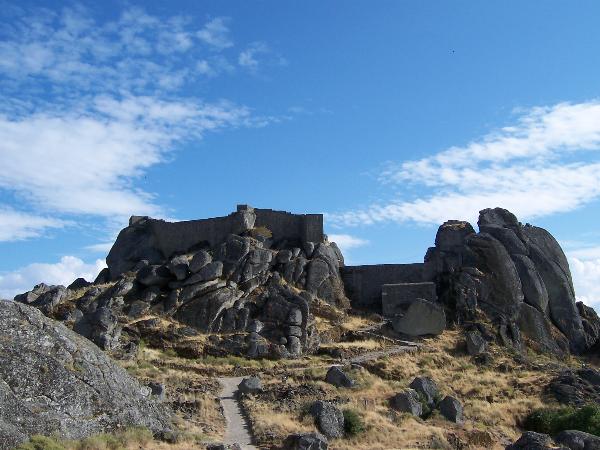 The
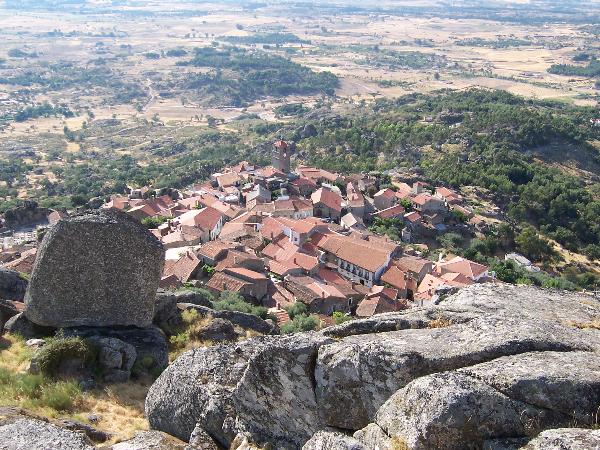
name Monsanto seems to have been derived from the expression
“Monte Santo” – holly mount – which we understand when
observing the place from the plane because the village
stretches along the slope of a hill up to 758 meters high
which after fortified would have been almost unconquerable,
providing a privileged refuge.
The
name Monsanto seems to have been derived from the expression
“Monte Santo” – holly mount – which we understand when
observing the place from the plane because the village
stretches along the slope of a hill up to 758 meters high
which after fortified would have been almost unconquerable,
providing a privileged refuge.
Evidences of human
presence in this hill go back to the Palaeolithic period
demonstrating how valuable was the protection given by altitude and
relative inaccessibility of the terrain.
The original
fortified pre-historic settlement was surrounded and reinforced by
the roman praetor Emílio Paulo in the 2nd century BC.
During the
centuries 5 through 6 AD the settlement was occupied by the
Visigods and later by the Arabs.
After conquering
the settlement to the moors in 1165 D. Afonso Henriques donated it
to the Order of the Temple with the intention of stimulating the
resettlement of the territory. After this donation Gualdim Pais
ordered the construction of the castle in an effort to increase the
natural defensibility provided by the terrain, making it the
strongest bastion near the river Erges border.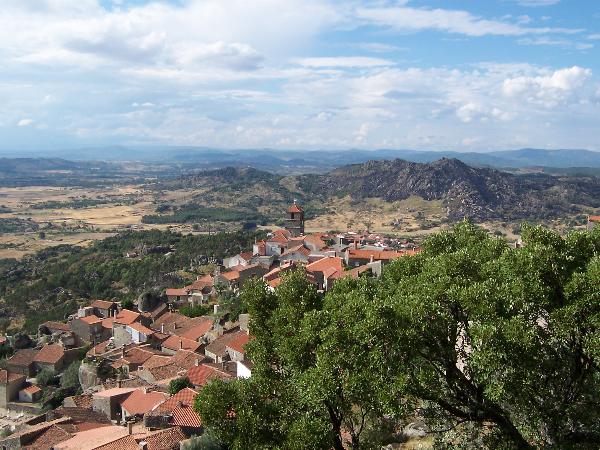
Still during the
reign of D. Afonso Henriques, back in 1172, Monsanto was donated to
the Order of Santiago, later receiving charter by the hand of the
same monarch, in the year of 1174.
The military and
strategic interest of this settlement awoke the interest of several
monarchs namely D. Sancho I and D. Sancho II who renewed the
charter respectively in 1190 and 1217.
In 1510 the
charter of Monsanto was once again renewed, this time by D. Manuel
I, being raised to village and coming to receive the
Pillory.
Since 1948 that
the Castle and the Walls of medieval origin are considered as
National Monument.
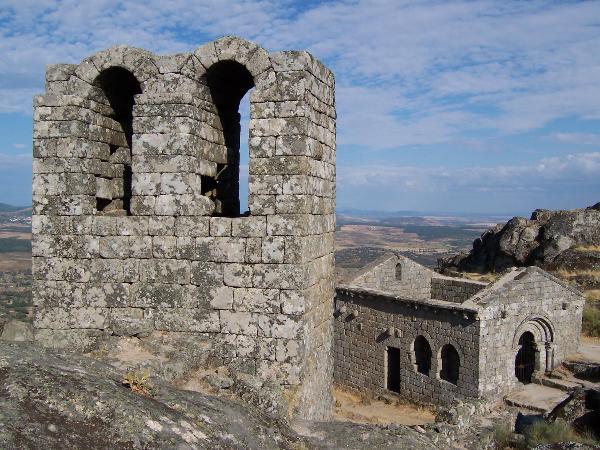
The castle is
presumably from the 13th century having been remodelled during the
14th, 16th and 17th centuries.
During the second
half of the 17th century the structure was adapted to the use of
artillery.
In the 19th
century the castle was partially destroyed by an explosion in the
ammunition storeroom during one Christmas night.
One of the most
emblematic monuments of Monsanto is the Lucano Tower because it
exhibits at the top a replica of the Silver Rooster which was the
symbol granted during a contest that took place in 1938 to the most
Portuguese Village of Portugal.
Points of Interest to
visit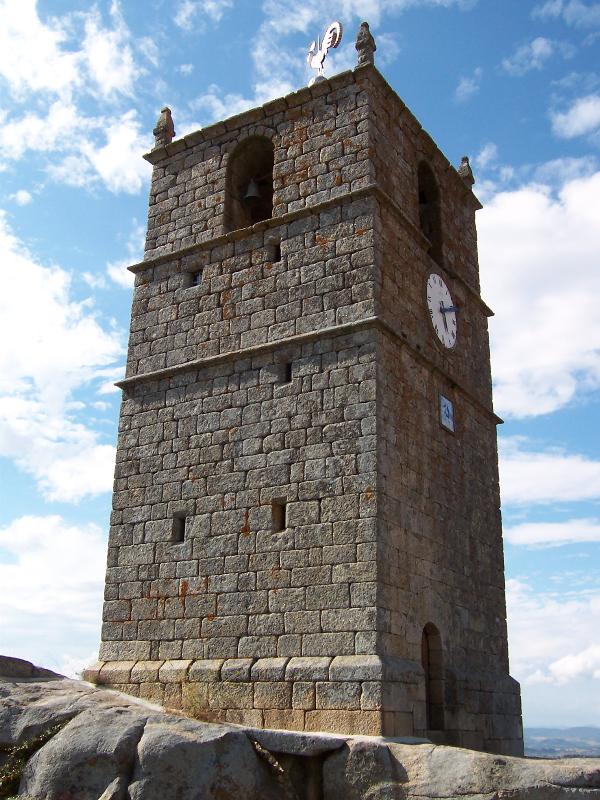
http://www.cm-idanhanova.pt/turismo/monsanto.html
Bibliography
- Carta do Lazer das Aldeias
Históricas, Roteiro de Idanha-a-Velha e Monsanto, Inatel,
2000;
- Website of the city council of
Idanha-a-Nova (http://www.cm-idanhanova.pt);
Original
content of the cache:
- Logbook;
- Pencil and spare
leads;
- Ten stamps - all about Monsanto -
from the collection allusive to the Portuguese Historical Villages
for the first ten geocachers;
- Handicraft items;
- Euro 2004 related
items;
- One flashlight;
- Key rings (mandatory I
guess)
| Terrain
characteristics |
General
precautions |
Special
precautions |
 Panoramic
view Panoramic
view |
 Steep
trails Steep
trails |
 Fire danger -
MAKE NO FIRE AT
ALL! Fire danger -
MAKE NO FIRE AT
ALL! |
 Historic
places Historic
places |
 Over 1 km from parking Over 1 km from parking |
 Cache In
- Trash Out! Cache In
- Trash Out! |
 Pets
allowed Pets
allowed |
 Beware
ticks Beware
ticks |
 Some Climbing
(No specific equipment required) Some Climbing
(No specific equipment required) |
 Available
all year round Available
all year round |
 Insect repellent
is suggested Insect repellent
is suggested |
 Places
accessible during winter Places
accessible during winter |
 Discretion is
suggested Discretion is
suggested |
|
|

Aldeias Históricas Portuguesas
Esta cache é parte de uma série de dez, cada uma delas
destinada a levá-lo a visitar uma Aldeia Histórica
Portuguesa.
Esta é a tabela de links para as caches e para os seus
proprietários:
A
Cache
Esta cache irá levá-lo até Monsanto, uma pequena aldeia na
Beira Baixa, perto da fronteira com Espanha, onde terá a
oportunidade de ver artesanato, construções romanas, arquitectura
tradicional e importantes construções militares portuguesas, além
da flora e da fauna características desta região.
No
caminho até à cache talvez queira parar no cimo do castelo para
desfrutar da vista espectacular enquanto se refresca com o vento
normalmente forte neste local.
O
terreno onde a cache está colocada é consideravelmente perigoso,
sobretudo no inverno. Tenha o máximo cuidado e não corra riscos
desnecessários. Se achar que a sua condição física não é a mais
adequada ou se achar que existe algum outro factor que possa tornar
perigosa a aproximação à cache o melhor será não insistir e voltar
para trás.
A
cache é uma caixa de plástico de tamanho normal tipo tupperware.
Devido ao grau de dificuldade do terreno e para facilitar um pouco
as coisas a cache foi colocada à vista. Poderá vê-la desde uma
distância de quinze metros. Não será necessário procurar em buracos
nem debaixo de pedras ou no meio da vegetação.
Uma vez que toda a zona é um gigantesco aglomerado de
blocos de granito tanto as coordenadas apresentadas como as que
vier a obter no local poderão não estar totalmente correctas. É por
isso aconselhável que imprima e se faça acompanhar da fotografia -
"spoiler" - disponibilizada, a qual foi tirada junto à cache e
poderá ser útil na verificação do local.
MONSANTO
 O topónimo
Monsanto parece derivar da expressão “Monte Santo”,
caracterização que se compreende quando se observa a povoação
desde a planície, uma vez que se espraia na encosta de uma
elevação com 758 metros de altitude, que quando fortificada
seria praticamente inexpugnável, constituindo um ponto de
refúgio privilegiado.
O topónimo
Monsanto parece derivar da expressão “Monte Santo”,
caracterização que se compreende quando se observa a povoação
desde a planície, uma vez que se espraia na encosta de uma
elevação com 758 metros de altitude, que quando fortificada
seria praticamente inexpugnável, constituindo um ponto de
refúgio privilegiado.
Vestígios da presença humana nesta elevação remontam ao
período Paleolítico o que demonstra bem o quão valiosa era a
protecção conferida pela altitude e pela relativa inacessibilidade
do relevo.
O
original povoado fortificado pré-histórico foi cercado e reforçado
pelo Pretor Romano Emílio Paulo no século II a.C.
Nos séculos V-VI a povoação foi ocupada pelos Visigodos e,
posteriormente, pelos Árabes.
Após conquistar a povoação aos mouros, em 1165, D. Afonso
Henriques doou-a à Ordem do Templo, com intenção de fomentar a
repovoação do território. Na sequência desta doação, Gualdim Pais
mandou construir o castelo de forma a aumentar a defensabilidade
natural conferida pelo relevo no local, transformando-o no baluarte
mais “valente” junto à fronteira do rio Erges.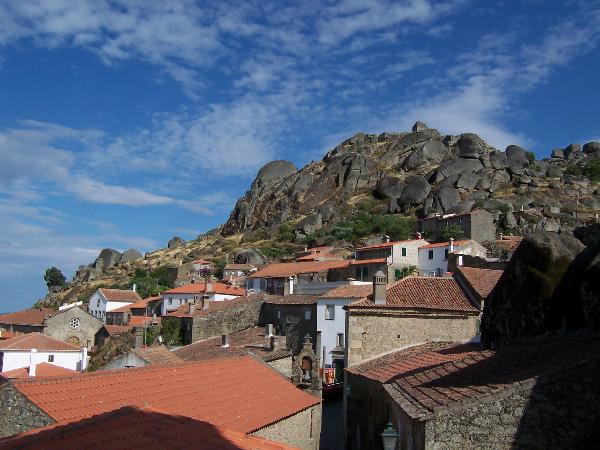
Ainda durante o reinado de D. Afonso Henriques, em 1172,
Monsanto foi doado à Ordem de Santiago, recebendo foral mais tarde,
em 1174, pela mão do mesmo monarca.
O
interesse militar e estratégico desta povoação despertou o
interesse de vários monarcas, nomeadamente D. Sancho I e D. Sancho
II, que lhe renovaram foral em 1190 e 1217,
respectivamente.
Em
1510 o foral de Monsanto foi uma vez mais renovado, desta vez por
D. Manuel I, sendo a povoação elevada a vila e vindo a receber o
Pelourinho.
Desde 1948 que o Castelo e as Muralhas, de origem
medieval, são considerados como Monumento
Nacional.
O
castelo é atribuído ao século XIII, tendo sido remodelado nos
séculos XIV, XVI e XVII.
Na
segunda metade do século XVII a estrutura é adaptada à utilização
de artilharia, com baterias e canhoneiras.
No
século XIX o castelo foi parcialmente destruído por uma explosão no
paiol durante uma noite de Natal.
Um
dos monumentos mais emblemáticos de Monsanto é a Torre de Lucano,
uma vez que ostenta no seu topo uma réplica do Galo de Prata,
símbolo atribuído em concurso, em 1938, à “Aldeia mais portuguesa
de Portugal”.
Pontos de
interesse a visitar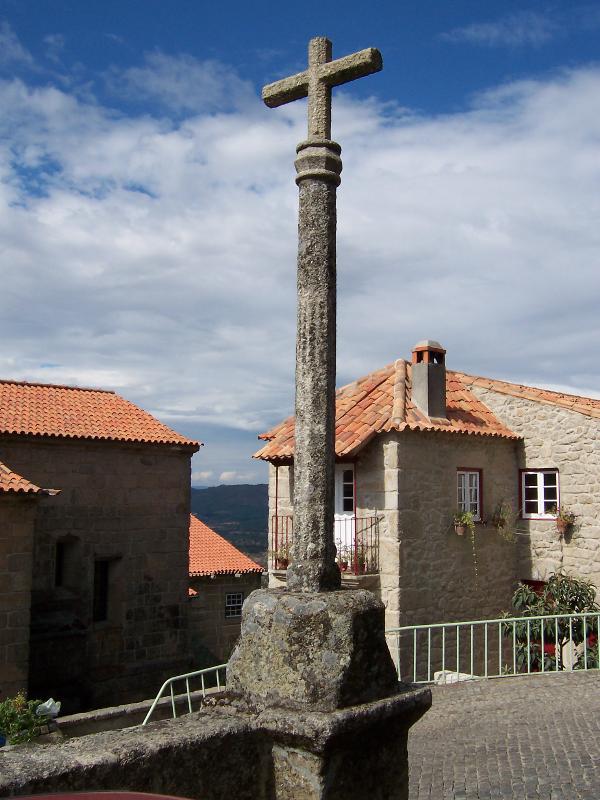
http://www.cm-idanhanova.pt/turismo/monsanto.html
Bibliografia
- Carta do Lazer
das Aldeias Históricas, Roteiro de Idanha-a-Velha e Monsanto,
Inatel, 2000;
- Website da Câmara
Municipal Idanha-a-Nova (http://www.cm-idanhanova.pt);
Conteúdo
original da cache:
- Livro de
registos;
- Lapiseira e minas
de reserva;
- Dez selos - todos
de Monsanto - da colecção alusiva às Aldeias Históricas de Portugal
para os primeiros dez geocachers;
- Artigos de
artesanato;
- Artigos
relacionados com o Euro 2004;
- Uma
lanterna;
- Alguns porta
chaves (de praxe!)
| Características do
terreno |
Precauções
gerais |
Precauções
especiais |
| Vista
panorâmica |
Caminhos
íngremes |
Perigo
de incêndio - NÃO FAÇA
FOGO! |
| Locais
históricos |
Mais de 1 km desde os
estacionamentos |
Cache In
- Trash Out! |
| Animais de
estimação permitidos |
Cuidado com
parasitas |
Alguma
escalada (Não é necessário equipamento
específico) |
| Disponível durante todo
o ano |
Sugere-se o uso
de repelente de insectos |
| Locais acessíveis no
Inverno |
Sugere-se
discrição |
|
|

Click To Rate This
Cache
Flags by 3D Flags