[Ita]
Questo luogo pretende rispetto.
Come registrare questa cache.
La cache dovrà essere registrata come foste un comune visitatore. Alle coordinate troverete un'edicola, entrate. Di fronte a voi c'è un tabernacolo con all'interno il libro per le firme a ricordo della visita.
Informazioni sul luogo
Sono qui raccolti i combattenti delle due guerre mondiali, appartenuti alle truppe Commonwealth in Italia. Fu Rudyard Kipling a decidere come realizzare il sito, che si trova su un’area originariamente attraversata dal fiume Lamone, donata dallo Stato Italiano al Commonwealth, che ne cura le opere di manutenzione e giardinaggio.
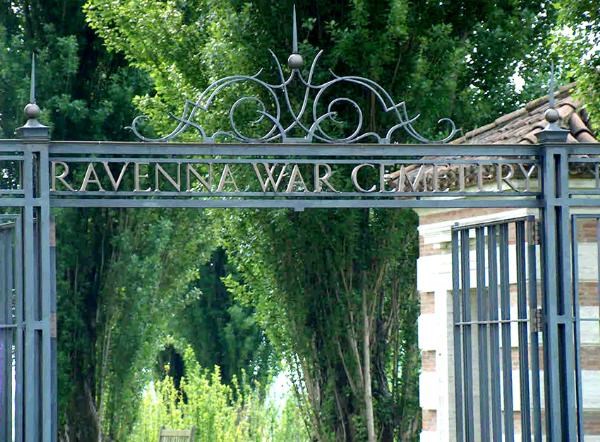
Le piante sono semplici ma ben curate; di tanto in tanto vengono sostituite in toto, per questo motivo la cache è stata modificata. Il viale di accesso, lungo 200 metri circa, con un bel prato all’inglese, è delimitato da arbusti di ibiscus e termina con una cancellata in ferro battuto in stile Liberty, piuttosto elegante, che consente l’accesso all’area. Il sito è aperto tutti i giorni, dalla mattina al tramonto.
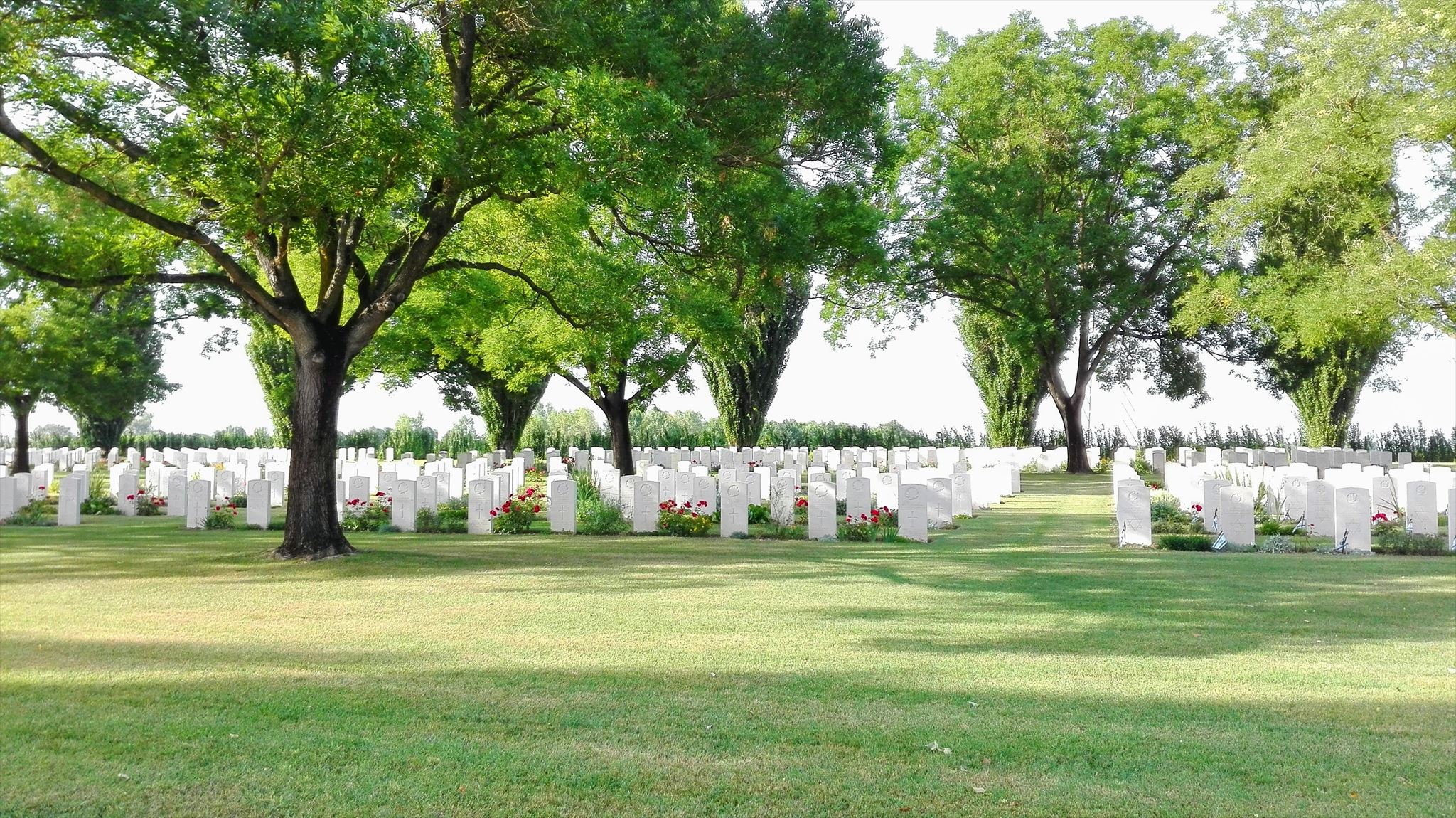
In sede di inaugurazione noti architetti e scultori inglesi dell’epoca definirono le forme standard degli apparati e i giardinieri reali del Kew Gardens fornirono indicazioni per la disposizione delle piante. L’ambiente è ordinato e l’atmosfera è di pace. Qui sono raccolti i caduti parlanti lingua inglese delle due guerre mondiali, uomini giovani soprattutto, di nazionalità, etnie e religioni diverse. Grande rispetto viene riservato alle differenze: le lapidi dei musulmani sono orientate verso La Mecca. mentre sulle lapidi degli ebrei si trova una pietra, come da tradizione. Nessun carattere distintivo per le singole lapidi, che sono tutte bianche e della medesima dimensione. Altre piante presenti sono : aceri, lauri, cotoneaster, lagerstroemia, sophora e populus niger.
[Eng]
This place demands respect.
How to register this cache.
The cache must be registered as if you were a common visitor. At the coordinates you will find a aedicule, revenue. In front of you there is a tabernacle with the book for the signatures in memory of the visit.
Location Information
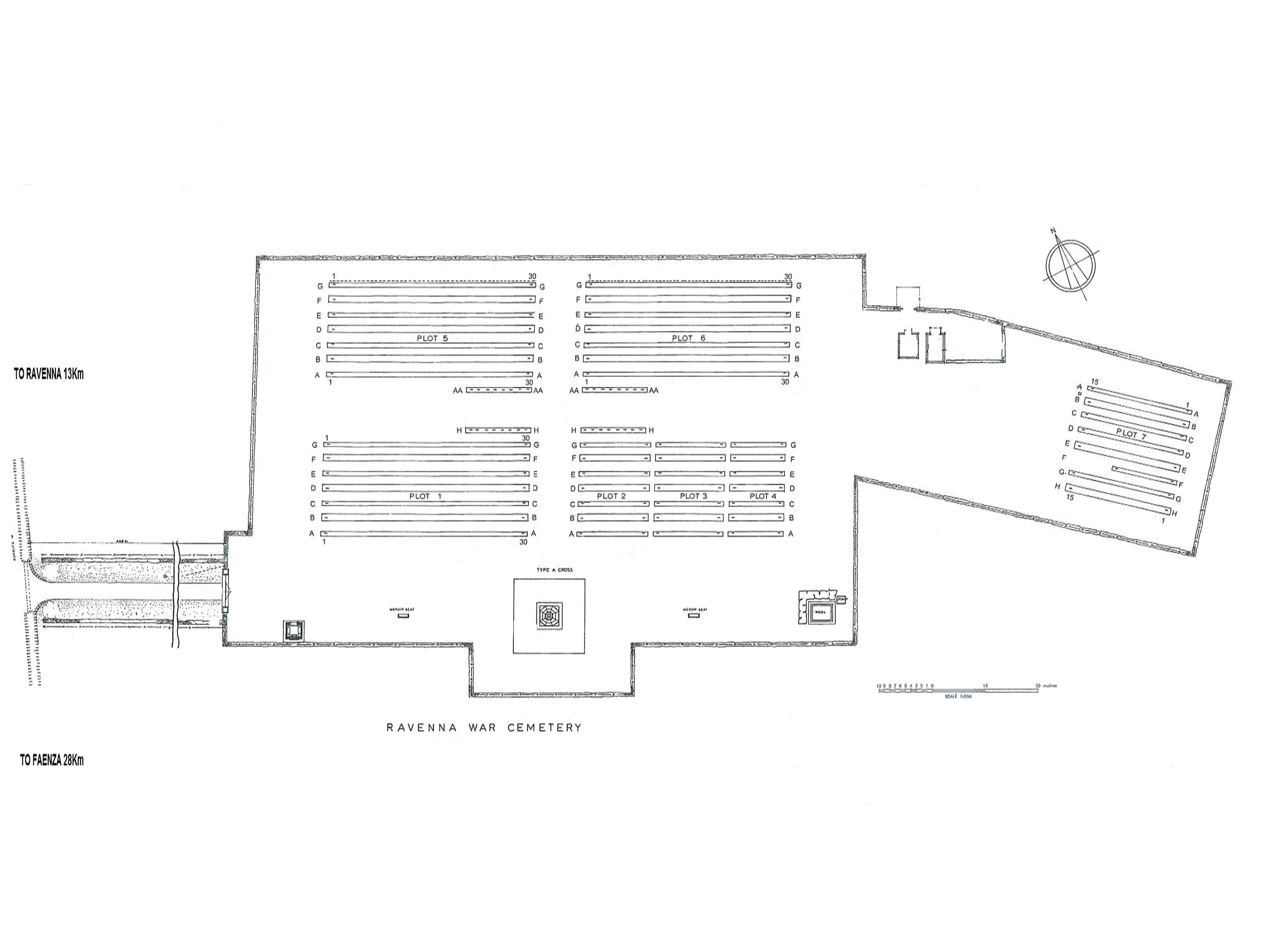
The War Cemetery lies on a communal road 1 kilometre south of the SS16 from Ravenna to Ferrara near the village of Piangipane in the Commune and Province of Ravenna. The turning from the main road is at the 143 kilometres stone, 12 kilometres west of Ravenna. The turning is marked with a CWGC sign pointing in the direction of the cemetery, and a road sign marked 'Piangipane 4 kilometres'. Continue along the minor road until a further CWGC sign is seen. The entrance to the cemetery is located on the left hand side of the road. The nearest train station to the cemetery is Mezzano but there is no taxi service available from there. There is however, a taxi service from Ravenna train station. Cemetery address: Via Piangipane 24B - 48100 Piangipane (RA) Emilia Romagna. GPS Co-ordinates: Latitude: 44.441525, Longitude: 12.107673.
Visiting Information
The cemetery is permanently open and may be visited anytime. Wheelchair access to the cemetery is possible via the main entrance from sunrise to sunset.
History Information
On 3 September 1943 the Allies invaded the Italian mainland, the invasion coinciding with an armistice made with the Italians who then re-entered the war on the Allied side. Following the fall of Rome to the Allies in June 1944, the German retreat became ordered and successive stands were made on a series of defensive lines. In the northern Appenine mountains the last of these, the Gothic Line, was breached by the Allies during the Autumn campaign and the front inched forward as far as Ravenna in the Adratic sector, but with divisions transferred to support the new offensive in France, and the Germans dug in to a number of key defensive positions, the advance stalled as winter set in. Ravenna was taken by the Canadian Corps at the beginning of December 1944, and the burials in the cemetery there reflect the fighting for the Senio line and the period of relative quiet during the first three months of 1945. Many of the men buried there were Canadians; one of the last tasks of the Canadian Corps before being moved to north-west Europe was the clearing of the area between Ravenna and the Comacchio lagoon. Others are Indians from the 10th Indian Division, and New Zealanders. The site for the cemetery was selected by the Army in 1945 for burials from the surrounding battlefields. Ravenna War Cemetery contains 955 Commonwealth burials of the Second World War, 63 of them unidentified. There are also 33 First World War burials, 30 of them brought in from Gradisca Communal Cemetery in 1973, the others from communal cemeteries at Arzigano, Fano and Monterosso al Mare. Among those buried in the cemetery are 33 men of the Jewish Infantry Brigade Group which was formed in September 1944, chiefly by volunteers from Palestine; the burials at Ravenna form the largest concentration of casualties from the Brigade. There is 1 Merchant Seaman whose death is not attributable to war service and 1 French burial.
Fonti:
http://www.livingromagna.com/service/la-citta-del-silenzio-a-piangipane-ravenna/
https://www.cwgc.org/find-a-cemetery/cemetery/70505/Ravenna%20War%20Cemetery