Vore Buffalo Jump EarthCache
This cache has been locked, but it is available for viewing.
-
Difficulty:
-

-
Terrain:
-

Size:  (not chosen)
Please note Use of geocaching.com services is subject to the terms and conditions
in our disclaimer.
The Vore Buffalo Jump is one of the most important archaeological
sites of the Late-Prehistoric Plains Indians. Discovered during the
construction of Highway I-90 in the early 1970’s, the Vore site is
a natural sinkhole that was used as a bison trap from about 1500 to
1800 A.D. Buffalo were driven over the edge of the sink hole as a
method for the Native American tribes to procure the large
quantities of meat and hides needed to survive the harsh prairie
winters.
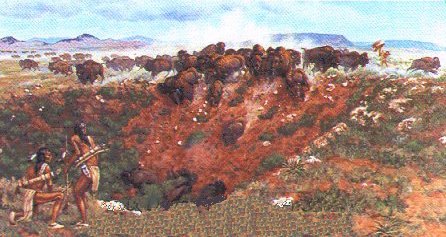
One of the world's premier archeological sites is located at the
edge of the northern Black Hills in Wyoming. For over three hundred
years, Plains Indian groups stampeded bison over the rim and into a
deep natural "sink hole" at the site which is now called the Vore
Buffalo Jump. It was one of the most effective means available to
the Indians to procure the buffalo which were their primary food
and the source of many other materials used in their cultures. It
is believed that up to 20,000 of the shaggy bison were trapped at
this one location. While there were undoubtedly many buffalo jumps
scattered throughout the Plains, the Vore site has several unique
properties.
 An exploratory excavation was completed at the site in the 1970's
during the construction of Interstate Highway 90. Less than 10% of
the site was unearthed at that time, but the analysis revealed at
least 20 bone layers which extend about 100 feet across the sink
hole and nearly 25 feet down.The bison bones and the many stone
artifacts abandoned at the site were buried quickly, but gently,
with thin layers of sediment. As a result, materials which would
normally decompose or erode away are still intact at the Vore site.
The quality of the preservation at this buffalo jump is unmatched.
An exploratory excavation was completed at the site in the 1970's
during the construction of Interstate Highway 90. Less than 10% of
the site was unearthed at that time, but the analysis revealed at
least 20 bone layers which extend about 100 feet across the sink
hole and nearly 25 feet down.The bison bones and the many stone
artifacts abandoned at the site were buried quickly, but gently,
with thin layers of sediment. As a result, materials which would
normally decompose or erode away are still intact at the Vore site.
The quality of the preservation at this buffalo jump is unmatched.
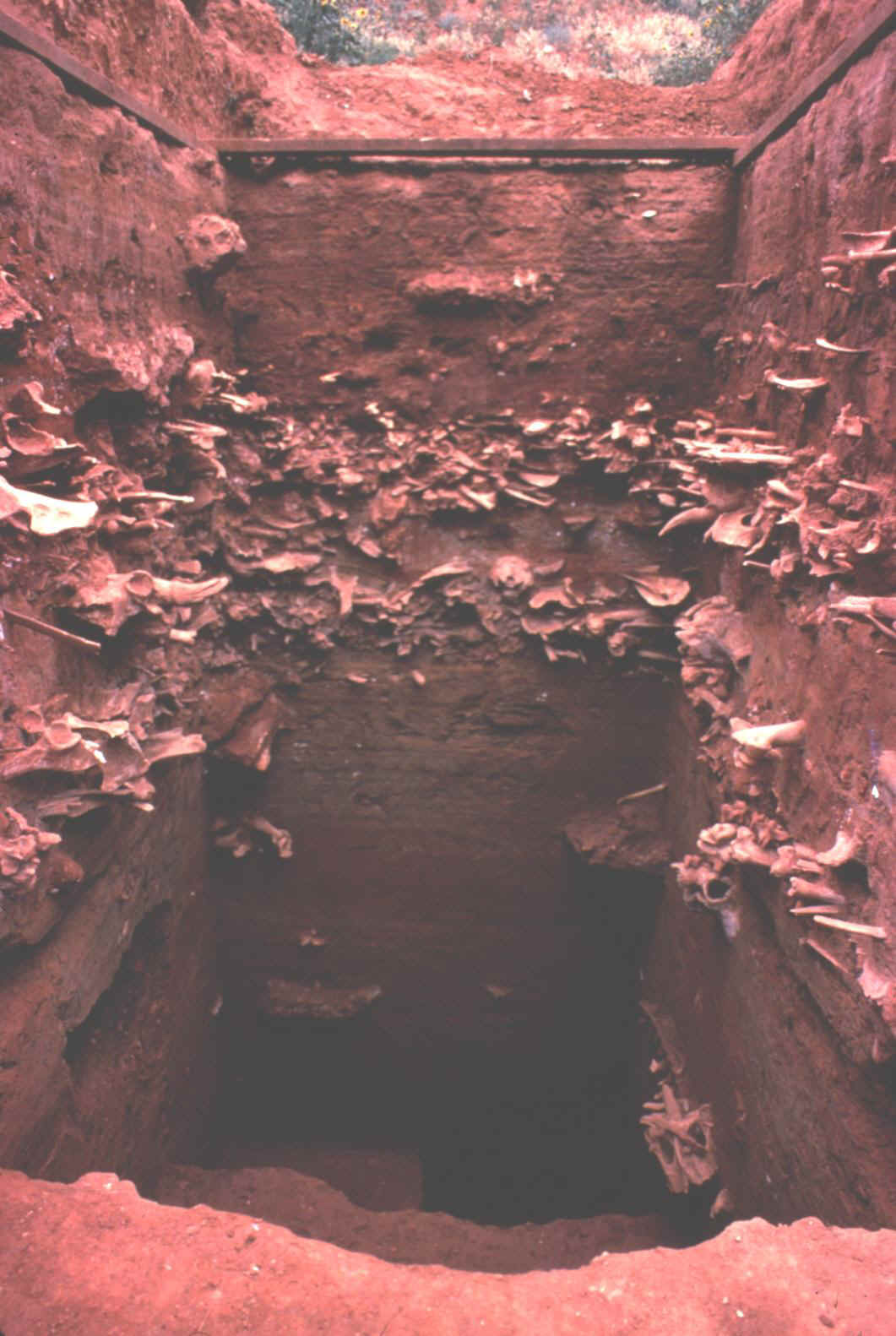
Events at the Vore Site can be dated with precision that is
unprecedented among archeological excavations. For example, the
annual layers of sediment, called varves, that washed into the sink
hole can be counted much like tree rings. When combined with other
dating techniques, these varves allow scientists to estimate the
dates of "jumps" at the site with amazing accuracy. The varves also
give excellent evidence about weather cycles, ecological change,
and other factors of interest.
This period of use at the Vore site corresponds with the rapid
development and climax of the Plains Indians' cultures as
free-roaming buffalo hunters. The various tribes were trading,
inter-marrying, exchanging ideas and warring. Their customs and
technologies were evolving swiftly. A number of different Native
American tribes ... perhaps the Cheyenne, Kiowa, Kiowa-Apache and
possibly the Lakota ... are believed to have used this
exceptionally productive "buffalo jump." Excavations at the Vore
site will help develop a more complete account of these proud
Native Americans who have captured the imaginations of the world.
The Vore Buffalo Jump is a natural sinkhole. Sinkholes are common
where the rock below the land surface is limestone, carbonate rock,
salt beds, or rocks that can naturally be dissolved by ground water
circulating through them. As the rock dissolves, spaces and caverns
develop underground. Sinkholes are dramatic because the land
usually stays intact for a while until the underground spaces just
get too big. If there is not enough support for the land above the
spaces then a sudden collapse of the land surface can occur. These
collapses can be small, or they can be huge lke the Vore Buffalo
Jump.
Do not log as a find until you have a picture ready to post. To get
credit for this find post a picture of yourself with the Vore
Buffalo Jump sink hole in the background (logs with no picture will
be deleted without notice) and answer the following questions.
1. How wide is the Vore Buffalo Jump sink hole?
2. How deep is the VBJ sink hole?

Logs with no photo of the actual EarthCacher/Geocacher (face
must be included) logging the find or failure to answer questions
will result in a log deletion. Exceptions will be considered if you
contact me first (I realize sometimes we forget our cameras or the
batteries die). Logs with no photos will be deleted without notice.
I have used sources available to me by using google search to get
information for this earth cache. I am by no means a geologist. I
use books, internet, and asking questions about geology just like
99.9 percent of the geocachers who create these great Earth Caches.
I enjoy Earth Caches and want people to get out and see what I see
everytime I go and explore this great place we live in.
Additional Hints
(No hints available.)
Treasures
You'll collect a digital Treasure from one of these collections when you find and log this geocache:

Loading Treasures