NOTE: This is an Earthcache, there is no physical container to find at the coordinates. To get your smiley for the cache you will need to e-mail your answers to the questions below to the cache owner.
Rip currents can occur sometimes in Florida.
What is a rip current?
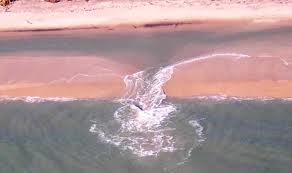
Rip currents (sometimes referred to as a rip) are rapidly moving currents that flow at right angles to the shoreline carrying water away from the shore. Although they may be referred to as rip tides, they are not directly related to tides.
When strong winds blow toward the shore, waves are formed that move large amounts of water up towards the beach. Most rip currents form after water becomes trapped on the beach side of sand bars. Sand bars are low natural ridges of sand that are formed under the water. They lie close to the shore and run parallel to the beach. At times, the pressure of the water against the sand bar may cut a narrow notch, or channel, through it. The resultant channel through the sand bar is usually no more than 20 yards wide and water will rush back out to sea through it. That rapidly moving water is called a rip current.
Rip current speeds
“Rip current speeds are typically 1-2 feet per second. However, speeds as high as 8 feet per second have been measured--this is faster than an Olympic swimmer can sprint! Thus, rip currents can sweep even the strongest swimmer out to sea.” -NOAA weather service
Wave size and rip currents
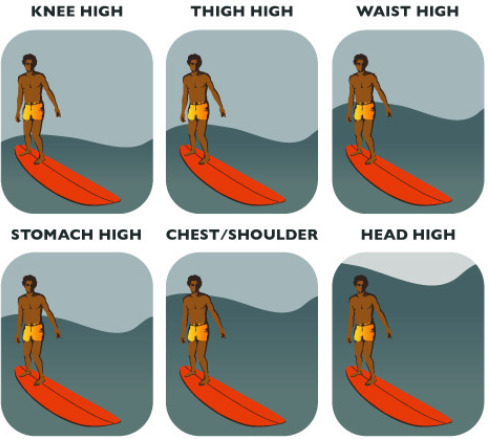
Water is heavy, and it takes a lot of energy to get it moving. Once water is in movement it can carry huge amount of force. Larger waves move faster than smaller waves. Rip currents are created when the surf moves large volumes of water onto the beach. In other words, when waves are larger there is more of a chance of a rip current. One way waves can be classified is small, medium, and large.
Wave Classification Guide:
Small waves=knee high
Medium waves=waist high
Large waves=head high
How to identify a rip current
•Darker water, indicating deeper water or a channel
•A spot of different color water than the water near it
•Murky brown water caused by sand stirred up by faster moving water
•A choppy or rippled look, when the water around is generally calm
•Foam or debris floating out to sea
Now it’s time for the application part of the cache. When answering the questions do your best. It is more important that you learn a new concept about our earth and can apply your knowledge, rather than have a precise answer.
Questions:
1-What is the time of day of your visit and which way is the wind blowing?
2-Looking at sandbar in the ocean, can you see signs of a rip current? What are they?
3-If someone was standing in the middle of the sand bar, using the Wave Classification Guide above, how high would you say the waves are (small, medium, or large)?
4-Using the information above and your answers to the previous questions, on a scale of 1-5 (1 = not dangerous and 5 = very dangerous) what is the danger of being caught in a rip current today?
Thank you for visiting this earthcache. Please send your answers to the above questions to the cache owner, once you have feel free to log it. In your "found it" log feel free to write about your experience, but don't include the earthcache answers. Thanks and we hope you enjoy the beautiful beach!
CONGRATULATIONS TO GREENFORADAY FTF!!!