Mr. Lincoln’s Railroad – “AND THE WAR CAME” Traditional Cache
Mr. Lincoln’s Railroad – “AND THE WAR CAME”
-
Difficulty:
-

-
Terrain:
-

Size:  (small)
Please note Use of geocaching.com services is subject to the terms and conditions
in our disclaimer.
This cache is hidden in parking lot of the B & O museum, which houses the largest assemblage of antique railroad equipment in the world. (Monday - Saturday, 10 a.m. - 4 p.m. Sunday, 11 a.m. - 4 p.m. CLOSED on the following holidays: Easter Sunday, Memorial Day, Independence Day, Labor Day, Thanksgiving, Christmas Eve, Christmas Day, and New Year's Day.) No charge for parking and viewing the rolling stock in the lot. Please don't climb on the trains.
"Both parties deprecated war, but one of them would make war rather than let the nation survive, and the other would accept war rather than let it perish, AND THE WAR CAME." Abraham Lincoln, 2nd Inaugural Address, March 4, 1865.

Cannons, generals and soldiers were unquestionably critical components of the Union war effort, but another piece of the puzzle was the Yankees' ability to use railroads to quickly move everything from hardtack to siege artillery to points where they were needed most. One iron highway in particular, the Baltimore & Ohio Railroad, helped determine the course of the war by allowing the North to shuttle men to and from the Western and Eastern theaters and by bringing foodstuffs grown in the Midwest to Federal armies in the East.
Another very important part of the railroad was its accompanying telegraph lines that followed the tracks, relaying news and battle plans at lighting fast speeds to and from troops in the field and their Commander in Chief in Washington. The Civil War was the first major conflict where railroads played a prominent role, and the B&O was the only major line that straddled a divided country. Between April 19, 1861 (The Baltimore Riot of 1861) and April 21, 1865 (Lincoln’s funeral train leaving Baltimore for Illinois), the B&O stood as witness and participant in the greatest conflict the United States has ever faced.
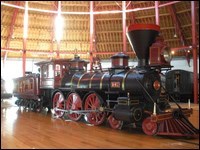
At the beginning of the Civil War, the North and South each claimed the railroad. The B&O presented two equally important problems to the Union and the Confederacy. Confederate President Jefferson Davis and the Confederacy needed to maintain possession of the rail line's tracks in northwestern Virginia to prevent the capture of strategically important Harpers Ferry. Meanwhile, the North was anxious to keep the Confederates from commanding a single mile of track on the most important northern railroad extending west of the Appalachian Mountains.
Baltimore & Ohio President John Garrett, a Virginian by birth, made no secret of his affinity for the South and often referred to Confederate leaders as his 'Southern friends.' When Union Maj. Gen. Benjamin Butler arrested Confederate supporters during his occupation of Baltimore in the first days of the war, executives who used the B&O to transport goods realized their commercial and financial ties lay with the North. Additionally, Baltimore's north-central location physically precluded the B&O from supporting the Confederacy. So when President Abraham Lincoln and the Northern states called, John Garrett answered with his full support. The B&O stayed with the Union.
Throughout the war there were numerous battles that determined the railroad’s fate (including Harpers Ferry, Monocacy, and Antietam) and the B & O railroad helped determine the fates of those battles.
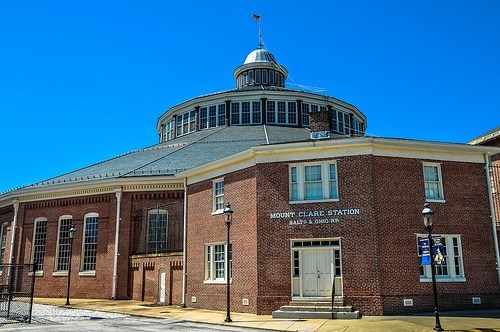
The roundhouse museum is considered to be the birthplace of American railroading, as it the site of the first regular railroad passenger service in the U.S., beginning on May 22, 1830. Inside the museum are eight locomotives and cars that served during the war and a gallery with Civil War artifacts from the Smithsonian Collection are on display. You can also take interpretive train rides from the museum or watch civil war reenactments held in the nearby Carroll Park throughout the year. It was also from this site of the first telegraph message, “What hath God wrought?” was sent on May 24, 1844, to Washington D.C. using Samuel F. B. Morse’s invention. Additionally, the museum houses a very nice collection of antique railroad clocks.
Additional Hints
(Decrypt)
Serrqbz Genva - Yrsg Pbeare Haqre-pneevntr.
Treasures
You'll collect a digital Treasure from one of these collections when you find and log this geocache:

Loading Treasures