The Maya had many more than a hundred Gods. Acan is one of the names given for the God of Intoxication. Acan is often mistakenly called the God of wine. However, the Maya had no wine grapes until after the Spaniards arrived with a taste for wine and brought those plants to Central America. Ethnobotony focuses on the indiginous plants and how the people used them.
All cultures seem to figure out how to make elixers and foods from the plants that will alter the consciousness. The Maya made an elixir using their available ingredients called balche.’ It was fermented, but it sure didn't taste like beer.
Balche’ was more than simply alcoholic; it had other “medicinal” properties. The honey that was used was unique to the bees in that area, producing a hallucinogenic kick. Was that their goal when they first combined ingredients in a canoe and found it bubbled and later made them feel very odd?
The Maya were serious beekeepers. Ah-Muzen-Cab was the bee god:


A specific subspecies of stingless bees were treated as sacred. The Maya called these bees Xunan kab, literally meaning "royal lady". Hives would be kept by families for generations, like pets. These nearly extinct bees would gather nectar from the pollen of a local plant and a local tree which contained ergoline compounds that produced psychotropic effect to the resulting balche’ elixir.
It is not clear whether balche’ was frequently consumed, or whether it was available to the common man [maybe with a medical use card.] It was used by the leaders in both healing and religious ceremonies.
Balche’ was used ceremonially, to prepare individuals for certain religious rites and indeed to bestow god-like powers on the drinker. Trances induced by the elixer would provide a glimpse into a sacred, invisible world.
Later, when the Maya were dominated by the Spaniards, anise was added to change the flavor and other ingredients were added to make a different, still hallucinogenic intoxicant known as xtabentún. It and balche’ are not related to pulque, mezcal and tequila that are distilled.
Balché' is still used by the Maya in Yucatán as an offering in planting ceremonies and to ward off trickster spirits who might try to damage field crops.
Other indigenous ingredients for Maya "happy hour" included a tobacco plant more powerful than present varieties, mushrooms called "k'aizalah okox" [the "lost judgment mushroom"], peyote and seeds from the morning glory (later used as an ingredient in xtabentún), and bufo marinus, a large tropical frog.
The Spanish reported the Maya added tobacco or toad skins to their alcoholic beverages. Apparently, glands in the frog skin are a powerful alkaloid compound that is poisonous in large quantities, but small amounts gave their balche' an extra kick. Balche' wasn't just a beverage. The Maya used an enema apparatus to introduce the alcoholic or hallucinogenic substances into the colon for faster and more potent effect.
Odd, isn't it, how little has changed since their time to the present? Maybe we are ready for a new era. Now that you know something about balche’ and its role in Maya culture, it’s time to use that knowledge to obtain cache coordinates.
Convert this plant that is indiginous to the Maya territory into a number:
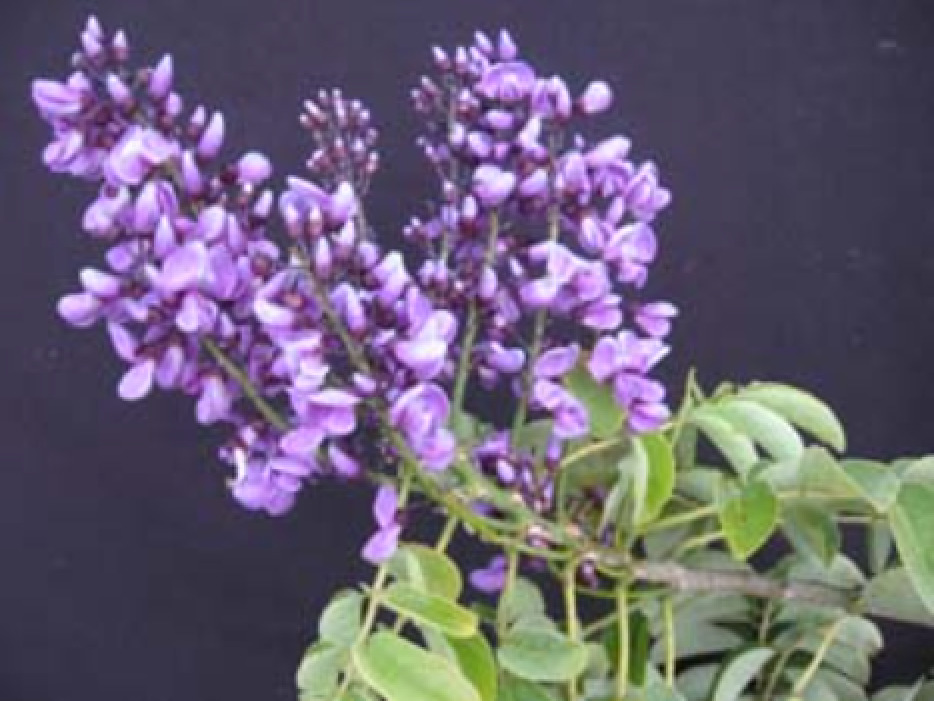
That number is A is in the math formula below. [Checksum for A is 9].
146 * A = B; B +  = C
= C
C/1000 = X [latitude w/3 decimal places]
Convert this plant that is indiginous to the Maya territory into a number:

That number is D in the math formula below. [Checksum for D is 16].
20 * D = E; E +  = F
= F
F/1000 = Y [longitude w/3 decimal places]
The cache is hidden at these coordinates:
N 47° X W 122° Y
Cache search instructions provided at GeoCheck:

Congratulations for FTF go to DrTusk and Shaddow who solved the puzzle before the hints were added.
Remember to write down the Maya number symbols found in the log book, or on the lid, that is needed to determine the coordinates of the final cache of this series. After conversion, ten are labeled N and are each a four-digit number. Ten are labeled W and are each a three-digit number. The final cache of this series, A New Era, provides the final numbers and instructions how to add to the prior twenty to determine its coordinates.