Bentonite Mine EarthCache
-
Difficulty:
-

-
Terrain:
-
Size:  (other)
Please note Use of geocaching.com services is subject to the terms and conditions
in our disclaimer.
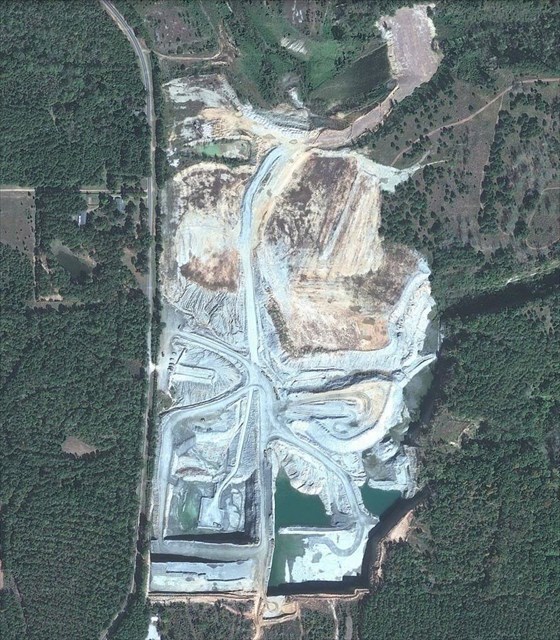
The posted coordinates will take you to a bentonite mine on Darrcott Rd. in Monroe County, Mississippi. The mine covers a large area (as you can see in the map below), and access into the mine is not permitted. DO NOT ATTEMPT TO CROSS THE FENCE. All the question can be answered from the posted coordinates.
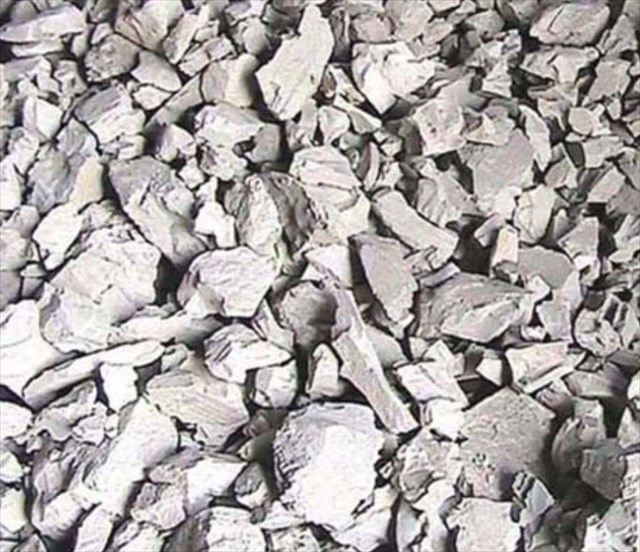
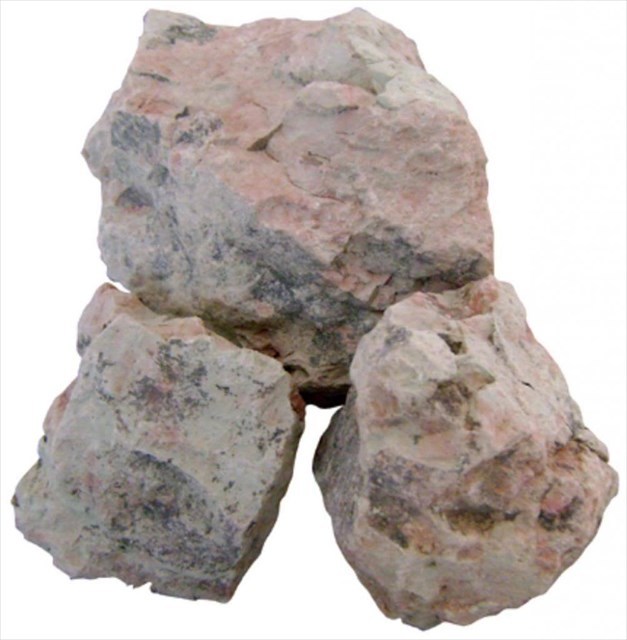
Bentonite is clay formed by the alteration of minute glass particles derived from volcanic ash. It was named for Fort Benton, MT, near which it was discovered.
The formation of bentonite involves the alteration of volcanic glass to clay minerals; this requires hydration (taking up or combination with water) and a loss of alkalies, bases, and possibly silica, with the preservation of the textures of the original volcanic glass. Bentonite consists chiefly of crystalline clay minerals belonging to the smectite group, which are hydrous aluminum silicates containing iron and magnesium as well as either sodium or calcium. Two types of bentonite are recognized, and the uses of each depend on specific physical properties.
Sodium bentonites absorb large quantities of water, swelling to many times their original volume, and give rise to permanent suspensions of gellike masses. These have been used to seal dams; in bonding foundry sands, asbestos, and mineral wool; as drilling muds; in portland cements and concrete, ceramics, emulsions, insecticides, soaps, pharmaceuticals, and paints; in the manufacture of paper; for clarifying water, juices, and liquors; and as a water softener to remove calcium from hard water. Calcium bentonites are nonswelling and break down to a finely granular aggregate that is widely used as an absorbent clay sometimes called fuller’s earth.
Bentonite occurs in rocks that were deposited in the Ordovician to Neogene periods (about 488.3 to 2.6 million years ago). In the United States the principal producers are Wyoming, Montana, California, Arizona, and Colorado. Important world producers are Greece, Japan, Italy, Brazil, Romania, Germany, Mexico, Argentina, Spain, India, Hungary, Poland, Canada, Turkey, and Cyprus.
Bentonite can be used for health benefits. Bentonite is a clay that is available in supplement form. The primary ingredient in bentonite is hydrated aluminum silicate. Other constituents in bentonite include calcium, magnesium, and iron (the composition varies according to the geographical location in which it is found).
Once in the body, bentonite easily absorbs water. It remains in the digestive tract and is believed to bind and inactivate toxins and promote their excretion.
To get credit for this Earthcache, all you have to do is answer the following five questions and send them to me in an e-mail through my profile page. Also, post a picture of you (or your group) when you log your cache. The photograph is not required.
Here are your questions:
1. How many distinct colors do you see in the carved out earth on the far side of the mine?
2. Calcium bentonite is sometimes called what?
3. After bentonite is taken into the body and remains in the digestive tract, what is it believed to do?
4. What are the two recognized types of bentonite?
5. Looking at the carved out earth on the far side of the mine, what color would you think is the bentonite, and how far below the surface was it?
Sources: Britannica and WebMD
Additional Hints
(No hints available.)
Treasures
You'll collect a digital Treasure from one of these collections when you find and log this geocache:

Loading Treasures