If you dare head to the listed coords on a moonlit night, you may wish to load up those silver bullets bullets. While you certainly won't find this cache, you might cross paths with a werewolf.
The first accounts of the werewolf's vulnerability to the silver bullet dates back to the Beast of Gévaudan, a man-eating beast who roamed the mountains in south-central France between 1764 and 1770. The victim list was estimated to of been 210 attacks; resulting in 113 deaths and 49 injuries; 98 of the victims killed were partly eaten... yuck!

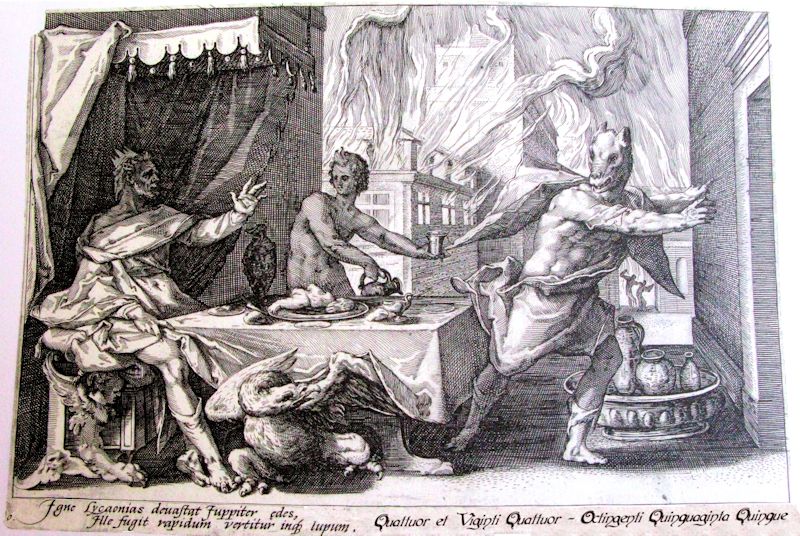
The stories of werewolves date much further back including Lycaon, who as punishment by Zeus, was transformed into a wolf because he had ritually murdered a child.
Silver bullets differ from lead bullets in several respects. Lead has a 10% higher density than silver so a silver bullet will have a little less mass than a lead bullet of identical dimensions. Pure silver is less malleable than lead and falls between lead and copper in terms of hardness (2.5 Mohs) and shear modulus (30 GPa). As a result, a silver bullet would have no difficulty accepting the rifling of a gun barrel as both lead and copper are common bullet materials. Science lesson for today.

Believe it or not there was no widespread belief in werewolves in medieval Europe before the 14th century. Werewolvery was a common accusation in witch trials throughout their history. A teenage werewolf was sentenced to life imprisonment in Bordeaux in 1603, not quite the happy ending we associate with a teenage werewolf.

Some modern researchers have tried to explain the reports of werewolf behavior with recognized medical conditions. It was argued that historical accounts on werewolves could have in fact been referring to victims of congenital porphyria, stating how the symptoms of photosensitivity, reddish teeth and psychosis could have been grounds for accusing a sufferer of being a werewolf

Werewolves were said in European folklore to bear tell-tale physical traits even in their human form. These included the meeting of both eyebrows at the bridge of the nose, curved fingernails, low-set ears and a swinging stride. One method of identifying a werewolf in its human form was to cut the flesh of the accused, under the pretense that fur would be seen within the wound.

In medieval Europe, traditionally, there are three methods one can use to cure a victim of werewolfism; medicinally (usually via the use of wolfsbane), surgically or by exorcism. However, many of the cures advocated by medieval medical practitioners proved fatal to the patients. So keep that in mind before you accuse that somewhat weird person in your office of being a werewolf.

Most modern fiction describes werewolves as vulnerable to silver weapons and highly resistant to other injuries. This feature does not appear in stories about werewolves before the 20th century. So now that's you're all schooled on werewolves and silver bullets, it's time you loaded up, headed out, and attempted to conquer the legend of the silver bullet.
iMPG
You can check your answers for this puzzle on GeoChecker.com.