
So what are fossils?
A fossil is the preserved remains or trace of a plant or animal from the past. That's the simple answer to "what is a fossil?" Plants can be preserved with a carbon film on a piece of shale, an animal bone can be naturally replaced by minerals and preserved, or a footprint in the sand can harden into a fossil.
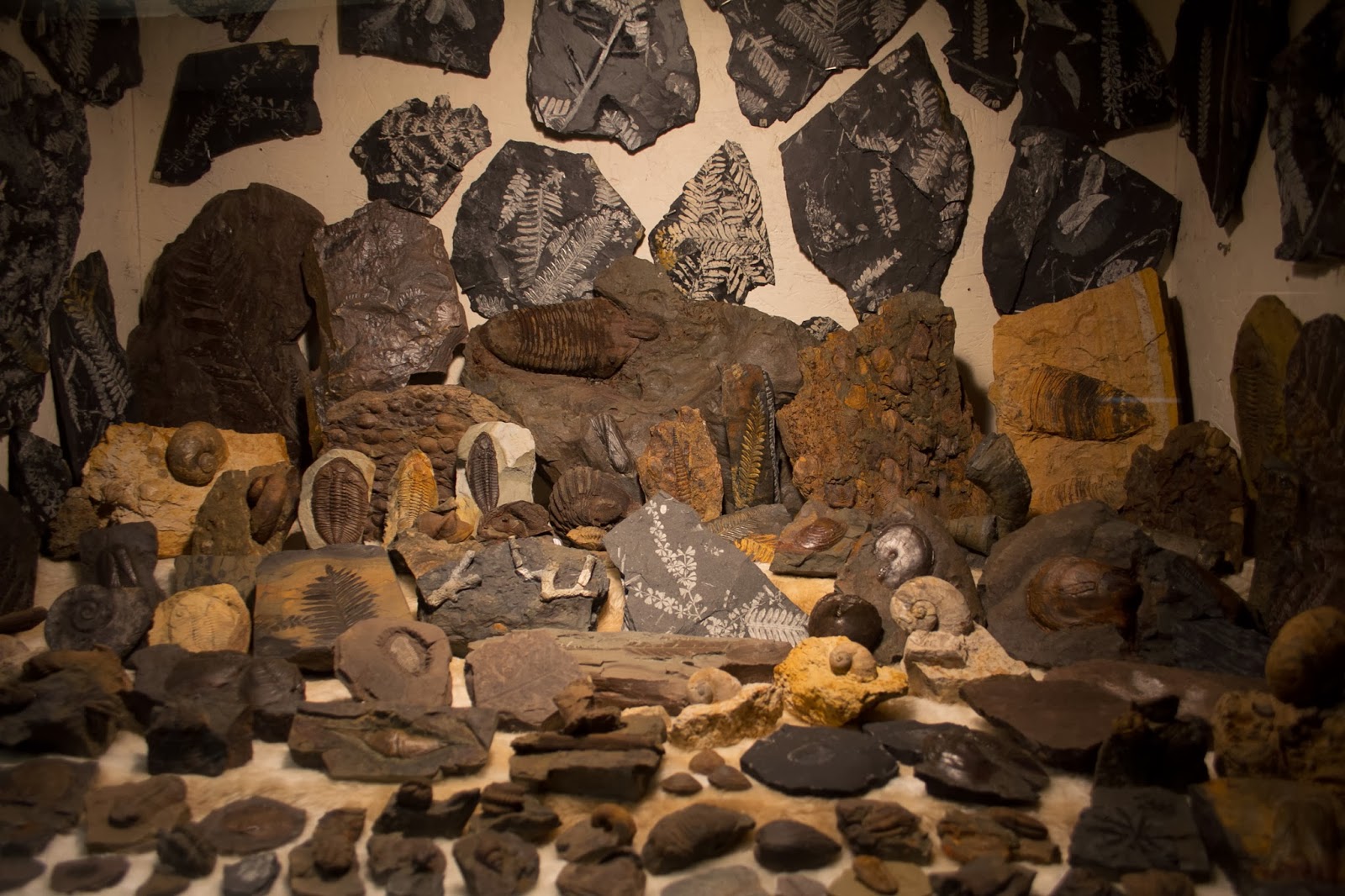
Now that we know the definition of a fossil how do they form?
Fossils usually only form in sedimentary rock. Sediments have to accumulate over the organism in order to preserve it. This could be a rapid burial, such as a volcanic eruption or mudslide, it could be sap from a tree oozing over an insect, or simply a slow sediment accumulation on the bottom of a lake.
Most fossils are marine in origin, or are land animals that fell into a water environment. This is because sediments easily accumulate in water environments (lakes, streams, oceans). Land environments are usually the sites for erosion, not sediment deposition.
Now that we know the basics I can explain better what fossils are and how do they form with an example:
Think about someone finding a Native American arrowhead in a recently ploughed farm field. That plough disturbed and dug up a few inches of soil. The arrowhead, which was previously buried in the soil popped to the surface. How did that arrowhead end up underground in the first place? A Native American left it on the surface hundreds of years ago. Over time, vegetation grew and died, creating soil. The soil slowly accumulated and buried the arrowhead.
This is similar to how a fossil forms. Let's take that lost arrowhead above and replace it by a leaf. Lets say the leaf falls into a lake with a low oxygen content, so it does not rot away. Now, let it sit there for a year. It will be covered by a small amount of sediment. Another year goes by and more sediment covers it. Now, multiply the time frame by an unimaginable number of years.. millions of years. Instead of the leaf being buried by a few inches of sediment, it is buried by miles and miles of sediment! Something now begins to happen to that sediment. Under miles and miles of pressure it heats up, the leaf literally cooks. Only the carbon ash remains. Chemical processes start to occur under the tremendous pressure, and the sediments compact into a type of rock... sedimentary rock.
Now, add millions of more years, and change the geologic context. Geologic forces thrust that sedimentary rock onto the surface. Wind and weather take its toll. The sedimentary rock outcropping begins to erode away. In one of the pieces of the eroded rock outcropping falls a fossil leaf impression, a preserved carbon footprint of that leaf that fell in the lake millions upon millions of years ago. This is how fossils form.
Preservation methods for fossils vary. Plants are fragile and often cook so that the carbon only remains. Animal bones and hard shelled animals are harder, and often have minerals leaching into them replacing the original bone. Sometimes volcanic ash layers cover the plants or animals and preserve them.
So what types of fossils exists?
When most people think of fossils they think of dinosaur skeletons and large bones, but there are many different types of fossils to be found. Palaeontologists, people who study fossils, divide them into two major types - body fossils and trace fossils.

Body fossils show us what a plant or animal looked like.
The first type, body fossils, are the fossilised remains of an animal or plant, like bones, shells and leaves. These can be mould and cast fossils, like most of the fossilised dinosaur skeletons and big bones we see, replacement fossils, like petrified wood, or whole body fossils - mammoths caught in ice, or insects trapped in amber.

Petrified wood, frozen mammoths, and insects in amber are all body fossils.
The second type of fossil records the activity of an animal. Known as trace fossils, these include footprints, trackways, and coprolites (fossil poo!).

Footprints and coprolites are trace fossils - they show us how an animal lived.
There are a lot more information on different types and examples. If you want to read more you can go to Wikipedia, Crystal world and even Pinterest
Ok after reading this brief introduction about fossils, you think you are ready for this cache?
As stated above the posted coordinates will take you to a small fossils and minerals garden located right outside the museum. Although the museum is free for individuals and highly recommended (you will learn a lot) I wanted this cache to be 24/7 so it outside. In the garden you will find a small collection of fossils mainly from Canada but not only. Some of the exhibits are over 350 million years, and under each one you will see a brief explanation. Inside the museum (on the left side just as you pass the door) you will find more information on the exhibition. You can see some good examples of the fossils describe about such as fossilized mud tracks, tree trumps and creatures.
So how do I log this cache? Answer the following questions:
- How many fossils do you see in the garden (how many cement stands)
- One of the fossils on display is from Portland, England. What is this fossil? What does it look like? And which type of fossil category (according to the text) does it belong to?
- One of the fossil is a false fossil, what is its scientific name and how do you think it was formed (you can get more information in the Museum next door)
- Not mandatory: When you post your log state which fossil is your favorite
- Not Mandatory: Post a picture of you or your GPS device next to the Garden sign
