Culpepper's Dish is 290 yards round with the sides being 47 yards high. It is thought that the sink-hole was created by the subsidence of the natural material of the Eocene beds into large sand-pipes found in the chalk. The acidic rainwater dissolved the chalk creating these natural pipes. Also known as a doline (dry), Culpeppers Dish has collapsed in a conical or crater-like shape.
There are several different types of sinkhole — sometimes called dolines: Some result from the surface dissolution of the soluble rock (solution sinkholes) — for example limestone rocks dissolve when attacked by rainfall or groundwater that is acidic. Sinkholes also occur where a thin covering of loose superficial material such as sand, clay or soil covers the soluble rocks beneath. In this setting, the soil can be washed into solutionally widened fissures below, leading to the development of a cavity within the overlying material. If the cover material is sandy, it will tend to gradually slump into the fissures, slowly creating a sinkhole over time (suffosion sinkhole). However, if the material is more cohesive, like clay, then the cavity can grow quite large before suddenly collapsing; a process termed a 'drop out' sinkhole. It is these more spectacular collapses that sometimes hit the headlines. Sinkhole; as the water filters down through the rocks above, the salt starts to dissolve and the rocks above drop down to form a sinkhole. More geohazard ‘tank models’ Gradual cave collapse In other cases, it is the gradual collapse of a cave passage at depth that can trigger a sinkhole. The collapse can gradually propagate up through the overlying strata to cause subsidence at the surface (a 'collapse sinkhole'). These sometimes extend up into rocks that are not themselves prone to dissolution, creating a 'caprock sinkhole'. These are common in parts of South Wales where sandstone rocks overlie cavernous limestone and in Ripon where sandstone and limestone overlie gypsum. Others may be buried by more recent deposits. Underground water flow Some sinkholes are caused not by dissolution of limestone, but the erosion of weak unconsolidated material by flowing water. Loose material can removed by a process called ‘soil piping’, creating large voids within the sediment.
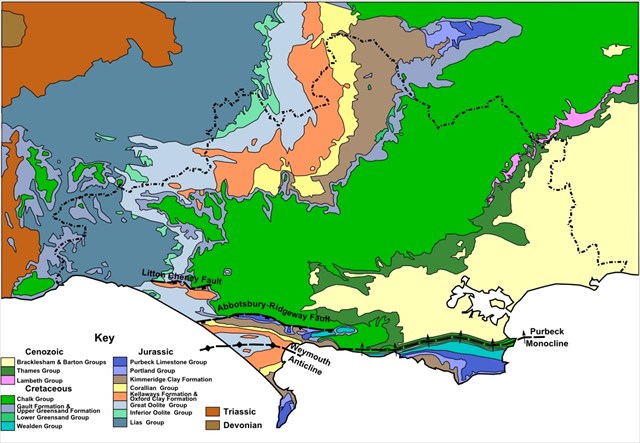
One of the most spectacular examples of this type of collapse is the event that occurred in May 2010 in Guatemala City. Here, cavities developed in weak, unconsolidated, volcanic deposits following a tropical storm. These then collapsed, creating a shaft approximately 100 m deep and 20 m wide. What triggers sinkholes? Several things can trigger sinkholes. The simple process of gradual dissolution can cause a sinkhole to form at the surface. However, other factors, including humans can induce sinkholes to form, such as: •Heavy rain or surface flooding can initiate the collapse of normally stable cavities, especially those developed within superficial deposits. •Leaking drainage pipes, burst water mains, irrigation or even the act of emptying a swimming pool are all documented examples of sinkhole triggers. Building works Construction and development are also potential triggers. Modifying surface drainage or altering the loads imposed on the ground without adequate support can caused sinkholes to develop. Changes in water table level In some parts of the world, drought or groundwater abstraction can cause sinkholes by changing the level of the water-table. This removes the buoyant support water provides to a cavity. Draining these cavities can cause them to collapse. Mining can be a factor in causing sinkholes, either by dewatering and lowering of the water-table, or by intercepting clay filled voids which subsequently collapse. Several sinkholes in Norwich have been caused by old chalk mines intercepting otherwise stable sediment-filled voids. Sinkholes in the UK Areas prone to sinkhole formation occur throughout the UK, although most are relatively small or are in upland rural locations. These include areas underlain by Carboniferous limestones, notably the Mendips, parts of Wales, the Peak District, and the northern Pennines including the Yorkshire Dales. The Chalk is also susceptible, especially where it is covered by younger clay and sand deposits (the 'Clay-with Flints' and Palaeogene strata), notably in parts of Dorset, Hampshire and the Chilterns. Gypsum areas at most risk However, the most susceptible area in the UK is the Permian gypsum deposits of north-east England, particularly around Ripon. Many large sinkholes have developed around Ripon, some of which have affected property and infrastructure. This is because gypsum is far more soluble than limestone, and thus dissolves more rapidly. Salt Sinkholes also occur over salt deposits, commonly in areas such as Cheshire where brine has been extracted making it difficult to separate naturally formed sinkholes from those created by man. In Scotland, sinkholes are generally rare except in parts of Assynt underlain by the Cambrian Durness limestone.
To log this Earthcache: Go to the published Co-ords and answer the following questions and send your answers to me through email in profile, please don't wait for a reply before you log your find:
Question 1. At the listed Co-ords look at the sink hole. Describe its appearance and using Fig:1 suggest what type of doline it is. Please give the reasons for your suggestion.
Question 2. Estimate the approximate dimensions of the sink hole?
Question 3. Do you think this Sink hole was naturally forming or artificial?
Please post a photo of you at GZ (optional)