LA STORIA
Il primo insediamento risale a prima dell’anno Mille: il primo documento scritto, datato 996, si riferisce a una sentenza imperiale su questo appezzamento di proprietà della nobile Famiglia Avogadro.
Nel 1176 la Famiglia concesse chiesa e terreno a due sorelle di nome Gemma e Realda.
Queste si votarono alla regola di San Benedetto, costituendo un monastero di clausura, mettendosi sotto la diretta protezione del papa.
Nel 1186 Papa Urbano III venne a consacrare la chiesa di San Giuliano.Nel 1411 papa Eugenio IV soppresse il convento.
La regola dettata da Gemma e Realda prescriveva oltre ai tre voti perpetui (castità, obbedienza e povertà) anche quello di obbedienza al Papa. Una scelta che verrà ripresa successivamente dalla Compagnia di Gesù, fondata da Sant’Ignazio di Loyola. Quest’ultimo voto venne osservato con fedeltà, ma furono gli altri a venir meno, come quello della povertà e soprattutto della castità.
Nel 1391 si aprì una vertenza tra le suore papiste e il Vescovo di Verona, Monsignor Giacomo Rossi, che sfociò in un processo ecclesiastico sulla loro condotta morale.
Furono raccolte varie testimonianze su situazioni di promiscuità tra le monache e i contadini che conducevano i loro fondi, una situazione che creò non poco scompiglio tra i fedeli del posto.
Raccolte le prove, il vescovo si rivolse a Papa Eugenio IV, che decretò la chiusura del convento e la soppressione dell’ordine femminile. Le undici suore superstiti lasciarono il convento e vennero invitate a ritirarsi in quello di Santa Giustina a Padova.
Tuttavia alcune di loro nel 1447 fecero ritorno in barba alle disposizioni del pontefice e riaprirono il convento sotto l’egida di quello di Santa Giustina prima e successivamente di quello di San Nazzaro e Celso.
Le suore tornate numerose e osservanti vennero premiate da papa Innocenzo X che il 23 aprile 1646 concedette l’indulgenza plenaria alla chiesa di San Giuliano. La chiusura definitiva giunse con il decreto di soppressione della Repubblica di Venezia nel 1771.
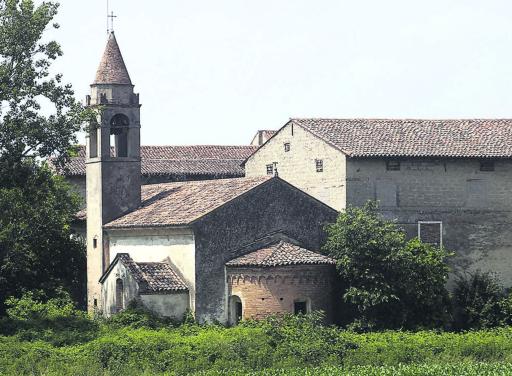
LO STATO ATTUALE
Il complesso formato dall’antico convento e dalla fattoria che nei secoli si è costruita attorno al nucleo originario è da anni in abbandono.
Mentre si discute del suo recupero e si fanno scavi per sondaggi archeologici in vista degli interventi futuri, dentro il cuore della LEPIA, nel monastero e nella chiesetta con affreschi anteriori al 1200, distruzione e degrado.
Proprio in occasione dell’ultimo intervento della Soprintendenza per i beni ambientali e architettonici, mirato a dei sondaggi archeologici, era stato aperto un pertugio per un sopralluogo all’interno della chiesetta. Da quella parte sono venute le ultime e più gravi devastazioni, con vandalismi che non hanno altra spiegazione se non il disprezzo.
L’altare maggiore è stato preso di mira con la rottura di diversi inserti marmorei e la frantumazione della pietra che chiudeva il lato a vista. La pesante pietra è stata scalzata dalla sua sede e frantumata sui gradini dell’altare. Stessa sorte è toccata alla pietra della mensa.
Il vandalismo ha messo in luce l’unica cosa di valore che l’altare nascondeva: un grosso parallelepipedo in marmo bianco, che è probabilmente il basamento di una colonna romana.
Infatti allungando la mano nella fessura fra la mensa rotta dell’altare e la base superiore della misteriosa pietra bianca si percepiscono ancora le cavità dentro le quali erano probabilmente sistemati gli ancoraggi per il blocco di marmo sovrastante della colonna o del pilastro.
Quello di sistemare sotto gli altare delle chiese cristiane pietre con o senza iscrizioni latine era un particolarità delle costruzioni altomedioevali, documentata sotto l’altare della chiesa di Santa Giustina a Illasi, a pochi chilometri dalla LEPIA. Anche questa era chiesetta di un complesso monastico dove pare sia stata priora Francesca, figlia di Cangrande della Scala.
Sul lato visibile la pietra di LEPIA non porta iscrizioni, ma nulla impedisce che ci siano sui lato rivolto verso l’abside o sulle pareti non visibili.
Il peso del reperto ha impedito che fosse trafugato e la sua scoperta casuale, grazie a una visita agli scavi della Soprintendenza da parte di Aldo Masconale, appassionato di arte e archeologia, ha impedito che ci fossero ulteriori devastazioni e furti.
Per ora si sono salvate tracce di affreschi altomedioevali nell’abside e sulla facciata: a quelli penseranno probabilmente le intemperie e le infiltrazioni di umidità a dare il colpo di spugna definitivo.
La caccia al reperto non ha risparmiato neanche tre gradini di pietra levati da una scala che sale al piano superiore della casa colonica. Nella vicina grande stalla, tutte le colonne in pietra, eccetto una, che sorreggevano le grandi travi del soffitto sono state rubate. Una, caduta ai ladri e spezzatasi, è rimasta sul pavimento, mentre ne mancano al conteggio almeno una decina. Il soffitto è puntellato con tubi in ferro e pali di fortuna.
La Soprintendenza ha fatto i suoi sondaggi archeologici, ma non ha dato il buon esempio: ci sono scavi aperti da mesi e lasciati in totale abbandono e incuria.
Affiorano ossa umane — tibie, femori e calotte di crani — cocci di vasellame, chiodi arrugginiti di vecchie casse in legno sfasciate, testimonianze di un cimitero attorno al complesso monastico che meriterebbe quanto meno il rispetto umano, visto che quello archeologico non sembra interessare. In attesa del grande intervento di recupero per fare della memoria che resta case e uffici, perfino un ristorante, si accendono le vicine luci della zona artigianale e commerciale: nuovi mercanti a due passi dal tempio della storia. (Fonte: srs di Vittorio Zambaldo da L’Arena di Verona di mercoledì 03 settembre 2008; provincia pag. 23)

LA CACHE
Nota preliminare: per cercare la cache si sconsiglia fortemente di portare bambini e di cercarla da soli e di notte, visto che in anni passati sono stati trovati abusivi che vi ci vivevano dentro lasciando sporcizia e vandalismo vario; ormai il luogo non ha più nulla di valore asportabile ed è di pubblico dominio e dichiarato tranquillo, ma la prudenza in questi casi non è mai troppa. Attenzione anche per le persone particolarmente suscettibili perchè sono state aperte delle tombe e ci sono resti di ossa umane. La cache ha lo scopo di far scoprire posti abbandonati di interesse storico che non meriterebbero di finire nel dimenticatoio ma anche di far riflettere su come l'inciviltà delle persone possa raggiungere picchi inimmaginabili.
Per trovare la cache parcheggiate al waypoint indicato e seguite il vialetto adiacente la pista da kart creata nel parcheggio, da li troverete una porta aperta che porta alla vecchia stalla del complesso che permette l'accesso al suo interno. Le coordinate portano solo ad individuare la zona, per trovare la cache dovete trovare la chiesetta e cercare sotto il vecchio altare.
La cache è di dimensioni small e all'interno contiene il logbook, una matita e vari oggetti da scambiare. Buona caccia a voi moderni Indiana Jones!

HISTORY
The first settlement dates back to before the eleventh century: the first written document, dated 996, refers to a judgment on this imperial plot owned by the noble family Avogadro.
In 1176 the family granted the land to the church at two sisters named Gemma and Realda.
They devoted themselves to the rule of St. Benedict, constituting a cloistered monastery, putting himself under the direct protection of the Pope.
In 1186 Pope Urban III was to consecrate the church of San Giuliano. In 1411 Pope Eugenius IV suppressed the convent.
The rule dictated by Gemma and Realda prescribed addition to the three vows (chastity, obedience and poverty) also that of obedience to the Pope. A choice that will be resumed later by the Society of Jesus, founded by St. Ignatius of Loyola. This vote was observed faithfully, but the others were to fail, such as poverty and especially of chastity.
In 1391 he opened a dispute between the sisters and the popish bishop of Verona, Monsignor Giacomo Rossi, which resulted in an ecclesiastical trial on their moral conduct.
Were collected various testimonies of situations of promiscuity among the nuns and peasants who conducted their funds, a situation which created no small stir among the faithful of the place.
Collecting evidence, the bishop turned to Pope Eugenius IV, who decreed the closure of the convent and the suppression of women. The eleven surviving nuns left the convent and were invited to retire to Santa Giustina in Padua.
However, some of them in 1447 they returned in spite of the provisions of the pontiff and reopened the convent under the auspices of the Santa Giustina first and later to San Nazzaro and Celso.
The sisters returned many observant were rewarded by Pope Innocent X that April 23, 1646 granted him a plenary indulgence to the church of San Giuliano. The final closure came with the decree of suppression of the Republic of Venice in 1771.

CURRENT STATE
The complex formed by the ancient monastery and from the farm which over the centuries has been built around the original has been abandoned.
While discussing his recovery and make excavations for archaeological surveys in view of future interventions, within the heart of Lepia, in the monastery and the church with frescoes from before 1200, destruction and degradation.
Just at the last intervention of the Superintendence for environmental and architectural heritage, aimed at the archaeological surveys, had opened a hole for a visit inside the church. That way came the latest and most severe devastation, with vandalism that have no other explanation than contempt.
The high altar was targeted with the breaking of several marble inserts and crushing the stone that closed the visible side. The heavy stone was ousted from his seat and shattered on the steps of the altar. The same fate befell the stone table.
Vandalism has revealed the only thing of value that hid the altar: a big rectangular white marble, which is probably the base of a Roman column.
In fact, reaching out into the gap between the route table of the altar and the upper base of the mysterious white stone is still perceive the cavity within which were probably placed anchors for the block of marble above the column or pillar.
To place under the altar of the Christian churches stones with or without Latin inscriptions was a peculiarity of the early medieval buildings, documented under the altar of the church of Santa Giustina in Illasi, a few kilometers from Lepia. Even this was a church of the monastic complex where it seems to have been prioress Francesca, daughter of Can Grande della Scala.
On the visible side of the stone Lepia not port entries, but nothing prevents that there are on the side facing the apse or on the walls not visible.
The weight of the find has prevented it was stolen and his accidental discovery, thanks to a visit to the ruins of the Superintendent by Aldo Masconale, passionate about art and archeology, has prevented that there were further devastation and theft.
For now you are saved traces of early medieval frescoes in the apse and on the facade: those probably will think the weather and moisture infiltration to give the final stroke of a pen.
The hunt for remains has not spared even three stone steps risen by a staircase that rises to the upper floor of the farmhouse. In nearby large barn, all stone columns, except one, that supported the large ceiling beams were stolen. A, fall to thieves and spezzatasi, remained on the floor, while it lacks the count at least a dozen. The ceiling is dotted with iron pipes and piles of luck.
The Superintendent has made its archaeological surveys, but did not set a good example: there are excavations open for months and left in disrepair and neglect.
Crop up human bones - tibias, femurs and skulls caps - shards of pottery, rusty nails of old wooden boxes smashed, evidence of a cemetery around the monastery which deserves at least human respect, since the archaeological not seem interested. Waiting for the big renovation work to make the memory that remains homes and offices, even a restaurant, light up the nearby zone lights craft and trade: new merchants a few steps from the temple of the story. (Source: srs Vittorio Zambaldo from Verona Arena of Wednesday, September 3, 2008, the province p. 23)

THE CACHE
Preliminary Note: To search the cache is highly inadvisable to bring children and to seek it alone and at night, as in past years were found squatters who lived there in leaving dirt and vandalism varied; now the place has nothing of value removable and is in the public domain and declared peaceful, but prudence in these cases is never enough. Watch out also for people particularly susceptible because of the graves were opened and there are remains of human bones. The cache is designed to discover abandoned places of historical interest that does not deserve to end up in oblivion but also to consider how the social behavior of individuals can reach peaks unimaginable.
To find the cache parked at waypoint indicated and follow the path adjacent to the kart track created in the parking lot, from there you will find an open door that leads to the old stable complex that allows access to the inside. The coordinates lead only to locate the area, to find the cache you have to find the church and look under the old altar.
The cache size is small and contains the logbook, a pencil and various objects to be exchanged. Happy caching to you modern Indiana Jones!