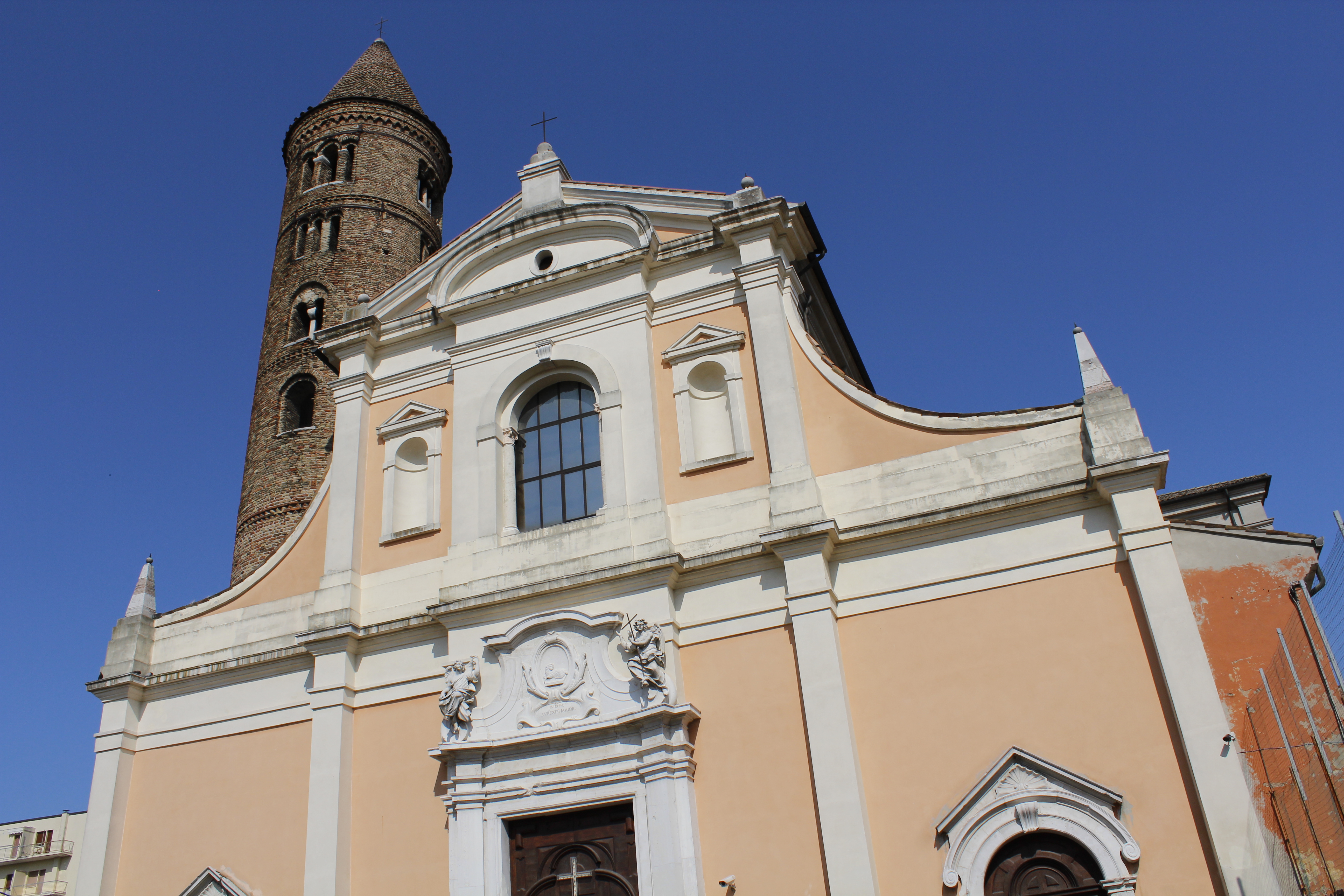
ITA - La Chiesa di San Giovanni Battista, anteriore al IX secolo, conserva un campanile databile allo stesso periodo, formato da due ordini di ampie monofore sormontate da bifore e trifore.
L'edificio fu demolito e ricostruito con l'attuale aspetto nel 1683 dall'architetto Pietro Grossi, uno degli architetti più attivi a Ravenna nella seconda metà del '600. Tra il '600 e il '700, infatti, la curia arcivescovile effettuò in città numerosi interventi di sistemazione su alcune chiese per contrastare gli effetti della subsidenza.
Per distinguerla dall'omonima Chiesa di San Giovanni Evangelista, è comunemente chiamata "Sân Zvan dla zôla"(San Giovanni della Cipolla), poiché presso il suo sagrato si svolge tutt'ora in giugno una fiera dedicata alla cipolla, in occasione della ricorrenza di San Giovanni.
All'interno della Basilica è esposto in modo permanente un presepe artistico napoletano e una preziosa raccolta di dipinti di artisti ravennati databili tra il XV e il XVIII secolo.
ENG - The Church of San Giovanni Battista was built before the 9th century. Its contemporary bell tower shows two rows of big single lancet windows topped by double lancet and triple lancet windows.
The building was first destroyed and then rebuilt to its present shape in 1683 by Pietro Grossi, one of the most active architects in Ravenna in the second half of the 17th century. Between 17th and 18th century, the diocesan administration carried out a series of restoration works in numerous religious buildings of the town, in order to counteract the phenomenon of subsidence.
To distinguish it from Church of San Giovanni Evangelista, the church is commonly known as "Sân Zvan dla zôla" (“Saint John of the onion”), because of an onion festival traditionally taking place in June in the churchyard during the celebrations for San Giovanni.
A Neapolitan nativity scene is permanently on display inside the basilica, as well as a precious collection of paintings by local artists from the 15th to the 18th century.