See The archived Skipton Cave Event Here
See the video of the day Here
Widderin Caves are located at the sloped of the (hopefully) extinct, name sake volcano Mt. Widderin. There are three linked chambers, said to be the largest set of volcanic lava caves in the southern hemisphere. The largest chamber is 100m long which is quite impressive.
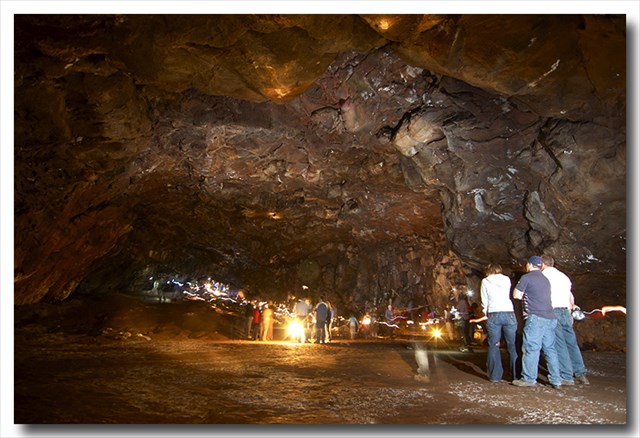
The caves are listed as a heritage site, but defenitely not because of aboriginal remains. The natives never entered the caves, although they knew of their existence and told the white settlers about them. But the caves were used by the settlers during the 19th century.
They are located on private ground, the Mount Widderin Station. The cave is open one day every year when the proceeds are used for local charities.
![]()
The cave has three chambers, soon after the low entrance it opens into the huge First Chamber. The entrance is called the Alice in Wonderland crawl, as it seems like the visitors would crawl into a rabbit hole when entering the cave. On the walls of the First Chamber around the entrance numerous graffitties can be found. Most of them are more than 100 years old, from the days when the cave was popular.
![]()
Almost parallel to the First Chamber lies the biggest chamber, the Ballroom. It is called the Ballroom because of its size and fairly flat floor. And it was really used as a ballroom, for New Year's Eve parties and jazz concerts from the 1890s until after the turn of the century. The popularity shrank, but the cave was still used now and then, the current owner had his 21st birthday party here in 1970.
![]()
At the far end of the First Chamber starts a passage, which becomes smaller until it becomes a crawl. On the other side is the last Chamber called Lake Chamber. It contains a lake of crystal clear, pure water.

The cave had once a large bat population which produced a thick layer of bat guano. The bats disappeared in 1866 and never returned, the reason is not passed down. But the bat guano was mined in the mid 19th century and used as fertilizer. In the guano several rare phosphate minerals like Dittmarite, Hannayite, Newberyite, and Schertelite were discovered. It is type locale for those four minerals, which made the cave famous among mineralogists and geologists.
Join us on Facebook at Geocaching Geelong and District