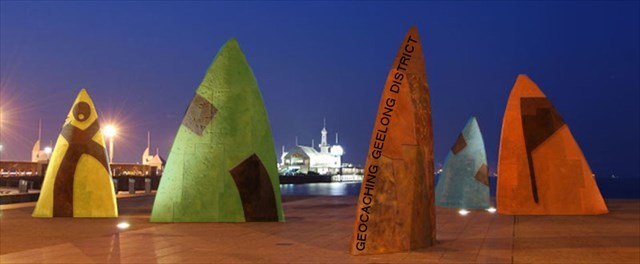
The Series has been brought to you to highlight local country towns in the South of Victoria.
Belmont
Belmont is a southern suburb of Geelong, Victoria, Australia. The name means "beautiful hill". Belmont is geographically separated from the Geelong central business district by the Barwon River. The suburb is primarily residential, with some light industry along Barwon Heads Road. The suburb is part of the City of Greater Geelong local government area. At the 2011 census, Belmont had a population of 13,616.
The area has been inhabited by the Wathaurong people for at least 25,000 years. The first European to settle in the area was Dr. Alexander Thomson, later mayor of Geelong, who took up a pastoral run in 1836, and subsequent purchases of crown land were managed from his homestead 'Kardinia'. Early white settlement was hampered by the lack of a secure bridge over the Barwon River. The first wooden bridge opened early in 1848, and was tolled by the South Barwon Road Board. Four years later, on 23 May 1852, the bridge was swept away in a flood.
From December that year a government punt operated at the site, and by late 1853 two government punts were used to form a pontoon bridge. In 1859 a secure iron bridge was opened as a replacement. By the mid-to-late 1850s a township had developed, with a general store and a number of pubs.
The Post Office opened on 21 January 1860. Some of the streets in the area are named after early properties; for instance Roslyn Road was originally a track which led to the homestead 'Roslyn' in the suburb of Wandana. A few significant older buildings remain, such as 'Royd Grange' which was built by Godfrey Hirst in 1897. Kardinia House, located in Riverview Terrace, is listed on the Victorian Heritage Register. In 1850 Alexander Thomson offered 93 allotments for sale, as the township of Belmont, between Mount Pleasant and Roslyn Roads. Further land sales occurred in 1886, when 25 acres (100,000 sqm) of Crown land was offered for sale in 25 allotments.
The years immediately after the First World War witnessed the transformation of the rural farmland in Belmont into a residential area. Further subdivision occurred in the 1920s, stimulated by the construction of a new bridge over the Barwon River in 1926, and the consequent extension of the Geelong tram system to Roslyn Road in 1927. Houses erected during the interwar years (and those following World War II) were affordable homes for textile workers, drivers, labourers, clerks, secretaries, teachers and builders. Major housing development in Belmont stepped up in the years following World War II, with housing developments spreading westwards, from the original township on the hill towards Highton. Later development in the 1970s saw subdivision to the south towards Grovedale. The CSIRO established a laboratory facility in Belmont in 1948 to perform research to support the wool industry. It became one of the leading textile research centres in the world, but in a reorganisation of the CSIRO in the early 2010s, the site was closed and staff moved to the Australian Future Fibres Research and Innovation Centre at Deakin University Waurn Ponds
Source: Wikipedia