Miten liuskekivi syntyy - kiven kiertokulku
Kivilajit jaetaan kolmeen ryhmään sen perusteella, miten kivilaji muodostunut. Kivilajit ovat 1) magmakivet, 2) sedimenttikivet ja 3) metamorfiset kivet. Magmakivet ovat muodostuneet syvällä maan kuoren alla olevasta sulasta kivimassasta nousemalla hitaasti kohti pintaa ja samalla jäähtyen ja kovettuen. Sedimenttikivet puolestaan muodostuvat maan pinnalla olevien kivien rapautuessa ja jauhautuessa hienoksi. Kivijauhe keräytyy vesien mukana meren pohjaan sedimentiksi eli kerrostumaksi. Ylemmät sedimenttikerrokset painavat alempia tiiviiksi massaksi ja kovettavat ne vähitellen sedimenttikiveksi. Metamorfinen kivi on ollut alun perin magmakiveä tai sedimenttikiveä, joka joutuessaan syvälle kuumuuteen ja paineeseen kiteytyy ja muuttuu uusiksi mineraaleiksi.
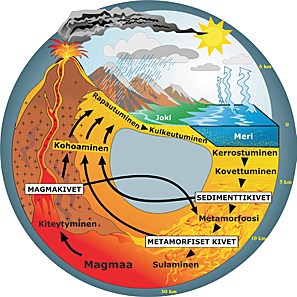
Kuva: Retkeilijän kiviopas, Geologian tutkimuskeskus, 2006
Metamorfinen kivi
Metamorfoosi tarkoittaa geologiassa kivilajien rakenteen ja koostumuksen muuttumista paineen ja korkean lämpötilan seurauksena. Metamorfinen kivilaji on voinut alun perin olla magmakivi tai sedimenttikivi, joka on vajonnut mannerlaattojen liikkeiden vaikutuksesta syvälle maankuoreen. Siellä kova paine ja kuumuus on kiteyttänyt kivilajin uudelleen. Ilmiötä kutsutaan metamorfoosiksi. Näin syntyneitä kivilajeja ovat esimerkiksi vuolukivi, marmori ja gneissi. Metamorfoosin lajeja on erilaisia, jotkut kivilajit syntyvät matalissa lämpötiloissa ja korkeissa paineissa, ja jotkut toiset korkeissa lämpötiloissa ja matalissa paineissa.
Lähde: Geologiaa helposti, käsikirja opettajille, Opetushallitus
Liuskekivi
Liuskekivi on yksi metamorfoituneista kivilajeista, joka on ollut muinaista merenpohjan hiekkaa ja savea. Aurinko ja säätilat rapauttaa maan pinnalla olevat kivet ajan myötä pieniksi rakeiksi. Pienimmät muruset jauhautuu hiekaksi, joka ajautuu veden mukana meren pohjaan. Merenpohjassa pienet hiekkamuruset tiivistyy saveksi. Alimmaksi jäävä savi alkaa tiivistyä päällä olevan painon takia kiveksi, joka on tässä vaiheessa sedimenttikiveä. Paino kasvaa ja sedimenttikivi joutuu kovaan puristukseen ja alaspäin painuessaan kuumuuteen, jossa se metamorfoituu vähitellen liuskekiveksi. Maankuoren liikkeestä johtuen liuskekiveä nousee maanpintaan.
Kiilleliuskeet ovat usein syntyisin savikivistä, josta se metamorfoosin myötä muuttuu ensin saviliuskeeksi, sitten fylliitiksi ja edelleen kiilleliuskeeksi. Kiilleliuske on väriltään harmahtavaa, se on karkearakeista ja kiiltää. Talkkiliuske on vihertävän harmaata ja pehmeää. Saviliuske on vihertävää, sinertävää tai mustaa, lehtimäistä ja se lohkeaa hyvin. Fylliitti on kiiltävää ja harmaan vihreää.
Liuskekivi lohkeaa ja halkeaa helposti, minkä takia sitä on voitu käyttää rakentamiseen ja sisustukseen. Toisaalta se saattaa juuri lohkeavuuden vuoksi helposti rapautua. Liuskekiviä on eri kovuisia. Liuskekivien värisävyt ovat musta, harmaa, vihreä, ruskea, punertava ja valkoinen. Värisävyyn ja kovuuteen vaikuttaa se, mistä mineraalista liuskekivi on muodostunut.
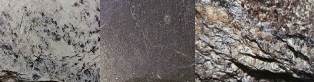
Kuva: Vasemmalta talkkiliuske, saviliuske, kiilleliuske
Savivuoren näkötorni
Viitasaaren Savivuoren valkoiseksi rapattu ja liuskekivin koristeltu näkötorni on rakennettu vuonna 1958. Rakennus on nykyisin Viitasaaren kaupungin omistuksessa. Näkötornissa on kesäisin kahvila-kioski ja talvisin alueella on laskettelukeskus. Näkötorniin pääsee sisälle vain kesäaikaan näkötornin aukioloaikoina. Liuskekivet ovat näkötornin julkisivussa ja tutkittavissa myös tornin ollessa suljettuna. Näkötornin huipulle pääsee vain portaita pitkin. Tehtävän suorittaminen ei edellytä menoa näkötornin sisätiloihin. Autolla pääsee aivan näkötornin viereen, tosin talvella Savivuoren päälle johtava jyrkkä autotie saattaa olla niin jäinen, että auto on paras jättää vuorelle johtavan tieristeyksen luo.
Lähteet: 3000 vuosimiljoonaa, Suomen kallioperä: Lehtinen, Nurmi, Rämö; Retkeilijän kiviopas: Geologian tutkimuskeskus; Kivet ja Mineraalit värikuvina: Schumann;Geologiaa helposti, käsikirja opettajille, Opetushallitus
Tehtävät
1. Koordinaatit sijaitsevat Savivuoren näkötornin luona. Tutki seinään muurattuja liuskekiviä. Minkä värisiä liuskekivet ovat? Tunnustele kiven pintaa ja kuvaile sitä. Minkä liuskekiven arvelet olevan kyseessä?
2. Näkötornin lähistöllä, erityisesti laskettelurinteen puoleisella rinteellä, on näkyvissä Savivuoren kallioperää. Miltä kallio näyttää, vertaa Savivuoren kallioperää ja näkötornin liuskekiveä. Onko Savivuori liuskekiveä ja voiko kivet olla aikoinaan louhittu täältä?
3. Etsi suurin näkötornin seinään kiinnitetty liuskekivi. Kuinka pitkä ja leveä se on?
4. Lähin liuskekivilouhos on nykyisin Pihtiputaalla. Miten liuskekiveä on muodostunut Pihtiputaalle?
5. Luettele kolme asiaa, mihin liuskekiveä voidaan käyttää?
6. Vapaaehtoinen tehtävä: Etsi kohde, johon liuskekiveä on käytetty (joku muu kuin tämä näkötorni), ota kuva siitä ja liitä se loggaukseesi. Maisemakuvat Savivuoren huipulta ovat myös aina tervetulleita.
Lähetä vastaukset kysymyksiin kätkön omistajalle sähköpostitse käyttämällä profiilin linkkiä. Sinun ei tarvitse odottaa vastausta, voit logata kätkön löydetyksi heti vastauksesi lähettämisen jälkeen.

English:
Geocache Description
There is no cachebox or logbook in this earthcache's coordinates. To log the cache you have to answer the questions asked in the geocache description and send the answers to the owner of the cache. The owner of the cache will contact you if there is something to clarifty with the answers.
How are slates formed – circulation of rocks
Rocks are separated in three groups depending on how the stones are formed. The groups are 1) igneous rocks, 2) sedimentary rocks and 3) metamorphic rocks. Igneous rocks are formed deep under the crust of Earth from melted rock mass. The rock mass rises slowly towards the surface cooling and hardening at the same time. Sedimentary rocks are formed when the rocks on Earth's surface crumble and pulverise. The stone powder accumulates along the water to the seabed to sediment. The upper sediment layers push the lower ones into a solid mass and slowly harden it into sedimentary rock. Metamorphic rock has originally been ingenous rock or sedimentary rock that has crystallized and changed into new minerals after being in the deep heat and pressure.
Picture: Retkeilijän kiviopas, Geologian tutkimuskeskus, 2006
Metamorphic rock
Metamorphosis means the changing of the composition and the structure of the rocks due to pressure and high temperature. Metamorphic rock could have originally been ingenous rock or sedimentary rock that has sinked deep in to the Earth's crust as a result of the movement of tectonic plates. There the strong pressure and heat has crystallized the rock all over again. The phenomenon is called metamorphosis. Rock types formed like this are soapstone, marble and gneiss. There are different types of metamorphosis. Some rock types are formed in low temperatures and high pressure whereas some are formed in high temperature and low pressure.
Slate
Slate is one of the metamorphic rock types that has been ancient seabed sand and clay. Sun and weather erode the rocks on the Earth's crust over time to small grains. The smallest crumbs pulverise into sand that drifts along the water to the seabed. The small sand crumbs turn into clay at the seabed. The clay at the bottom starts to condense into a stone due to the weight on top of it. The weight increases and the sedimentary rock gets into hard pressure and heat as it sinks down where it slowly turns into slate. Slate rises to the ground as a result of the movements of the Earth's crust.
Mica schists are often formed from claystone where it first turns into slate, then phyllite, and again to slate as a result of metamorphosis. Slate is crayish, rough and shiny. Talc slate is greenish gray and soft. Clay slate is greenish, bluish or black, leafy, it breaks easily. Phyllite is shiny and grayish green. Slate breaks and splits easily which is why it's good for building and decorating. On the other hand it can also crumble easily. Some slates are harder than others. Slate's different colour shades are black, gray, green, brown, reddish, and white. The shade and hardness depends on what minerals it has formed from.
Picture: From left talkkiliuske, saviliuske, kiilleliuske
Observation tower of Savivuori
The observation tower of Savivuori in Viitasaari is plastered white and decorated with slates. It was built in 1958. The building is owned by the city of Viitasaari. The observation tower has a coffee shop in the summer and there is a ski center in the area in the winter. The observation tower is only open at summertime. The slates are on the facade of the tower and can be examined even when the tower is closed. The top of the tower can only be accessed by the stairs. To complete the task you don't have to enter the tower. You can get to the observation tower by a car but in the winter the hill going to the tower can be slippery so it might be best to leave the car at the bottom of the hill.
Sources: 3000 vuosimiljoonaa, Suomen kallioperä: Lehtinen, Nurmi, Rämö; Retkeilijän kiviopas: Geologian tutkimuskeskus; Kivet ja Mineraalit värikuvina: Schumann;Geologiaa helposti, käsikirja opettajille, Opetushallitus
Tasks
1. The coordinates are located at the observation of Savivuori. Examine the slates on the wall. What colour are the slates? Feel the surface of the rock and describe it. What type of slate do you think it is?
2. Near the observation tower, especially on the side of the ski slope, can be seen bedrock of Savivuori. What does the rock look like, compare the bedrock of Savivuori and the slate of the observation tower. Can Savivuori be slate and could the slate on the wall be from the bedrock?
3. Find the largest slate on the wall of the observation tower. How long and wide is it?
4. The closest slate mine is in Pihtipudas. How is slate formed at Pihtipudas?
5. List three things where slate can be used.
6. Bonus task: Find a place where slate has been used (something else than this observation tower), take a picture of it and add it to your log. Landscapes from the top of Savivuori are always welcomed.
Send your answers to the questions to the cache owner through e-mail using the link in the profile. You don't have to wait for an answer, you can log the cache as found right after sending the answers.