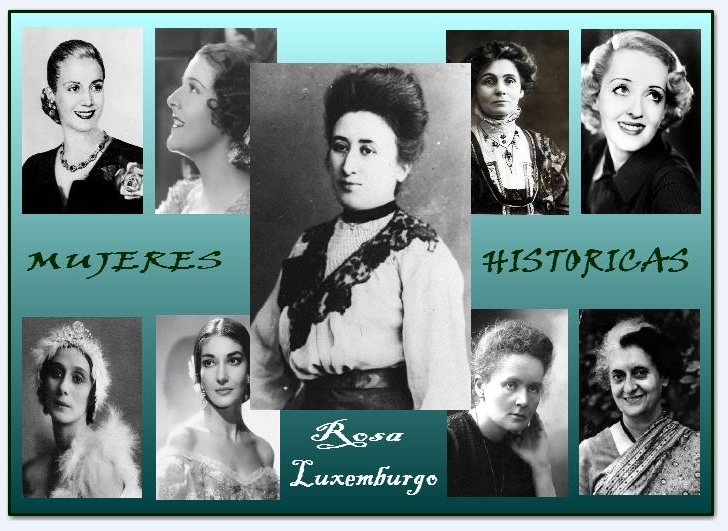
Mujeres para la Historia - BONUS - Rosa Luxemburgo
Sinopsis
Rosa Luxemburgo nació en una familia judía en Zamosc el 5 de marzo de 1871, en territorio polaco controlado por Rusia. Era la quinta y más joven hija del comerciante maderero Eliasz Luxemburgo y Line Löwenstein. Luxemburgo indicó más adelante que su padre le dio un interés en las ideas liberales, mientras que su madre era religiosa, bien leída, con libros en el hogar. La familia hablaba alemán y polaco, y Luxemburgo también aprendió ruso. La familia se trasladó a Varsovia en 1873. Después de ser postrada en la cama con una dolencia de cadera a la edad de cinco años, se quedó con una cojera permanente.
Comenzando en 1880, Luxemburgo asistió a un gimnasio. A partir de 1886, ella comenzó en la política mediante la organización de una huelga general; como resultado, cuatro de los líderes del partido fueron muertos y el partido se disolvió, aunque los miembros restantes, entre ellos Luxemburgo, se reunieron en secreto. En 1887, después de huir a Suiza para escapar de la detención, asistió a la Universidad de Zurich (al igual que los socialistas Anatoly Lunacharsky y Leo Jogiches), cultivando el estudio de la filosofía, la historia, la política, la economía y las matemáticas. Se especializó en Staatswissenschaft (la ciencia de las formas de Estado), la Edad Media, y las crisis económicas y de intercambio de acciones.
Su tesis doctoral, "El desarrollo industrial de Polonia" (Die Entwicklung Industrielle Polens), fue presentado oficialmente en la primavera de 1897 a la Universidad de Zurich, que le otorgó un título de Doctor en Derecho. Su tesis fue publicada por Duncker y Humblot en Leipzig en 1898. Ella era una rareza en Zurich, ya que era casi la única mujer con un doctorado. Ella siguió los pasos de Plejánov y Axelrod, sumerjiendose inmediatamente en la teoría política del marxismo internacional.
Alemania
En mayo de 1898 se casó con Gustav Lübeck Luxemburgo, obtuvo la nacionalidad alemana, y se trasladó a Berlín. Allí, ella era activa en el ala izquierda del Partido Socialdemócrata de Alemania (SPD), en la que estaba claramente definida la frontera entre su facción y la Teoría del revisionismo de Eduard Bernstein atacándolo en un folleto, publicado en septiembre de 1898, titulado Reforma social o revolución. La habilidad retórica de Luxemburgo le hizo una portavoz de liderazgo en la denuncia de supuesto parlamentaria reformista del SPD. Ella argumentó que la diferencia fundamental entre el capital y el trabajo sólo podía ser contrarrestada si el proletariado tomó el poder y efectúa cambios revolucionarios en los métodos de producción. Ella quería que los revisionistas fueran expulsados del SPD. Eso no ocurrió, pero gracias al liderazgo de Karl Kautsky conservaron una influencia marxista en su programa.
A partir de 1900, Luxemburgo publicó análisis de los problemas socio-económicos europeos contemporáneos en los periódicos. En previsión de la guerra, atacó vigorosamente lo que definió como el militarismo y el imperialismo alemán. Ella quería una huelga general para despertar a los trabajadores a la solidaridad y evitar la guerra que se avecinaba.; los dirigentes del SPD se negaron, y rompieron con Karl Kautsky en 1910. Entre 1904 y 1906, fue encarcelada por sus actividades políticas en tres ocasiones. En 1907, se asistió al 5º Cogreso del Partido de los socialdemócratas rusos en Londres, donde conoció a Vladimir Lenin. En el 2º Congreso de la Internacional Socialista, en Stuttgart, trasladó una resolución, que fue aceptada, de que todos los partidos obreros europeos deben unirse en el intento de detener la guerra.
Durante la guerra
En agosto de 1914, Luxemburgo, junto con Karl Liebknecht, Clara Zetkin y Franz Mehring, fundó el grupo Die Internationale; se convirtió en la Liga Espartaco en enero de 1916. Ellos escribieron panfletos contra la guerra que firmaron con un pseudónimo "Spartacus" (gladiador tracio liberador de los esclavos que se oponían a los romanos); El pseudónimo de Luxemburgo fue "Junius" (después de Lucio Junio Bruto, fundador de la República romana).
La Liga Espartaquista vehementemente rechaza el apoyo del SPD a la guerra, tratando de conducir al proletariado de Alemania a una huelga general contra la guerra. Como resultado de ello, en junio de 1916 Luxemburgo fue encarcelada durante dos años y medio, al igual que Karl Liebknecht. Durante el encarcelamiento, ella se trasladó dos veces, primero en Posen (ahora Poznan), luego a Breslau (hoy Wroclaw).
Sus amigos continuaron publicando ilegalmente sus artículos. Entre ellos se encontraba "La Revolución Rusa", criticando a los bolcheviques, lanzando una advertencia profética de su conversión en una dictadura. No obstante, continuó llamandola "dictadura del proletariado", aunque no el modelo de un partido bolchevique. En ese contexto, ella escribió "Freiheit ist immer die Freiheit des Andersdenkenden" ( "La libertad es siempre la libertad de la persona que piensa diferente"). Otro artículo, escrito en 1915 y publicado en junio de 1916, fue "Die Krise der Sozialdemokratie" ( "La crisis de la socialdemocracia").
En 1917, la Liga Espartaquista se afilió al Partido Independiente Democrático Social (USPD) (anti-guerra, miembros ex-SPD, fundada por Hugo Haase). En noviembre de 1918, el USPD y el SPD asumieron el poder en la nueva república tras la abdicación del Kaiser. Esto siguió a la revolución alemana que había comenzado en Kiel, para poner fin a la Primera Guerra Mundial. El USPD y la mayoría de los miembros del SPD apoyaron los consejos, mientras que los líderes del SPD temían que esto pudiera conducir a una Räterepublik ( "república Consejo") como los soviets de las revoluciones rusas de 1905 y 1917.
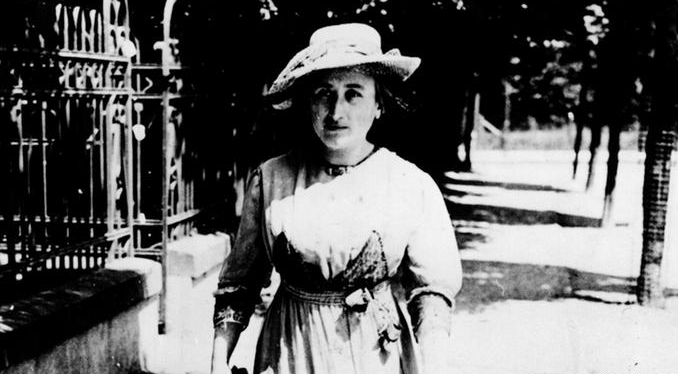
Revolución alemana de 1918-1919 y asesinato
Luxemburgo fue liberada de la prisión en Breslau el 8 de noviembre de 1918. Un día después, Karl Liebknecht, que también había sido liberado de la prisión, proclamó la Freie Sozialistische Republik (República Libre Socialista) en Berlín. Él y Luxemburgo reorganizaron la Liga Espartaco y fundó el periódico Bandera Roja, exigiendo amnistía para todos los presos políticos y la abolición de la pena capital en un ensayo titulado "contra la pena de Muerte." El 14 de diciembre de 1918, se publicó el nuevo programa de la Liga espartaquista.
Del 29 al 31 de diciembre de 1918, participaron en un congreso conjunto de la Liga Espartaquista, socialistas independientes, y los comunistas Internacionales de Alemania (IKD), que llevó a la fundación del Partido Comunista de Alemania (KPD) bajo la dirección de Karl Liebknecht y Luxemburgo el 1 de enero de 1919. Ella apoyó la participación de la nueva KPD en la Asamblea Nacional de Weimar que fundó la República de Weimar; pero ella estaba fuera votado-y el KPD boicoteó las elecciones.
En enero de 1919, una segunda oleada revolucionaria barrió Berlín. El día de Año Nuevo, declaró: Hoy podemos establecer seriamente en destruir el capitalismo de una vez por todas. Es más, no sólo estamos hoy en condiciones de realizar esta tarea sino que nuestra solución ofrece el único medio de salvar la sociedad humana de la destrucción.
Al igual que Liebknecht, Luxemburgo se negó a rechazar este violento intento de tomar el poder. Sin embargo, la Bandera Roja alentó a los rebeldes a ocupar las oficinas editoriales de la prensa liberal.
En respuesta al levantamiento, el líder socialdemócrata Friedrich Ebert ordenó a los Freikorps para destruir la revolución de izquierdas. Luxemburgo y Liebknecht fueron capturados en Berlín el 15 de enero de 1919 por la División de Fusileros de la Guardia de Caballería del Cuerpo Libre (Freikorps 'Garde-Kavallerie-Schützendivision). [21] Su comandante, el capitán Waldemar Pabst (1880-1970), junto con teniente Horst von Pflugk-Harttung (1889-1967), los interrogó bajo tortura, y luego se dio la orden de ejecutarlos. Luxemburgo fue derribada con una culata de un rifle por el soldado Otto Runge (1875-1945), luego se le disparó en la cabeza, ya sea por el teniente Kurt Vogel (1889-1967), o por el teniente Souchon Hermann (1894-1982). Su cuerpo fue arrojado a canal Landwehr de Berlín. [22] En el Tiergarten Karl Liebknecht recibió un disparo y su cuerpo, sin nombre, fue llevado a un depósito de cadáveres.
Los asesinatos de Luxemburgo y Liebknecht inspiraron una nueva ola de violencia en Berlín, y en toda Alemania. Miles de miembros del KPD, otros revolucionarios y civiles murieron. Por último, la División Armada Popular (Volksmarinedivision), y obreros y soldados de los consejos, que se había desplazado a la izquierda política, se disolvió. Luxemburgo fue tenida en alta estima por Lenin y Trotsky, que reconoció en la Tercera Internacional sus credenciales revolucionarias.
La última parte de la revolución alemana vio muchos casos de violencia armada, y huelgas en toda Alemania, que duró hasta mayo de 1919. Las huelgas importante se produjeron en Berlín, Bremen República Soviética, Sajonia, Sajonia Gotha, Hamburgo, tierras del Rin, y la región del Ruhr. Última de huelga era la República Soviética de Munich, que fue reprimida violentamente el 2 de mayo 1919.
Más de cuatro meses después de los asesinatos de Luxemburgo y Liebknecht, el 1 de junio de 1919, fue encontrado e identificado el cadáver de Luxemburgo después de una autopsia en el hospital Charité de Berlín. [21] Otto Runge fue condenado a dos años de prisión (por "tentativa de homicidio" ) y el teniente Vogel a cuatro meses (por no informar de un cadáver). Sin embargo, Vogel escapó después de una breve detención. Pabst y Souchon quedaron impunes. Los nazis más tarde recompensaron a Runge por haber sido encarcelado (murió en Berlín en la custodia soviética después del final de la Segunda Guerra Mundial . En una entrevista con la revista alemana Der Spiegel en 1962 y otra vez en sus memorias, Pabst sostuvo que dos dirigentes del SPD, el ministro de defensa Gustav Noske y canciller Friedrich Ebert, habían aprobado estos asesinatos. Esta declaración no ha sido confirmada, ya que ni el Parlamento ni los tribunales examinaron el caso.
Luxemburgo y Liebknecht fueron enterrados en el cementerio central de Friedrichsfelde, en Berlín, donde socialistas y comunistas que conmemoran todos los años, en el segundo domingo de enero.
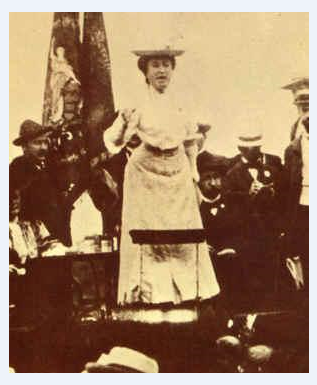
https://www.youtube.com/watch?v=S48yZUr1qO0

Synopsis
Luxemburg was born to a Jewish family in Zamosc on 5 March 1871, in Russian-controlled Congress Poland. She was the fifth and youngest child of timber trader Eliasz Luxemburg and Line Löwenstein. Luxemburg later stated that her father gave her an interest in liberal ideas, while her mother was religious, well read, with books in the home. The family spoke German and Polish, and Luxemburg also learned Russian. The family moved to Warsaw in 1873. After being bedridden with a hip ailment at the age of five, she was left with a permanent limp.
Starting in 1880, Luxemburg attended a Gymnasium. From 1886, she belonged to the Polish, left-wing Proletariat party (founded in 1882, anticipating the Russian parties by 20 years). She began in politics by organizing a general strike; as a result, four of the party's leaders were put to death and the party was disbanded, though remaining members, including Luxemburg, met in secret. In 1887, she passed her Matura examinations. After fleeing to Switzerland to escape detention in 1889, she attended the University of Zurich (as did the socialists Anatoly Lunacharsky and Leo Jogiches), studying philosophy, history, politics, economics, and mathematics. She specialized in Staatswissenschaft (the science of forms of state), the Middle Ages, and economic and stock exchange crises.
Her doctoral dissertation, "The Industrial Development of Poland" (Die Industrielle Entwicklung Polens), was officially presented in spring 1897 to the University of Zurich, which awarded her a Doctor of Law degree. Her dissertation was published by Duncker and Humblot in Leipzig in 1898. She was an oddity in Zurich as almost the only woman with a doctorate. She followed in the footsteps of Plekhanov and Axelrod, plunging immediately into the politics of international Marxism.
Germany
In May 1898 Luxemburg married Gustav Lübeck, obtained German citizenship, and moved to Berlin. There, she was active in the left wing of the Social Democratic Party of Germany (SPD), in which she sharply defined the border between her faction and the Revisionism Theory of Eduard Bernstein by attacking him in her brochure, released in September 1898, titled Social Reform or Revolution. Luxemburg's rhetorical skill made her a leading spokeswoman in denouncing the SPD's reformist parliamentary course. She argued that the critical difference between capital and labour could only be countered if the proletariat assumed power and effected revolutionary changes in production methods. She wanted the Revisionists ousted from the SPD. That did not occur, but Karl Kautsky's leadership retained a Marxist influence on its programme.
From 1900, Luxemburg published analyses of contemporary European socio-economic problems in newspapers. Foreseeing war, she vigorously attacked what she saw as German militarism and imperialism. She wanted a general strike to rouse the workers to solidarity and prevent the coming war; the SPD leaders refused, and she broke with Karl Kautsky in 1910. Between 1904 and 1906, she was imprisoned for her political activities on three occasions. In 1907, she went to the Russian Social Democrats' Fifth Party Day in London, where she met Vladimir Lenin. At the Second International (Socialist) Congress, in Stuttgart, she moved a resolution, which was accepted, that all European workers' parties should unite in attempting to stop the war.
During the war
In August 1914, Luxemburg, along with Karl Liebknecht, Clara Zetkin and Franz Mehring, founded the Die Internationale group; it became the Spartacus League in January 1916. They wrote illegal, anti-war pamphlets pseudonymously signed "Spartacus" (after the slave-liberating Thracian gladiator who opposed the Romans); Luxemburg's pseudonym was "Junius" (after Lucius Junius Brutus, founder of the Roman Republic).
The Spartacist League vehemently rejected the SPD's support for the war, trying to lead Germany's proletariat to an anti-war general strike. As a result, in June 1916 Luxemburg was imprisoned for two and a half years, as was Karl Liebknecht. During imprisonment, she was twice relocated, first to Posen (now Poznan), then to Breslau (now Wroclaw).
Friends smuggled out and illegally published her articles. Among them was "The Russian Revolution", criticising the Bolsheviks, presciently warning of their dictatorship. Nonetheless, she continued calling for a "dictatorship of the proletariat", albeit not the One Party Bolshevik model. In that context, she wrote "Freiheit ist immer die Freiheit des Andersdenkenden" ("Freedom is always the freedom of the one who thinks differently"). Another article, written in 1915 and published in June 1916, was "Die Krise der Sozialdemokratie" ("The Crisis of Social Democracy").
In 1917, the Spartacist League was affiliated with the Independent Social Democratic Party (USPD) (anti-war, ex-SPD members, founded by Hugo Haase). In November 1918, the USPD and the SPD assumed power in the new republic upon the Kaiser's abdication. This followed the German Revolution begun in Kiel, when Workers' and Soldiers' Councils seized most of Germany, to put an end to World War I and to the monarchy. The USPD and most of the SPD members supported the councils, while SPD leaders feared this could lead to a Räterepublik ("council republic") like the soviets of the Russian Revolutions of 1905 and 1917.
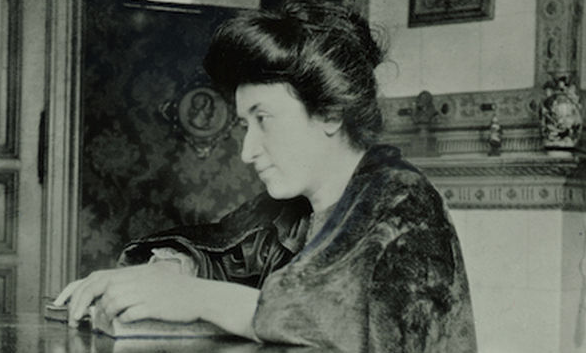
German Revolution of 1918–1919 and murder
Luxemburg was freed from prison in Breslau on 8 November 1918. One day later, Karl Liebknecht, who had also been freed from prison, proclaimed the Freie Sozialistische Republik (Free Socialist Republic) in Berlin. He and Luxemburg reorganised the Spartacus League and founded the Red Flag newspaper, demanding amnesty for all political prisoners and the abolition of capital punishment in an essay titled "Against Capital Punishment." On 14 December 1918, they published the new programme of the Spartacist League.
From 29 to 31 December 1918, they took part in a joint congress of the Spartacist League, independent Socialists, and the International Communists of Germany (IKD), that led to the foundation of the Communist Party of Germany (KPD) under the leadership of Karl Liebknecht and Luxemburg on 1 January 1919. She supported the new KPD's participation in the Weimar National Assembly that founded the Weimar Republic; but she was out-voted, and the KPD boycotted the elections.
In January 1919, a second revolutionary wave swept Berlin. On New Year's Day she declared: Today we can seriously set about destroying capitalism once and for all. Nay, more; not merely are we today in a position to perform this task, nor merely is its performance a duty toward the proletariat, but our solution offers the only means of saving human society from destruction.
Like Liebknecht, Luxemburg refused to reject this violent attempt to seize power. But the Red Flag encouraged the rebels to occupy the editorial offices of the liberal press.
In response to the uprising, Social Democratic leader Friedrich Ebert ordered the Freikorps to destroy the left-wing revolution. Luxemburg and Liebknecht were captured in Berlin on 15 January 1919 by the Rifle Division of the Cavalry Guards of the Free Corps (Freikorps' Garde-Kavallerie-Schützendivision). Its commander, Captain Waldemar Pabst (1880–1970), along with Lieutenant Horst von Pflugk-Harttung (1889-1967), questioned them under torture, and then gave the order to execute them. Luxemburg was knocked down with a rifle butt by soldier Otto Runge (1875–1945), then shot in the head, either by Lieutenant Kurt Vogel (1889-1967), or by Lieutenant Hermann Souchon (1894–1982). Her body was flung into Berlin's Landwehr Canal.[22] In the Tiergarten Karl Liebknecht was shot and his body, without a name, brought to a morgue.
The murders of Luxemburg and Liebknecht inspired a new wave of violence in Berlin, and across Germany. Thousands of KPD members, other revolutionaries, and civilians were killed. Finally, the People's Navy Division (Volksmarinedivision), and Workers' and Soldiers' councils, which had moved to the political left, disbanded. Luxemburg was held in high regard by Lenin and Trotsky, who recognised at the Third International her revolutionary credentials.
The last part of the German Revolution saw many instances of armed violence, and strikes throughout Germany, which lasted until May 1919. Significant strikes occurred in Berlin, Bremen Soviet Republik, Saxony, Saxony Gotha, Hamburg, the Rhinelands, and the Ruhr region. Last to strike was the Munich Soviet Republic, which was suppressed on 2 May 1919.
More than four months after the murders of Luxemburg and Liebknecht, on 1 June 1919, Luxemburg's corpse was found and identified after an autopsy at the Berlin Charité hospital. Otto Runge was sentenced to two years' imprisonment (for "attempted manslaughter") and Lieutenant Vogel to four months (for failing to report a corpse). However, Vogel escaped after a brief custody. Pabst and Souchon went unpunished.The Nazis later compensated Runge for having been jailed (he died in Berlin in Soviet custody after the end of World War II), and they merged the Garde-Kavallerie-Schutzendivision into the SA. In an interview with German news magazine Der Spiegel in 1962 and again in his memoirs, Pabst maintained that two SPD leaders, defence minister Gustav Noske and chancellor Friedrich Ebert, had approved of his actions. This statement has never been confirmed, because neither parliament nor the courts examined the case.
Luxemburg and Liebknecht were buried at Friedrichsfelde Central Cemetery in Berlin, where socialists and communists commemorate them every year, on the second Sunday of January.
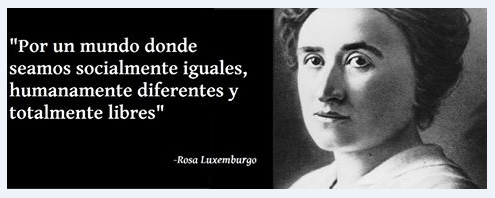
https://www.youtube.com/watch?v=S48yZUr1qO0
EL CACHÉ
IMPORTANTE : EL CACHÉ NO SE HALLA EN LAS COORDENADAS INDICADAS.
Para obtener las coordenadas finales, deberas resolver las incógnitas que encontrarás en seis de los cachés correspondientes a esta serie y sustituirlas en la siguiente fórmula:
N 38º 03, ABC W 000º 44, DEF
THE CACHE
IMPORTANT: THE CACHE IS NOT HIDEN at the given coordinates.
For the final coordinates, you must solve the unknowns finding it in six of the caches of this serie and substitute in the following formula:
N 38º 03, ABC W 000º 44, DEF