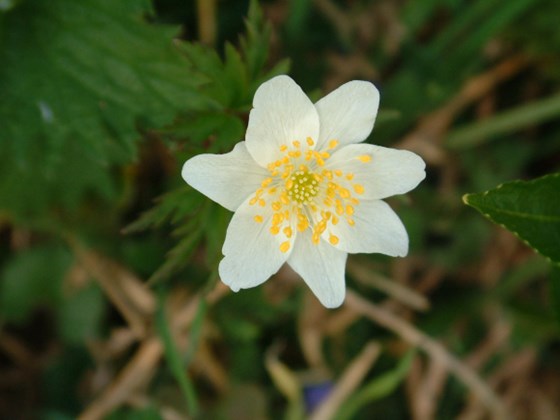
Anemone Nemorosa or Wood Anemone from the Ranunculaceae family is a characteristic sign that spring is arriving, this low-growing plant displays a white flower from March to May in deciduous woodlands across the UK and in meadows or under hedgerows. A delicate little flower yet spectacularly growing in abundance low on the woodland and forest floors.
The shape of the leaf displays three visible lobes and the stalks are long. Leaves are basal.
The flower petals are white, with a pinkish tinge. Many distinct yellow anthers are visible.
A perennial which flowers from March to May pollinated by hoverflies who seem to favour this plant.
The presence of this species can indicate ancient woodlands as it is a slow growing species, which spreads via rhizomes under the woodland floor. A poisonous plant not used in traditional medicines.
The wood anemone through dead oak leaves
And in the thickest woods now blooms anew,
And where the green briar and the bramble weaves
Thick clumps o'green, anemones thicker grew,
And weeping flowers in thousands pearled in dew
People the woods and brakes, hid hollows there,
White, yellow and purple-hued the wide wood through.
What pretty drooping weeping flowers they are:
The clipt-frilled leaves, the slender stalk they bear
On which the drooping flower hangs weeping dew,
How beautiful through April time and May
The woods look, filled with wild anemone;
And every little spinney now looks gay
With flowers mid brushwood and the huge oak tree.
John Clare (1793-1864)