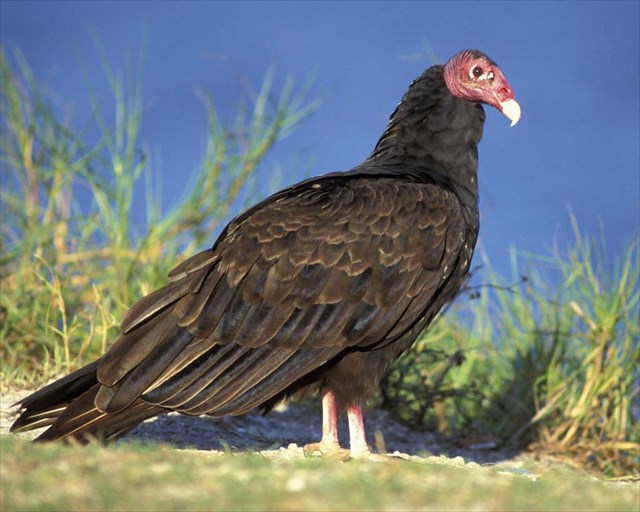
Turkey Vultures (Cathartes aura) are large dark birds with long, broad wings. They appear black from a distance but up close are dark brown with a featherless red head and pale bill. While most of their body and forewing are dark, the undersides of the flight feathers (along the trailing edge and wingtips) are paler, giving a two-toned appearance. Bigger than other raptors, except for eagles and condors, they have long "fingers" at their wingtips and long tails that extend past their toe tips in flight. When soaring, Turkey Vultures hold their wings slightly raised, making a shallow ‘V’ when seen head-on. Turkey Vultures are majestic but unsteady soarers. Their teetering flight with very few wingbeats is characteristic. Look for them gliding relatively low to the ground, sniffing for carrion, or else riding thermals up to higher vantage points. They may soar in small groups and roost in larger numbers. You may also see them on the ground in small groups, huddled around roadkill or dumpsters. Turkey Vultures are common around open areas such as roadsides, suburbs, and farm fields. Turkey Vultures nest in rock crevices, caves, ledges, thickets, mammal burrows and hollow logs, fallen trees, abandoned hawk or heron nests, and abandoned buildings. I once came across a nest in an old, collapsed shed on Mid Forest Lodge while working on a bobcat study.
While trying to determine what species to name this one, a Turkey Vulture soared over, and a cache was born. The container is a camouflaged plastic jar with a logbook and some swag. You will need to bring your own pen or pencil (or quill if you prefer). There is plenty of parking on the wide road shoulder. I would recommend starting from the north if you plan on doing the whole series.