Cloverdale has some pretty amazing birds trying to live their lives in an increasingly urban area. This series will highlight some of them.
Our all time favorite kind of bird... the humming bird!
We are blessed to have 2 types here:
1. Anna's Humming Bird
"Anna’s Hummingbirds are among the most common hummingbirds along the Pacific Coast, yet they're anything but common in appearance. With their iridescent emerald feathers and sparkling rose-pink throats, they are more like flying jewelry than birds. Though no larger than a ping-pong ball and no heavier than a nickel, Anna’s Hummingbirds make a strong impression. In their thrilling courtship displays, males climb up to 130 feet into the air and then swoop to the ground with a curious burst of noise that they produce through their tail feathers.
What do you call a flock of hummingbirds? Few animals have so many applicable terms, and none so beautiful. Instead of calling them a flock, choose between a bouquet, a glittering, a hover, a shimmer, or a tune of hummingbirds."
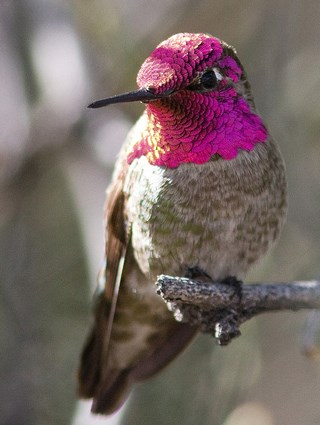
Male Anna's Hummingbird (Write up and photo cortesy of allaboutbirds.org)
Backyard feeders allow these little guys to stay here all winter when there are few flowers to drink from.
2. Rufous Humming Birds:
"The feistiest hummingbird in North America. The brilliant orange male and the green-and-orange female Rufous Hummingbird are relentless attackers at flowers and feeders, going after (if not always defeating) even the large hummingbirds of the Southwest, which can be double their weight. Rufous Hummingbirds are wide-ranging, and breed farther north than any other hummingbird. Look for them in spring in California, summer in the Pacific Northwest and Alaska, and fall in the Rocky Mountains as they make their annual circuit of the West. Like other hummers, they eat insects as well as nectar, taking them from spider webs or catching them in midair."
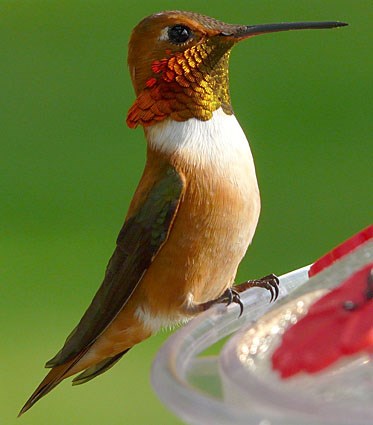
Male Rufous Humming Bird (Write up and photo courtesy of allaboutbirds.org)
So if you'd like to set up a feeder, all you need to do is boil a cup of water, and disolve a 1/4 cup of sugar in it (or any 4 to 1 water to sugar ratio). Let it cool and fill your feeder! Studies show that red food dyes in commercial nectars are harmful to birds, so its better, easier and cheaper to make your own. Change every week, or in hot weather every 3 or 4 days. Enjoy!