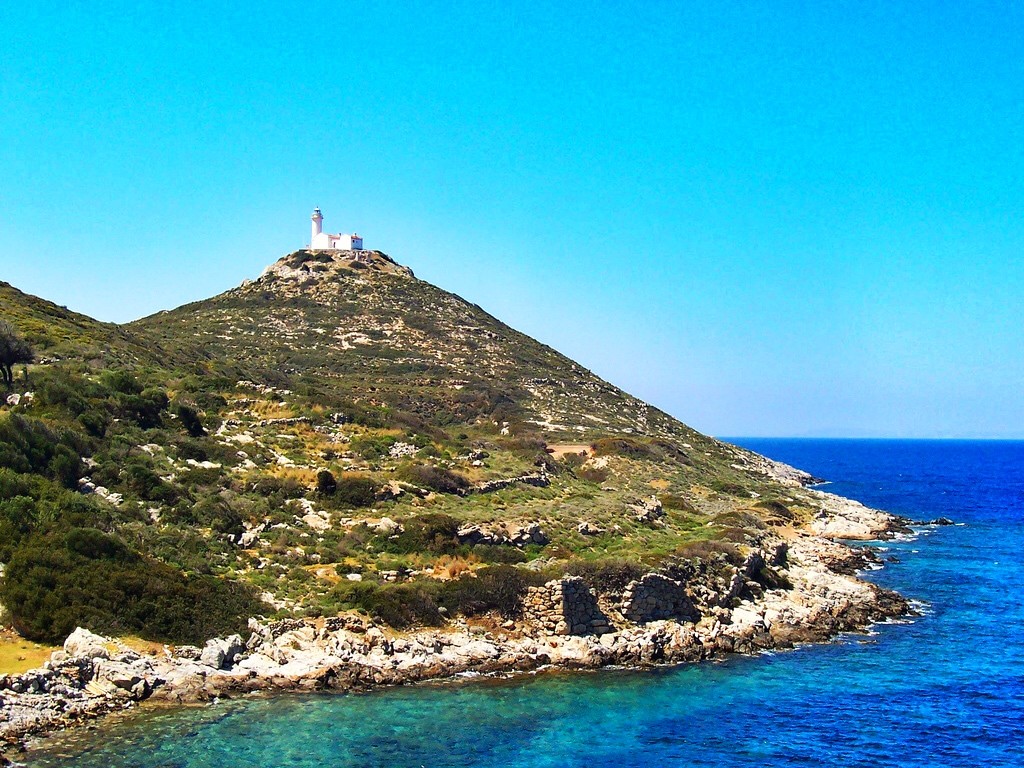
[TR] Datça'nın Knidos ( Kriyo ) mevkiine 1931 yılında inşaa edilmiştir. Anadolu'nun Akdeniz'e uzanmış en uç noktası olan bu yer aynı zamanda Ege ve Akdeniz'i birbirinden ayıran bir nokta durumundadır. Bulunduğu yerin coğrafi şekli bakımından deve şeklini andırdığından fenere Deveboynu ismi verilmiştir. Bu fenerin deniz seviyesinden yüksekliği 109 metre olup,kagir kulesinin yüksekliği ise 9 metredir. Çakma karakteri Gp.Fl.W.(2) 10 Sn. olan fenerin görünüş mesafesi 12 deniz milidir. Fenerde önce ışık kaynağı olarak fitilli gaz yağı lambası kullanılmış daha sonra LPG ile çalışan parlak ışıklı manşonlu ( gömlekli ) lambalar kullanılmış ve şu anda güneş enerjisi ile çalışan 35 W'lık elektrik lambası kullanılmaktadır. Işık kaynağını kuvvetlendirerek uzaktan görünmesini teminen odak uzaklığı 375 mm olan üç adet kotodiyoptrik panel kullanılmıştır. Söz konusu optik paneller cıva banyosu üzerinde dönebilen dairesel platform üzerine dörtgen teşkil edecek şekilde yerleştirilmiş bulunmaktadır. Işık kaynağı odakta sabit olarak yakılmakta ve platform üzerindeki optik panellerin döndürülmesi suretiyle fenerin dört çakar ışık vermesi sağlanmıştır. Saat mekanizması ve paneller İstanbul’da koruma altındadır.Şu anda elektrikli flaşörlü 300m fener cihazı ile faaliyetini sürdürmektedir, Fener ve gardiyan binası ulusal miras olarak Kıyı Emniyeti ve Gemi Kurtarma İşletmeleri Genel Müdürlüğünce koruma altındadır.
Ziyaret Saatleri : 08:00 - 19:00(Nisan-Ekim arası) / 08:00 - 17:00(Kasım-Mart arası)
[TR] It was constructed in Knidos region of Datça in 1931. This location of situation which is the farmost point of Anatolia towards the Mediterranean Sea is also the border between the Mediterranean and Aegean Seas. Its name "Deveboynu" (Camel’s Neck) was given to the fact that its geographical situation represents the form of a camel neck. It is 109 meters above the sea level with a tower having 9 meter of height. The visual sight distance of the lighthouse, in which has the flashing character of GP Fl W (2).10 sec, is 12 nautical miles. Oil lamp has primarily been used and then high intense filament lamps work with LPCo as a light source and it is currently provided an illumination with the electric lamp of 35 W by solar powered. In order to be seen from the long distance by strengthen the light source, three pieces cotodiyoptric cylinder lenses which has optical distance of 375 mm as a optic system had been used. Quadrangle optical panels had placed on circular platform which float on bath of mercury. Fixed light source illuminates on focus and when the optic is rotated on the platform it will give out four flashes during the period of rotation. Clockwork mechanism and optical panels has been under protection in Istanbul Nowadays it is operated with electrical flash lantern 300mm. Lighthouse and guardian house is being under protection as national heritage by General Directorate of Coastal Safety and Salvage Administrations. Above mentioned mechanism and optical panels has been under protection and still using in service. Lighthouse and guardian house is being under protection as national heritage by General Directorate of Coastal Safety and Salvage Administrations.
Visiting Hours : 8am - 7pm(April to October) / 8am - 5pm(November to March)