OFHP 1-10 – Historic Poor Farm
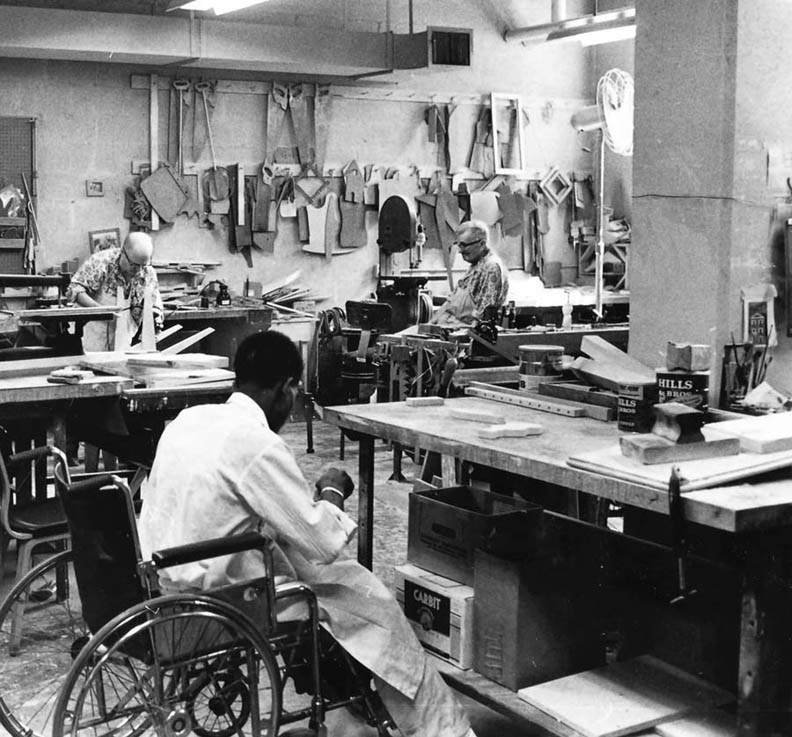
Fascinating to those working on the project has been the story of the poor farm that opened in 1910, a complex of buildings where Cook County housed the poor, elderly and disabled -- and put them to work.
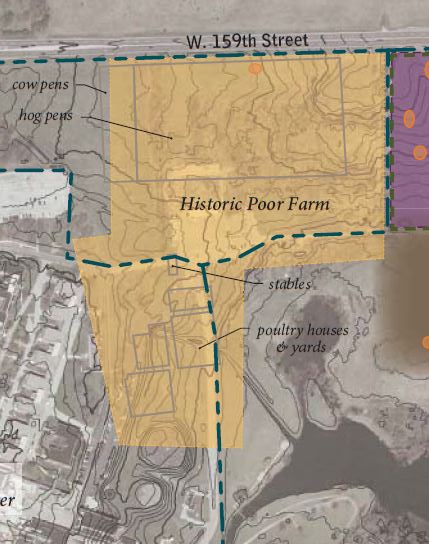
The county bought the Oak Forest property for $33,624 in 1908 because another poor farm site, called Dunning, had become unsanitary and overcrowded. County leaders wanted a more rural location where the poor could have a healthier environment and tuberculosis patients, who would be treated there, could breathe cleaner air. With thousands of residents, the poor farm was like a small city. A rail line was extended to the property. Children who lived there had their own schoolhouse and teacher.
Before the 1935 Social Security Act, counties and cities held the main responsibility for the welfare of poor people. Across the United States, counties and cities ran similar poorhouses and poor farms in the 19th century and early 20th century. The idea was thought to be progressive at the time: the poor would build character as they supported themselves in a self-sustaining community. "Reformers argued it would be cheaper to congregate the poor into institutions than give them welfare" payments, said University of Southern Maine sociology professor David Wagner, author of "The Poorhouse: America's Forgotten Institution." "Reformers also -- in a strong parallel to reforming welfare in recent years -- claimed paupers were getting too much money and were not using their resources wisely,".
Anna Ashcraft, Cook County's director of real estate management, gathered historical information about the Oak Forest property and was intrigued by the poor farm's history and the lives of its residents. "They grew enough food to feed themselves. They made clothing. They made shoes," Ashcraft said. "It's not something you learn about in school."
Ironically, the effort to preserve the forgotten history of the Oak Forest property may never have happened if not for an event in very recent history: the Great Recession that began in 2007. A buyer was interested in developing part of the property as a business park, Ashcraft said, but the deal fell through in 2009. Cook County officials, who had been eager to sell the land to a developer, changed their minds. In 2010, the site was acquired by the county's forest preserve district for $13.2 million in loan repayment and $1.8 million in cash. "It was a really good outcome, I have to say," Ashcraft said. "The project may be the proudest of my career here. It worked out incredibly well."



The Cache:
Medium container with room for a few Items.
Parking:
Visitors can enter the Oak Forest Heritage Preserve off 159th Street, through the Medical Center's main entrance, and follow the signs (just tell security that you are visiting the Heritage Preserve). Parking is also available through the parking lot on Fieldcrest Drive just off of Pulaski or at the Fieldcrest Park parking lot.
Notes:
- Bring your camera! This is a beautiful preserve with a lot of wildlife, history, and many informative signs.
- This is a forest preserve and I suggest bug repellent and long pants. Watch for poison ivy, although I tried to place all caches away from it, you may run into it. There are also ticks in the area.
- This series can be done walking, running, or biking.
- Dogs are allowed, but must be leased at all times.
- Do not place the following items in the Geocache: Food items, inappropriate, offensive, or hazardous materials.
- Hours are sunrise until sunset. Preserve users must not be in the preserves after hours.
- Please remember, it’s not an official find until you log it online.