Riffles, Runs and Pool
Stream ecosystems provide a habitat or natural environment for many diverse aquatic organisms and plants. Each stream is composed of a series of pools, riffles and runs.
Riffles:
An area of stream characterized by shallow depths with fast, turbulent water.
The riffles are short segments of the stream where water flow is agitated by rocks. Gravel riffles consist of gravel and cobble-sized stone arranged at distinct intervals in shallow streams. Gravel riffles promote the formation of stable substrate in channels that have been modified or otherwise heavily impacted by development. Gravel substrate provides productive habitat for aquatic organisms and areas for fish to spawn. Generally, riffles are the shallowest, steepest, and often the swiftest and most turbulent habitats of a stream. Substrate in riffles is usually bedrock or the larger size material found in a given stream. In gravel-bed streams, riffle substrate includes gravels, cobbles, boulders and bedrock.
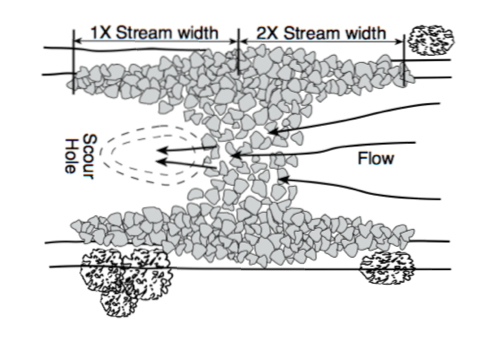
Image A shows the flow of the water over a riffle

Image B shows the Aggregate Size chart
Run:
An area of stream characterized by moderate current, continuous surface and depths greater than riffles.
Runs are stretches of the stream downstream of pools and riffles where stream flow and current are moderate. The smooth surface allows for light to penetrate.

Image C shows the location of Riffles, Runs and Pools in a stream
Pools:
An area of the stream characterized by deep depths and slow current.
Pools are typically created by the vertical force of water falling down over logs or boulders. The movement of the water carves a deeper indentation in the stream bed. Pools are important because they can provide depth and still water.
To claim this EarthCache, please send answers, to the following questions, to the CO at the top of this page:
1) Standing at the riffle, describe where you can find a “Run” and “Pool” above or below the riffle.
2) What type of aggregate can be found in the riffle at the reference point? Use the chart above.
3) Estimate the width of Bronte Creek at the riffles.
4) What two important things do riffles do to keep the stream healthy?
5) Name 4 things Trout Unlimited Canada suggests visitors to the park can do to keep Bronte Creek Healthy.