
The Cooloola Sandpatch is part of the Cooloola Sandmass, one of Queensland's largest coastal sand deposits, that stretches 42 km south of Rainbow Beach and about 10 km inland. It rises to an elevation of more than 200 m, which gives visitors a spectacular view over the Upper Noosa River catchment and hinterland areas. It is a unique and constantly evolving environment, where the action of wind, water and weather shape the landscape and bring about continual change.
The Cooloola Sandpatch is an impressive example of a parabolic sand dune or 'sandblow'. Here an accumulation of sand has occurred inland, due to there being little or no vegetation on a sand dune ridge. In this gap area, there are no plants present to hold the sand down, so it is able to blow and move to make a U-shaped (parabolic) deposit or blowout (see diagram below).

Over time blowouts increase in size, and if left unchecked the whole dune system can migrate inland, with the sand covering everything in its path. It's for this reason that it is vital to maintain good vegetation cover and established plant communities on our sand dunes, as stable sand dunes are important for coastline protection. They act as buffers against wave damage that occurs during storms, they stop salt water from finding its way inland and they also act as a sand reservoir during times of beach erosion.
To log this earthcache, you will need to send your answers to the following three questions via the message centre. Once you've sent your answers, feel free to log your find - I will get in touch with you if there are any problems. It would also be great if you would like to post a photo of your adventures at the Cooloola Sandpatch with your log, but this is totally OPTIONAL.
Questions:
1. How many years ago did the Cooloola Sandmass begin to form?
2. What are the three characteristics that define a parabolic sand dune?
3. What can cause advanced sand blows to become stabilised sand dunes once again?
A big congratulations to Dora the Explorer! and CDAH55 for their well-earned FTF, so glad you enjoyed your visit to the Sandpatch as much as I did 
How to get to the Cooloola Sandpatch:
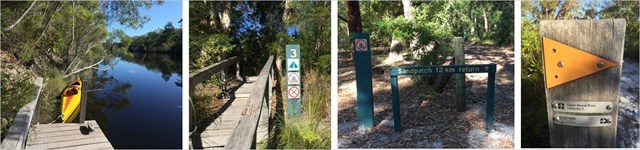
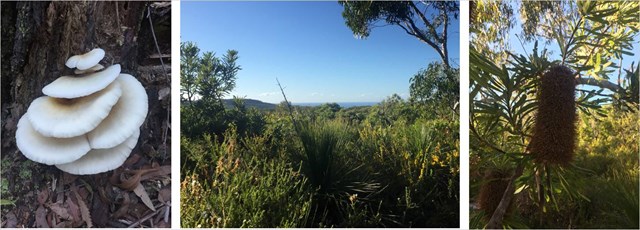
To get to the Cooloola Sandpatch you will be embarking on an adventurous journey - hence this earthcache's terrain 5 rating. If you are a keen paddler, the easiest way to get to the Cooloola Sandpatch is to launch your kayak or canoe from the Harry's Hut day use area (accessible only by 4WD vehicles) and paddle 7.5 km upstream (about 1.5 hours) to Campsite 3. Mooring your paddlecraft, you then follow the well sign-posted 6 km track to the Sandpatch on mostly firm-packed sand, through coastal heathland and forests of blackbutt, scribbly gum and banksia. During our visit we paddled to Campsite 3 by kayak, stayed overnight (you need a camping permit to do this), then walked the 12 km round-trip to the Sandpatch (give yourself 4 hours for the return trip) in the morning, before paddling back to Harry's Hut in the afternoon. We were there in September and were treated to a lovely showing of many different wildflowers and fungi, as well as the beautiful Sandpatch.
If you are not a paddler, you can launch a power boat from Boreen Point and travel up to Campsite 3 that way. Or if you like a bushwalk, the Cooloola Sandpatch is one highlight of the Cooloola Great Walk, a 102 km, 5 day one-way trek, however to do this you will need to be an experienced hiker and you will require a topographic map, compass, reliable communication and navigation equipment.
For your safety - additional things to consider:
- There is no drinking water available at Campsite 3 onwards, so remember to take enough water with you for your journey
- Depending on the time of year, it can be very hot walking from Campsite 3 to the Sandpatch as there is little shade. The walk is best undertaken in the morning to avoid the heat of the day.
- Tread lightly - Please be careful where you walk and avoid damaging plants and fungi wherever you go; stay on the tracks and don't shortcut
- Leave no trace - Take all rubbish home with you
- Don't undertake the paddle/walk alone, have someone go with you; apart from being safer it's more fun to share the experience
- Don't forget your sunscreen and insect repellent and make sure you pack a first aid kit and know how to use it
- Give yourself plenty of time to get to the Sandpatch and back before it gets dark; make sure you let someone know of your whereabouts and itinerary before you leave
