Sedimentary rock forms from bits of rocks deposited over time by wind and/or water. Rocks occur in all sizes. The tiny amounts of mud, pebbles, sand grains, and smaller rock particles can form sedimentary rock. Sediment can also contain the remains of once living things. This may be bones, shells, droppings, leaves or stems. Wind and water carry sediments and deposit them in layers usually in a lake or ocean bottom. The processes that turn sediments into solid rock are compaction and cementation. The processes of compaction and cementation together are known as sedimentation.
Compaction
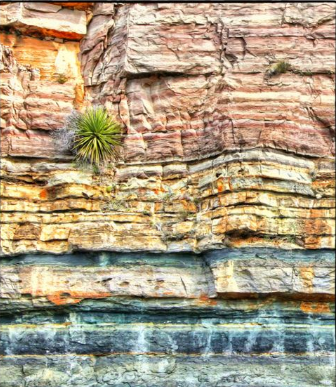
At first, the fragments of rock lie loosely together. But gradually, over many, many years these thick layers build up. This build up becomes heavy and presses down on the layers beneath it. Compaction is the pressing down of layers forcing the sediments to fit closer together. Over millions of years, this process can squeeze fragments tightly together. The layers often remain visible in the rock and may be used to identify sedimentary rock.
Cementation
During the process of compaction, the minerals in the rock are dissolving. These dissolved minerals fill in the spaces between sediment particles. Cementation is the process of sediments being glued tightly together. The processes of erosion, deposition, compaction, and cementation may occur over millions of years transforming rock fragments into solid rock.
Faults
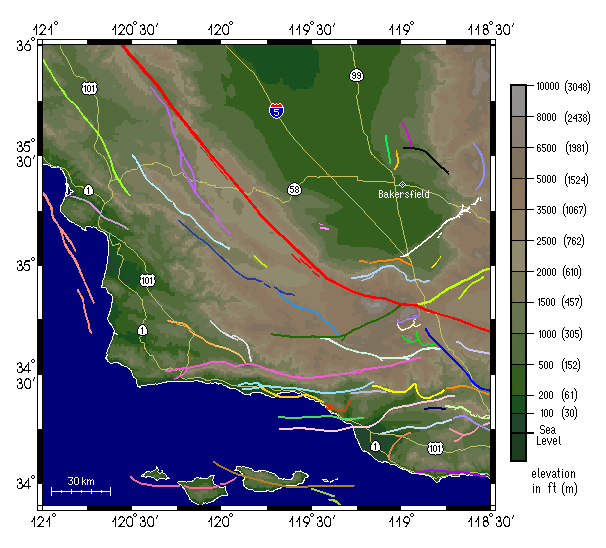
The Faults in Simi Valley that come into play are: a. San Andreas Fault, b. Simi Fault (also known as the Santa Rosa fault) and of course, c. the big Tectonic Plate movement of the Pacific Plate and North American Plate.
These all have had actions in this area and are responsible for the movement you see here before you.
The following Material were used for Reference:
- UCSB Geology Department
- U.S. Department of the Interior, Professional papers and Geological surveys
- Wikipedia
- California Institute of Technology
- Utah Division of Mines and Geology
- Wikipedia
Logging Requirements: Please E-Mail me the answers, don't post any pictures of the site itself.
1. Type in GC6Z03J Sediments and Faults.
2. How many big layers do you count in a 20 foot section?
3. What are the main colors in these layers?
4. What type of Sedimentation do you think made these layers?
5. What angle do you Estimate are these layers tilted?
6. What forces caused this tilt?