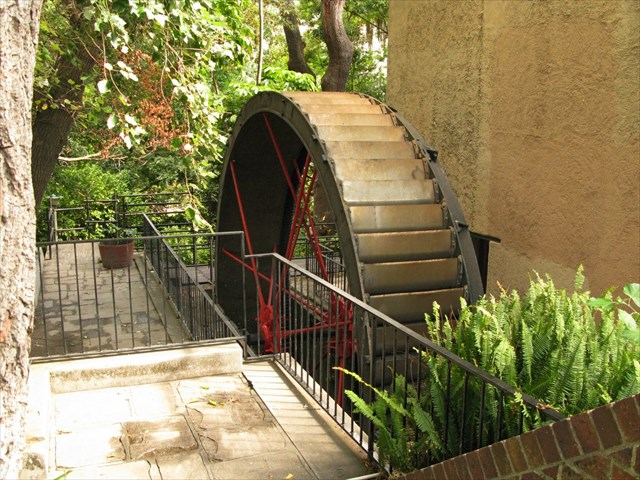
The Water-Wheel at Josephine Mill
The Swede Joseph Letterstedt built his mill in 1840 and dedicated it to 'Josephine'. There is doubt as to who this Josephine was. The notion that he named the mill after a daughter is wrong as his only daughter was named Lydia.
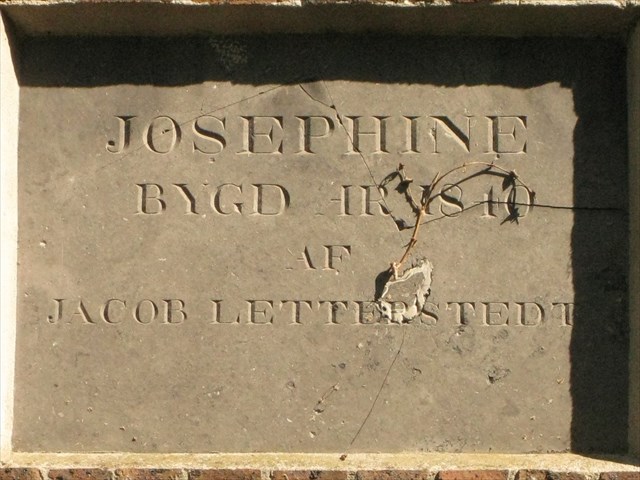
It is more likely, and now generally accepted, that his Swedish patriotism prompted him to name the mill in honour of the Swedish Crown Princess, Josephine, whom he had met on a visit to Sweden a year or two before the mill was built.
A striking feature of the Josephine Mill is its enormous iron water-wheel, just under 8 m in diameter and about 1.4 m wide. Unfortunately the original water-wheel had been neglected for many years, as had the mill buildings. The property was donated to the Cape Town Historical Society in 1975 and this led to the mill buildings and water-wheel being restored. The present water-wheel is a restored replica of the original. The restoration of the wheel was done under the direction of the University of Cape Town Professor of Mechanical Engineering, Dick Dutkiewicz, with much of the work being undertaken by UCT students.
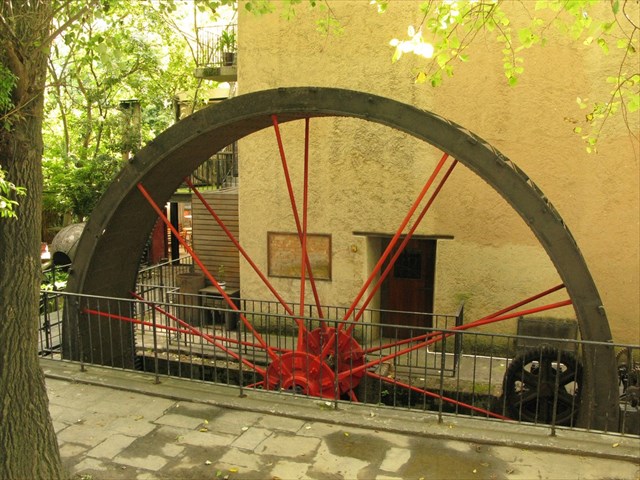
The Enormous Iron Water-Wheel
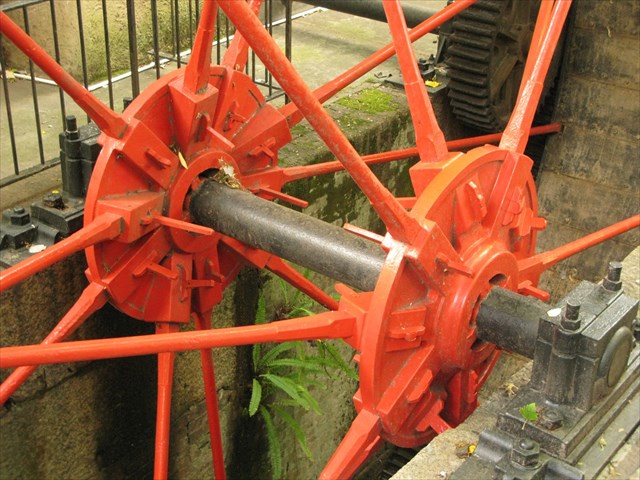
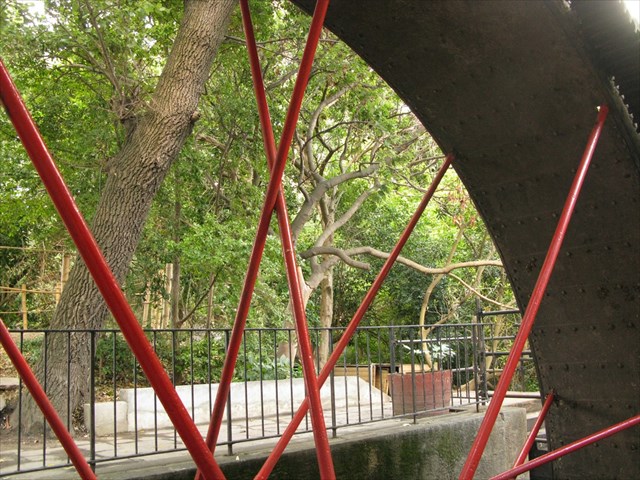
This water-wheel is made of iron, both cast and wrought. The central axle is 18 cm in diameter and is made of cast iron. Ten wrought iron 'spokes', five radial and five diagonal, support the cast-iron rim to which the wrought-iron buckets are fastened.
 |
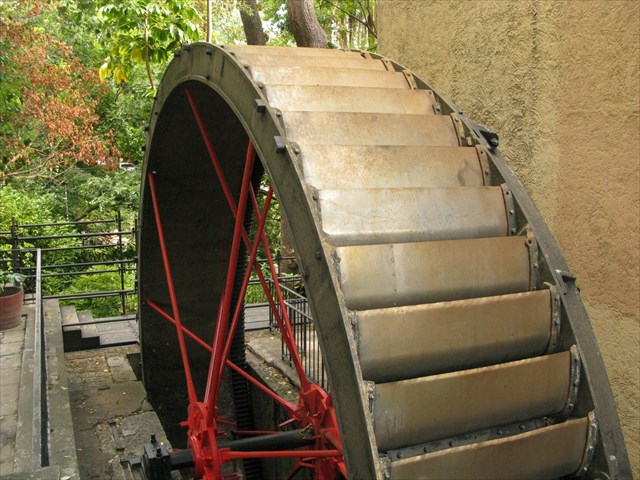 |
| The Central Axle and Spokes |
The Wrought- Iron Buckets and Spokes |
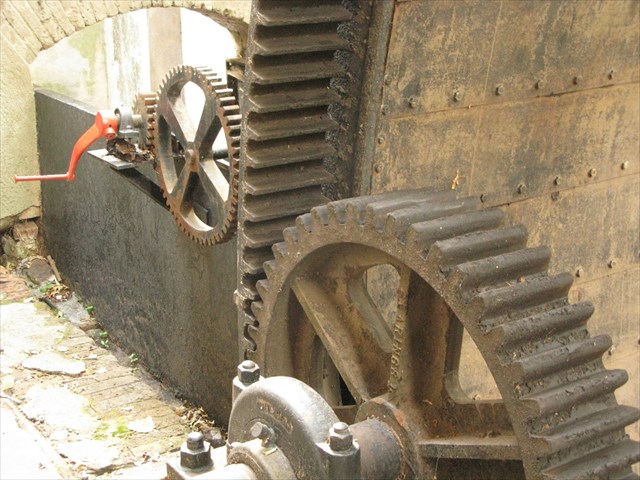
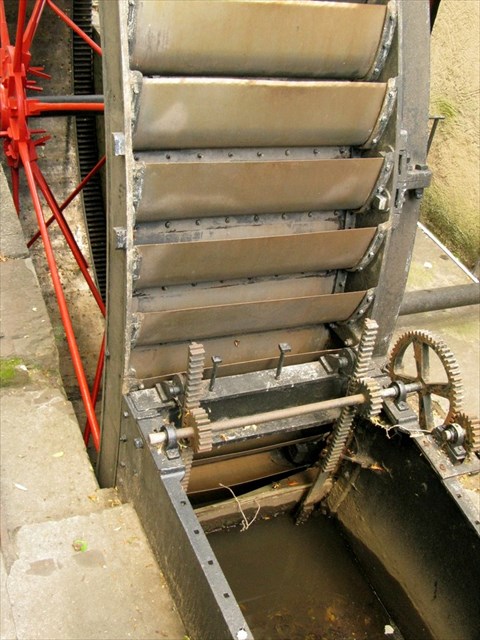
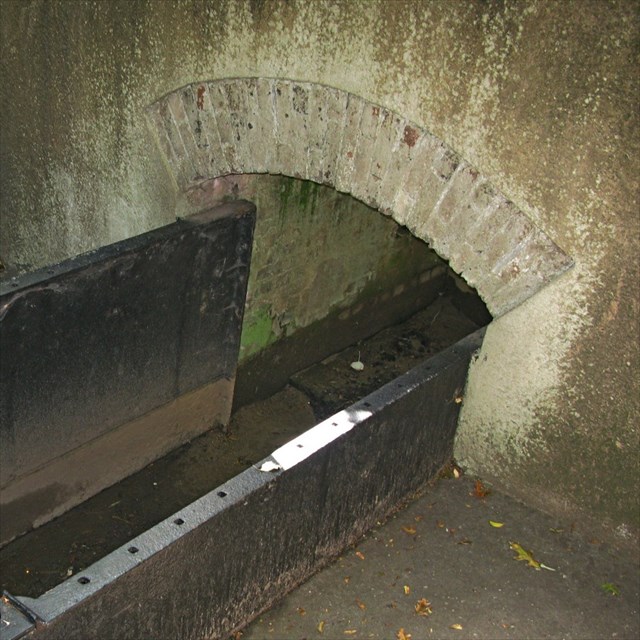
A cog-rim is bolted onto one side of the rim. It is a breast-shot wheel, meaning that the water enters the wheel's buckets at the same height as the wheel axle. The weight of the water in the buckets causes the wheel to rotate with the cogs on the rim driving a small cog-wheel at the end of the drive shaft that passed through the wall to drive the mill-stones inside the building via a series of gears and shafts. The speed of the wheel could be adjusted by controlling the flow of water from the mill-race into the buckets: this was done by a sliding-hatch sluice gate that could be raised and lowered by a ratchet mechanism. This controlled the rate at which water flowed into the buckets.
 |
 |
| The Cog Wheel and Rim Cogs |
The Sliding Hatch Sluice Gate |
 |
 |
| The Mill Race |
Radial and Diagonal Spokes |
Text of a Historical Plaque on the wall of the Mill
This water-mill, situated on the site of an earlier mill built by Johan Frederick Dreyer in 1818, was erected in 1840 by Jacob Letterstedt, a Swedish immigrant and 1820 settler. It was named after Crown Princess Josephine, later Queen of Sweden. The taller extension was erected sometime between 1863 and 1881 to house the steam mill. Anders Ohlsson & co. Leased the property from 1888 to 1896, when Ohlsson's Cape Breweries purchased it. Mrs. Kate van der Byl, owner of the adjoining mill house, bought the mill in 1931. Her niece and heiress, Miss Myra East, donated it in 1975 to the Historical Society of Cape Town, who restored it between 1975-and 1987.
This plaque can be seen on the exterior wall of the Mill building. To the right of the entrance to the Mill old millstones have been set into the paving.
Sources and Additional Reading
James Walton, Water-mills, windmills and horse-mills of South Africa, C. Struik Publishers, 1974.
James Walton (Ed),The Josephine Mill and Its Owners, Published by the Historical Society of Cape Town, 1978.
The link to the Geocache Mill Series Website is:
www.geocachingmillseries.weebly.com