Caches come about in many ways. Some start with a great location, others with a nifty container or a fun theme and then the rest falls into place. This particular cache is the spawn of a viral song that my children listen to. It’s been played so many times that it’s become a common expression amongst us and is often the response given when an answer is otherwise unknown. Despite the repetition and silliness it did inform us of a fact we were ignorant to, cashews do indeed come from a fruit.

Though you might think of it as just another nut in the trail mix, the cashew is a decidedly strange snack. Sprouting like a tail from the bottom of an oddly-shaped fruit, the cashew, in its natural state, is both very weird-looking and very poisonous.
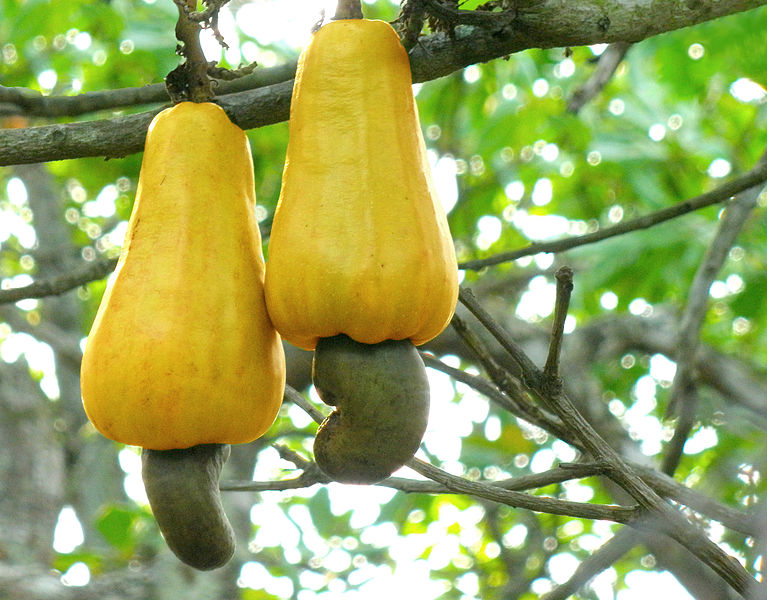
While many of the cashews produced for commerce come from Africa and India, the cashew tree is native to tropical regions of Brazil. The tree produces a long, fleshy stalk, called a cashew apple, which resembles a small pear. At the end of this stalk grows the kidney-shaped cashew nut that many know and love.

Cashew nuts are protected from hungry passerby by a double shell containing a potent poison called anacardic acid. This oily substance is closely related to urshiol, the toxic compound found in poison ivy, poison oak and poison sumac acts as an irritant, causing an allergic rash on the skin. Its corrosive coating is the reason that cashew nuts are not sold in their shells like pistachios or peanuts. Instead, cashews are typically dried and roasted, a process that rids the nut of toxic oils and leaves its shell brittle and easy to remove.