Tutu
Common name: Tutu
Botanical name: Coriaria arborea
The tutu is a small tree with poisonous properties. Almost all parts of the tree are poisonous to some degree, but in spring the sap of the plant is particularly poisonous and in autumn the seeds are very poisonous as well. There are numerous cases recorded of people becoming very sick and even dying from the tree’s effects, especially early settler children who ate the palatable berries and were poisoned by the seeds, as well as many cases of animal deaths after eating the leaves, especially during the early years of European settlement. Even in recent times occasional poisoning occurs. Three tourists were poisoned from eating large quantities of the very tasty tutu berries while out tramping in 2012, but luckily presented themselves at Nelson Hospital within a few hours and were in time to be treated and all survived the experience. The first two sheep brought to New Zealand, by Captain Cook in 1773, died after eating tutu just a few days after their release at Queen Charlotte Sound. The largest animal death was an elephant (!) from a travelling circus (Bullen’s) that ate some tutu roadside shrubs in 1957. If you are in Ohakune, visit GC446H9 “Mollie – RIP”, as the cache commemorates this event and is close to where Mollie the elephant is buried.
The glucoside responsible for all this poisoning, called “tutin”, was discovered in 1870. As little as 1 milligram can cause nausea, vomiting and exhaustion over a period of 24 hours. No antidote is known. In spite of this the Maoris used to prepare an alcoholic beverage from the fruit after the seeds had been removed. Little direct poisoning occurs nowadays, but sometimes bees gather honeydew that has been excreted onto the leaves by insects that have sucked tutu sap: when this happens the honey is also poisonous and many cases have been reported of tutu poisoning from this cause over the years. One recent case of honey poisoning from tutu that made the national news occurred in the Coromandel in 2008 when 22 people fell ill after eating honey that had been contaminated by tutin. Do not place your beehives anywhere near where tutu grows!
Tutu is usually a shrub, but can grow into a small tree up to 8 m high with a trunk up to 30 cm across. It occurs all over New Zealand and in the Chatham Islands from sea level to 1060 m altitude and is found in scrub, along forest margins and in gullies and near rivers and streams. It is one of the first plants to reappear after a forest fire and was reported to be the first plant to appear on the pumice deposits left after the Mount Tarawera eruption in 1886.
Leaves
The leaves are dark green and shiny in two rows all along the branches, giving it a similar appearance to a fern. The leaves are 5-10 cm long and 4-5 cm wide, with pointed tips. They have prominent veins. The underside of the leaf is dull rather than shiny. The spring growth is very lush and a lighter green. It is the sap from this spring growth that is particularly poisonous.
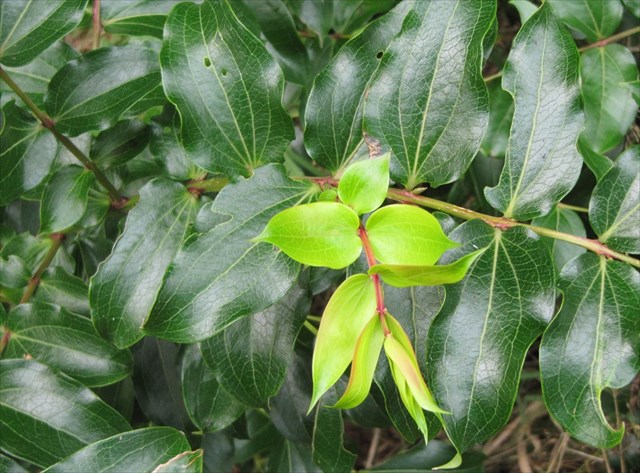 Distinctive leaves
Flowers and fruit
The flowers are produced in spring and are tiny, creamy coloured and hang from the ends of the branches in long racemes. The pollen is wind-borne.
[flower photos to follow – not in flower at time of publication]
They are followed by black fruits with fleshy ‘petals’ around them, once again hanging in long racemes. Each fruit encloses several of the highly poisonous seeds.
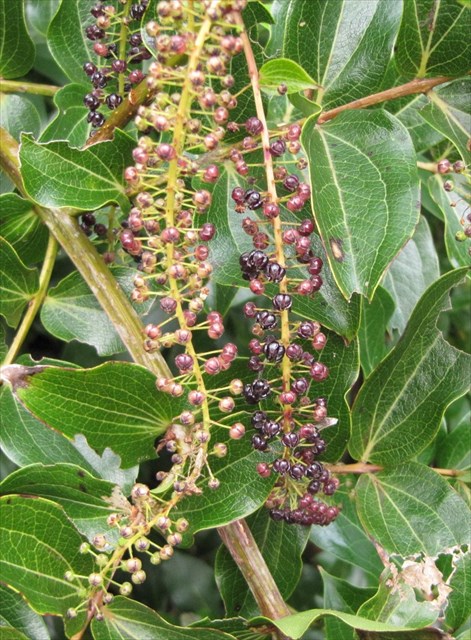
Fruit racemes
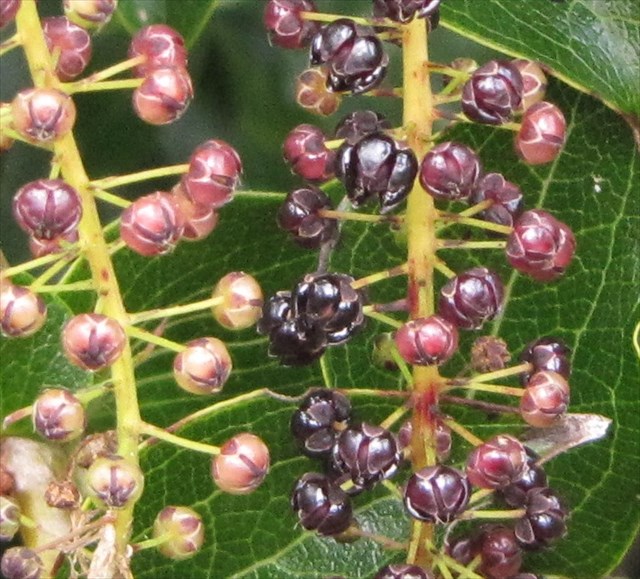 Close-up view of the fruit
Bark
Young trees have dark smooth and knobbly bark, but it becomes rough on old trees.
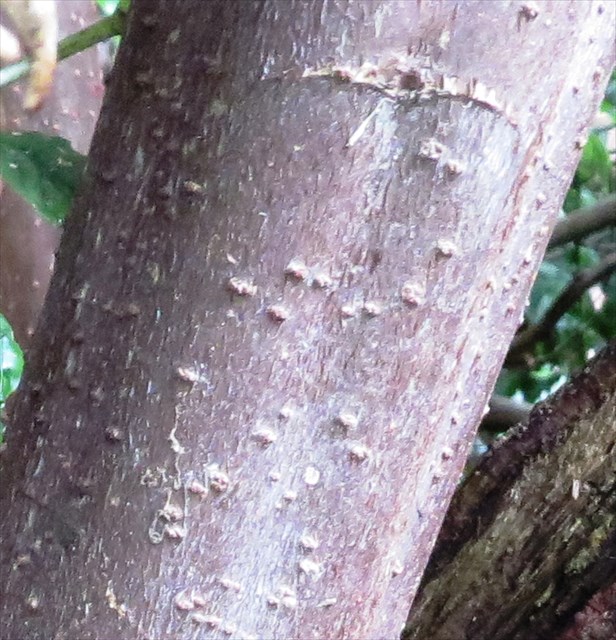
Bark of a young tree
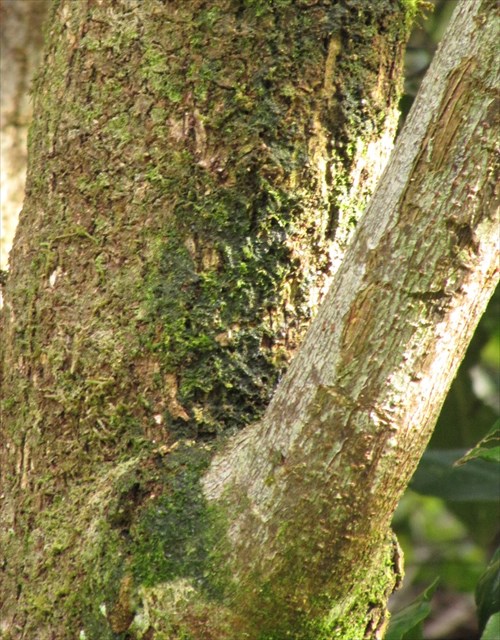
Bark of a mature tree
The tutu at GZ
Tutu is VERY common all along the Rimutaka Rail Trail and alongside the side trail that sidles around Goat Rock (which I call "The Phew Track" and have placed a phew caches along there). Few of the tutu plants around Goat Rock are tree size, most are spindly saplings, but there are numerous trees of various sizes that you can spot along the sides of the old Rimutaka Railway cutting that you have traversed to get to GZ. The cache is tucked in behind more of a large shrub than a tree in this case, which is close to the track.
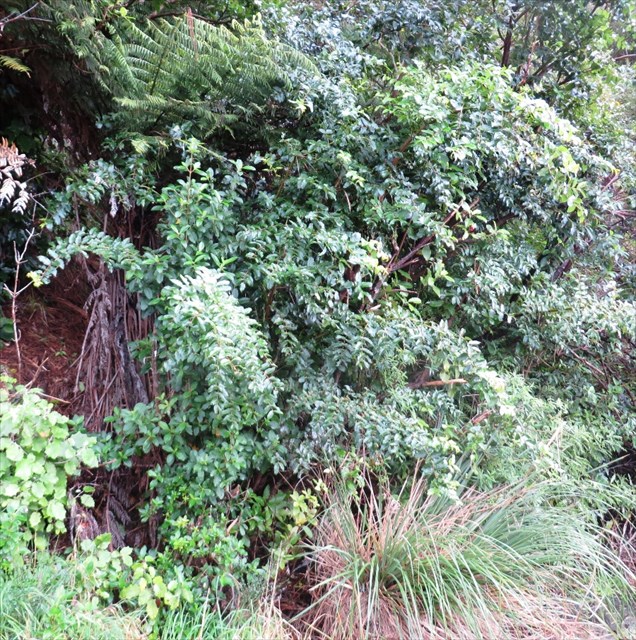
The tree at GZ
The cache
The cache is, as usual for this series so far, a red M&M container. At time of placement the cache contained a log book and a pencil. There is room for small Travel Bugs and Geocoins inside the cache. Online logs that do not have a matching signature in the paper log will be deleted.
Please replace the cache where and as found so that it cannot be noticed by the many walkers, cyclists and occasional horse riders who use this track.
You can't be poisoned just by brushing the tree, only by ingesting the poisonous sap or seeds, so reaching for and replacing the cache is safe.
DO NOT EAT THE BERRIES!