There are currently building works at the Civic Centre. Some waypoints may be inaccessible. Until the works are completed, please answer the questions based on the accessible locations only. Please indicate in your answer email / message which locations you could not access and your answers will be accepted.
The Civic Centre
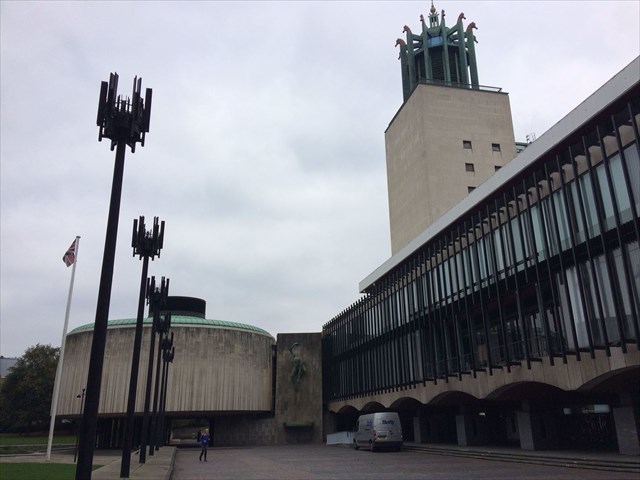
Newcastle Civic Centre was completed in 1967 and officially opened a year later by King Olav V of Norway. The architect was G W Kenyon. The building cost around £5 million to construct and replaced the Victorian town hall that stood in the Bigg Market. This was demolished in 1973. The Civic Centre was constructed to a very high standard using costly materials and incorporating many works of art. These include two sculptures by David Wynne: Swans in Flight in the inner courtyard and River God Tyne on the south facing wall next to the circular council chamber. The seahorses atop the tower were designed by John Robert Murray McCheyne.
In 1995 the Civic Centre became a Grade II* listed building. The listing states that it is an important public building with extremely high quality materials and craftsmanship.
The Rock Cycle
The rock cycle is an important concept in geology. It describes how earth’s physical processes, such as plate tectonics and the water cycle, create, alter and destroy rocks over millions of years. The rock cycle is shown in the diagram below:

The three main rock types
Rocks are classified into three groups:
1. Igneous rocks are formed when molten magma cools and solidifies underground (called intrusive) into rocks such as granite. Volcanic eruptions also create igneous rocks when lava at the surface cools (called extrusive) to form rocks such as basalt or andesite. Most igneous rocks are made up of interlocking crystals (crystalline) of minerals like quartz, feldspar or mica.
2. Sedimentary rocks are formed when loose sediment (silt, sand, pebbles) are buried deep underground and compacted. The sediment is eventually cemented together by minerals, turning sand into sandstone for instance. Sedimentary rocks often contain fossils or plants or animals. Some sedimentary rocks, such as limestone, are crystalline because they formed when mineral crystals precipitated out of warm oceans onto the sea floor.
3. Metamorphic rocks are created when intense heat and / or pressure alter sedimentary rocks causing minerals in the rock to recrystallise forming a new rock. However, the original rock does not melt. Many metamorphic rocks have a banded, layered or ‘wavy’ appearance (called foliation) because they have been squeezed under huge pressure, and they often have a ‘sheen’ on the surface caused by light reflecting of mica and other minerals.
The Civic Centre rock cycle
You can easily experience your own rock cycle by visiting some locations around the civic centre where you will see igneous, sedimentary and metamorphic rocks. Use the information on the cache page, and your observations, to answer the questions.
The Questions
The big seat:
Take a seat and look at either the stone the seat (bench) is made from, or the stone immediately behind the seat, closest to the ground. This is a crystalline rock containing mostly quartz and feldspar.
1a: Describe the colours of the mineral crystals.
1b: Measure some crystals and work out a rough average for the crystal size, in mm.
1c: Is this an igneous, sedimentary or metamorphic rock? (bonus points if you can name the specific rock type)
Jimmy woz here
There is a large stone plaque here, commemorating an interesting visitor to Tyneside. It is made of sedimentary limestone rock containing fossils.
2a: Who visited Tyneside?
2b: Find a fossil and look closely at it. Describe its size and shape.
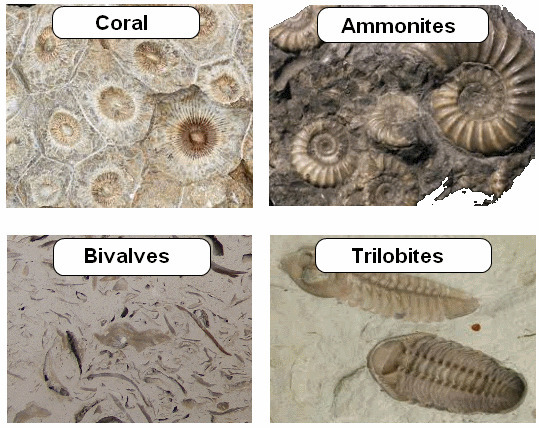
2c: Look at the picture of fossil types on this page. Which fossil type best matches what you can see in the stone?
The pillars
There are large, square pillars supporting the building here, clad in stone.
3a: Look at the last pillar closest to the River God Tyne sculpture. What is the date at the base in Roman Numerals?
3b: Look at the second to last pillar. The cladding stone is similar in overall colour to the rock at the big seat. Describe two differences between this stone and the stone at the big seat.
Council chamber
You should be standing next to the circular council chamber.
4a: Look at the stone steps just in front of the fancy metal doors. What colour are they?
4b: Why do you think this stone was chosen for these steps?
4c: Look at the stone cladding either side of the door (you can look on the outside walls where the light is better). Which of the locations you have visited do you think were metamorphic rock? Try and explain your answer.
5 Entirely optional, but strongly encouraged, we would appreciate any photos of your visit being added to your log.
Please email or message us with your answers. You can do this before you log, or just after. We will reply. Earthcaches are about learning and thinking, so getting answers ‘wrong’ is fine. However, we will delete logs that have no accompanying answers.
The area is disabled accessible, hence the T1 rating. The D rating reflects the number of waypoints and questions.