
KuskuTeam somos: 

El Municipio de Rojales ha dedicado algunas de sus calles, a las diferentes provincias españolas. Sirva esta serie para dar a conocer e invitar a visitar las mismas especialmente a la gran cantidad de visitantes extranjeros que recibimos. Y queremos dedicar la serie precisamente a aquellas que suelen ser menos conocidas y que merecen ser puestas en valor. No se trata de dar una información exhaustiva de cada provincia que forma esta serie, para eso ya está la Wikipedia, sino ofrecer unas pequeñas pinceladas que permitan a quien no la conozca, obtener alguna información de utilidad acerca de las mismas.

Provincia de Murcia: Datos fundamentales:
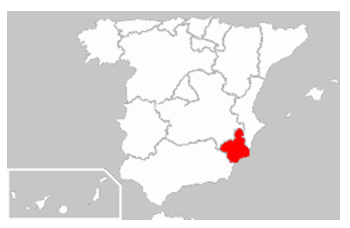
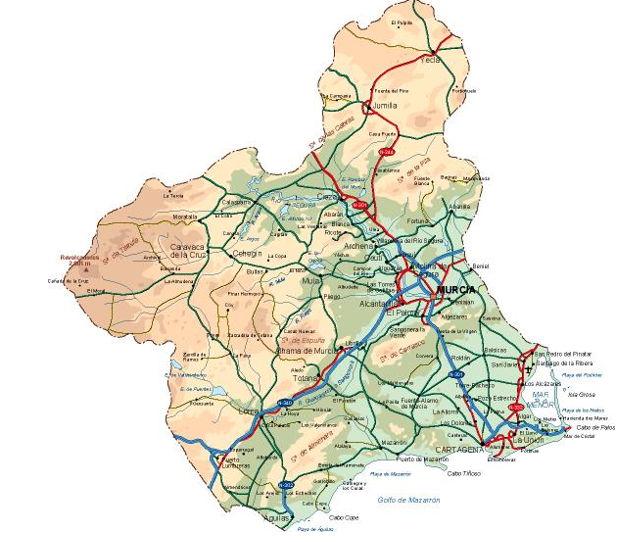
La Región de Murcia es una comunidad autónoma uniprovincial española, situada en el sudeste de la península ibérica, entre Andalucía (provincias de Granada y Almería) y la Comunidad Valenciana (provincia de Alicante), y entre la costa mediterránea y Castilla-La Mancha (provincia de Albacete). Su capital es la ciudad de Murcia, que es sede de los órganos institucionales regionales, con excepción de la Asamblea Regional, que tiene su sede en Cartagena, razón por la que es denominada como «capital legislativa» en el preámbulo de la ley 5/2005, aunque esta denominación no aparece recogida en el estatuto de autonomía. La población total de la Región de Murcia es de 1.463.249 hab (2015),de los que algo menos de un tercio vive en la capital y la mitad en los municipios de Murcia, Cartagena y Lorca. Comunidad uniprovincial, es no obstante 9ª de España en superficie y la 10ª en población por delante de Aragón o Asturias. En su condición de provincia es la 7ª más poblada de las 50 que tiene el país.
La Región de Murcia disfruta en general de un clima mediterráneo seco que corresponde en la clasificación climática de Köppen al código BS, el de los climas secos semiáridos, si bien, la topografía variable de su territorio, y la distancia al mar, origina una diversidad de matices y genera importantes diferencias térmicas y pluviométricas entre la costa y el interior. Con inviernos suaves y veranos calurosos, la temperatura anual media en las zonas más bajas se sitúa en el entorno de los 18 °C, y va desciendo según se gana altura. Las comarcas del Altiplano, Noroeste, tierras altas de Lorca, o las zonas montañosas de mayor altura presentan ya clima mediterráneo continentalizado en su comportamiento térmico. Así, mientras que en el litoral las temperaturas medias mensuales rara vez descienden de 10 °C en los meses más fríos, hay zonas en las comarcas del interior donde no se suele sobrepasar los 6 °C, y las temperaturas medias anuales se sitúan en el entorno de los 15 °C, o incluso son menores a los 12 °C en las zonas más elevadas. En cuanto a los valores extremos, éstos son más moderados en las zonas de costa, mientras que pueden superar los 40 °C en verano y descender de los 0 °C en inverno en zonas del interior. Y rebasar incluso la barrera de los -10 °C en el Altiplano, Noroeste y zonas más elevadas. Respecto a las precipitaciones, los acumulados anuales se sitúan en la mayor parte del territorio en el entorno de los 300 mm anuales, debido a que su disposición orográfica (al este de las Cordilleras Béticas) dificulta la llegada de las borrascas atlánticas por el Efecto Föhn. Las lluvias se concentran normalmente en pocos días, principalmente en invierno, primavera y sobre todo otoño, pudiendo ser torrenciales en situaciones de gota fría, con valores superiores a los 100 mm en menos de 24 horas, pudiéndose ocasionar riadas e importantes inundaciones. Los acumulados anuales son superiores a los 400mm en la parte más noroccidental de la comarca del Noroeste, Sierra Espuña y zonas próximas, o la cara norte de algunos conjuntos montañosos, como el de Carrascoy o el Carche, alcanzándose los valores pluviométricos del clima mediterráneo típico. E incluso pueden llegar a superarse los 650 mm de media en las sierras más húmedas del Noroeste.
En la Región de Murcia se encuentra la laguna natural más grande de España, la albufera del Mar Menor. Se trata de una laguna de agua salada situada junto al Mar Mediterráneo, constituyendo una de las más grandes de Europa. Sus especiales características ecológicas y naturales hacen del Mar Menor un paraje natural único. De forma semicircular, está separado del Mar Mediterráneo por una franja de arena de 22 km de longitud y entre 100 y 1200 m de anchura, denominada La Manga del Mar Menor, comunicándose ambos "mares" por dos pasos naturales y uno artificial. La laguna ha sido designada por la Organización de las Naciones Unidas como Zona Especialmente Protegida de Importancia para el Mediterráneo. En su perímetro litoral cuenta con 73 km de costa en la que se van sucediendo playas de aguas transparentes y poco profundas (la profundidad máxima no es superior a 7 metros), y con 170 km² de superficie. El litoral mediterráneo murciano, desde el punto de vista geomorfológico, presenta una gran riqueza de formas. El accidentado puzle de relieves y depresiones del área que nos ocupa, bajo la acción de los procesos de modelado que han actuado a lo largo de los tiempos, ha dado lugar a los diferentes tipos de costas que actualmente se pueden contemplar. De los 258 km de línea de costa, el 26,19% (67,6 km) es acantilado alto (de más de 20 m de altura), el 11,82% (30,5 km) es acantilado medio (entre 2 y 20 m de altura), el 6,55% (16,9 km) es costa rocosa baja (menos de 2 m de altura) y el 32,62% (84,2 km) son playas. Expertos han señalado la importancia de la biodiversidad de la Región de Murcia, motivada por sus especiales condiciones geográficas y climatológicas en un territorio relativamente pequeño. La cubierta vegetal existente está cifrada entre 50 y 70 especies por Km2, además de poseer una alta densidad de endemismos locales, incluidos ibero-africanismos, algo que motivó a que la Red Natura 2000 declarase protegidas 72 áreas murcianas de alto valor ecológico, de un total de 276 existentes en España.
Los restos humanos más antiguos encontrados en el territorio actual de la Región de Murcia se localizan en el Estrecho de la Encarnación (Caravaca), en la conocida como Cueva Negra, en donde los expertos tuvieron la certeza de estar ante una de las estaciones más antiguas de Europa34 con una edad cercana al millón de años (Paleolítico Inferior), con restos fósiles de tipo pre-neandertal (Homo Heidelbergensis). También muy destacable es el yacimiento de Cueva Victoria, una cueva de grandes dimensiones localizada en la ladera sur del Cabezo de San Ginés (Cartagena) que, durante el Pleistoceno Inferior, funcionó como un cubil de hienas. Se han encontrado fósiles de abundante fauna, aunque sus restos más significativos son pequeños fósiles que el profesor Josep Gibert i Clols identificó como restos humanos y que dató en 1 200 000 años, contemporáneos a los del hombre de Orce del yacimiento paleontológico de Venta Micena, provincia de Granada. Sin embargo, los restos humanos de mayor trascendencia en la región provienen del Musteriense o Paleolítico Medio, donde predominaba el hombre de Neandertal, con yacimientos de la talla de la Sima de las Palomas del Cabezo Gordo (en Torre Pacheco); con unos materiales que van desde el 150.000 al 35.000 a. C. A la importante presencia de la cultura íbera en la zona, dominada por los bastetanos en la zona oeste, los mastienos al sur y los contestanos al este, hay que añadir la poderosa influencia fenicia a través de las intensas redes comerciales y de asentamientos costeros como la Punta de los Gavilanes en Mazarrón. Los cartagineses desarrollaron posteriormente su más importante área de actuación peninsular en el Sureste ibérico. En el 227 a. C. Asdrúbal el Bello fundó un asentamiento comercial en la actual Cartagena, denominándola Qart Hadasht (Ciudad Nueva en fenicio) al igual que su homóloga africana, siendo conquistada en el 209 a. C. por Escipión en el marco de la segunda guerra púnica, rebautizándola como Carthago Nova para diferenciarla de la Carthago africana.Bajo el dominio romano el territorio de la actual Región de Murcia formó parte, primero de la provincia de la Hispania Citerior, posteriormente a la provincia Tarraconense, constituyéndose en el Bajo Imperio romano la Provincia Carthaginense. En esta época Carthago Nova fue una de las principales ciudades romanas de Hispania.
La agricultura y la ganadería (y las industrias derivadas asociadas) siguen siendo un motor importante de desarrollo en la Región, más si cabe tras el hundimiento del sector de la construcción y del negocio de la vivienda durante la Crisis económica de 2008-2013. El sector primario murciano se caracteriza por su producción intensiva e industrial, dedicado históricamente a la exportación. Desde Calasparra hasta Beniel, a lo largo del eje del río Segura, se extienden la mayor parte de las huertas tradicionales de la Región de Murcia, ampliadas progresivamente fuera del valle fluvial con caudales subterráneos o trasvasados desde el río Tajo, a lo largo del siglo XX. Frutales de hueso, uva de mesa y cítricos son, en la actualidad, los cultivos predominantes desde la entrada de dicho río a la Región, donde se ubica un pequeño pero interesante sector de arrozal. Las exportaciones en este sector se han consolidado como uno de los principales motores de la economía de la Región de Murcia y el motor principal de muchas empresas que compensan así la escasa demanda interna debido a la crisis. Las exportaciones murcianas han aumentado un 60% en 2012 con respecto al año anterior. Sumando por primera vez los 8.000 millones de euros en productos exportados, elevándose así hasta casi el 30% del PIB regional el montante de las ventas al exterior. En el sector de la exportación también tiene relevancia la industria, como la energética y petro-química, concretamente en el polo industrial del valle de Escombreras, en Cartagena; que cuenta con plantas de las compañías Repsol, Enagás, Iberdrola y Gas Natural, siendo la primera de ellas objeto de la mayor inversión industrial de la historia de España gracias a la ampliación de su refinería. También es de suma importancia la industria conservera y alimentaria que cuenta con una fuerte tradición histórica, con importantes firmas locales como ElPozo o Don Simón-García Carrión, o internacionales como Hero y Pepsico. Así mismo habría que destacar la industria del mueble (principalmente en Yecla), la farmacéutica (Hefame, Bayer) o la naval (centrada en los astilleros de Navantia en Cartagena).
Respecto a su red de transportes, el Aeropuerto de San Javier es el principal aeródromo de la Región de Murcia, situado en el municipio costero de San Javier, gestionado por AENA. En el año 2012 contó con 1.181.782 pasajeros, superando el volumen de otros aeropuertos españoles como los de Asturias, Santander, Reus, Zaragoza o Valladolid. Aún sin estar operativo, recientemente se ha concluido la construcción del Aeropuerto Internacional de la Región de Murcia, auspiciado por el Gobierno Regional de la mano de una iniciativa empresarial privada (llamada AEROMUR), en la pedanía de Corvera. Actualmente sin uso, a los problemas entre la concesionaria y el ejecutivo se ha unido el hecho de que su viabilidad iría unida a un traslado de las operaciones desde San Javier hacia él, algo que dependería de la predisposición de AENA y del pago de una indemnización. El puerto de Cartagena ocupa, en la actualidad, el cuarto puesto a nivel nacional en tráfico de mercancías tras Algeciras, Valencia y Barcelona y por delante de Tarragona, Bilbao o Huelva. 80El 60% de la exportación y el 80% de las importaciones de la Región de Murcia se realizan a través del Puerto de Cartagena. Los puertos de la Región de Murcia se engloban dentro del distrito de la Provincia marítima de Cartagena, subdividiéndose a su vez en los distritos de Águilas, Mazarrón, Cartagena y San Pedro del Pinatar. Dentro de cada distrito se encuentran diferentes puertos deportivos y pesqueros, incluyendo también puertos comerciales, siendo el más importante el Puerto de Cartagena, aunque también hay que destacar el Puerto de Águilas o el Puerto de San Pedro del Pinatar. La red ferroviaria de la Región de Murcia es amplia pero muy anticuada; basada en vía única sin electrificar en todos sus tramos a excepción de los 10 km comprendidos entre la estación de Murcia-Cargas y el final de la variante Murcia-Alquerías. Todos los servicios son ofrecidos por Renfe Operadora, mientras que la infraestructura es administrada por Adif. La Región de Murcia vio disminuir su red ferroviaria cuando a mediados de los 80 el Ministerio de Fomento decidió cerrar todos aquellos tramos que consideró como no rentables, abandonando cientos de kilómetros y decenas de estaciones; entre ellos el ferrocarril Murcia-Caravaca; quedando sin uso ferroviario la estación término de Murcia-Zaraiche, y el tramo Almendricos-Baza, dejando incomunicados al levante español y Andalucía por vía férrea directa.
Su capital:
Murcia es una ciudad española, capital del municipio del mismo nombre y de la comunidad autónoma de la Región de Murcia. Es el centro de la comarca de la Huerta de Murcia y de su área metropolitana. Está situada en el sudeste de la península ibérica a orillas del río Segura, en la denominada depresión pre litoral murciana, a 40 kilómetros en línea recta del Mar Mediterráneo. Con 441.003 habitantes, Murcia ocupa el 7º puesto en la lista de municipios de España por población. El área urbana de la ciudad (o zona metropolitana), aunque no establecida oficialmente, comprendería a unos diez municipios de la Región de Murcia, contando con una población de 643 854 habitantes en 2013, repartidos en una superficie total de 1230,92 km2, con una densidad de población de 515 hab/km2.5 De este modo, el área urbana de Murcia ocuparía el 10º puesto en la lista de áreas metropolitanas de España.
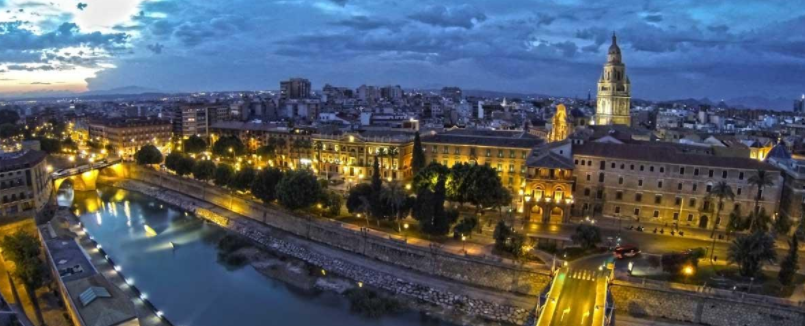
Murcia es un importante municipio de servicios en la que el sector terciario ha sucedido a su antigua condición de exportadora agrícola por antonomasia, gracias a su célebre y fértil huerta, por la cual era conocida con el sobrenombre de la Huerta de Europa. Entre sus industrias más destacadas se encuentran la alimentaria, la textil, la química, la de destilación y la fabricación de muebles y materiales de construcción, estando muchas de ellas ubicadas en el Polígono Industrial Oeste, considerado uno de los más grandes de la península6 (compartido con el municipio de Alcantarilla). Es también un importante centro de gran tradición universitaria desde que fuera fundada la primera universidad en 1272. Actualmente es sede de dos universidades, la pública Universidad de Murcia y la privada Universidad Católica San Antonio, que atraen alrededor de 50.000 estudiantes al municipio.
De orígenes inciertos, hay constancia de que fue fundada en el año 825 con el nombre de Madīnat Mursiya (مدينة مرسيّة en árabe) por orden de Abderramán II, probablemente sobre un asentamiento anterior de origen romano.8 Durante la Edad Media, Murcia llegó a ser capital de la cora de Tudmir (siglo X), posteriormente fue cabeza de distintos reinos de taifas de creciente importancia en los siglos XI, XII y XIII y entre 1243-1266 se incorporó a la Corona de Castilla como capital del Reino de Murcia, siendo además ciudad con voto en cortes y sede episcopal desde 1291.
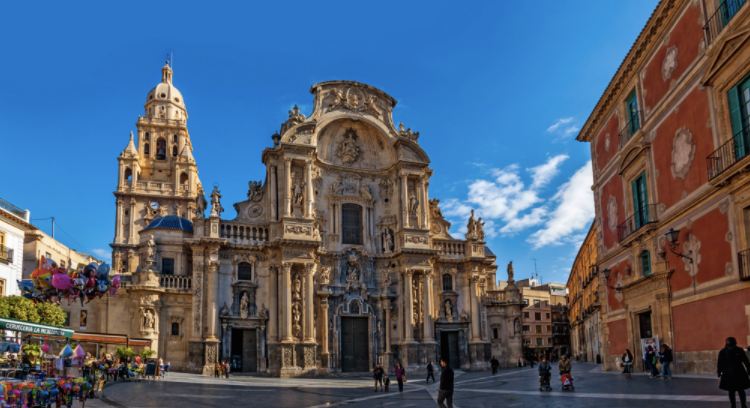
De su patrimonio histórico-artístico destacan su célebre Catedral, de fachada barroca e interior principalmente gótico, el afamado Casino, de suntuosos interiores; el denso patrimonio escultórico de Francisco Salzillo, y un gran conjunto de edificios barrocos. En el ámbito cultural es conocida por su rico folclore, especialmente vistoso durante las Fiestas de Primavera y las procesiones de Semana Santa, declaradas de Interés Turístico Internacional. El Consejo de Hombres Buenos de la Huerta de Murcia, ejemplo de tribunal consuetudinario de regantes del Mediterráneo español, está declarado Patrimonio cultural inmaterial de la Humanidad por la Unesco. El edificio más emblemático de la ciudad es la Catedral de Santa María, sede de la diócesis de Cartagena que se encuentra en pleno casco antiguo, en la Plaza de Belluga. Comenzó a construirse sobre la antigua mezquita mayor o aljama en el siglo XIV, y se consagró en 1465, aunque diversas partes fueron añadidas o reformadas hasta finales del siglo XVIII, cuando se terminó su famosa torre. Por este motivo presenta diferentes estilos arquitectónicos, especialmente gótico, renacentista y barroco. La Catedral cuenta con un renovado museo (Museo de la Catedral de Murcia) en el edificio que antaño fuera el claustro y en el que se exhibe el tesoro catedralicio. Junto a la fachada de la catedral, en la misma Plaza de Belluga, se encuentran la Escuela Superior de Arte Dramático y Danza (Antiguo Seminario Mayor de San Fulgencio) y el Palacio Episcopal, ambos del siglo XVIII. El majestuoso palacio se divide en dos partes: el cuerpo central articulado sobre un patio porticado y el denominado Martillo, que fue el mirador de los obispos sobre el Segura y sus jardines y que constituye el cerramiento arquitectónico del contiguo paseo del Arenal, actual Glorieta. A pocos metros de la Catedral y Belluga, al lado del río Segura, se encuentra la referida plaza de La Glorieta, que ha sido tradicionalmente el centro político de la ciudad. Construida en el siglo XVIII, es un espacio ajardinado donde se encuentra la Casa Consistorial (siglo XIX), con un edificio anexo que da a la Plaza Belluga, obra señera de Rafael Moneo. Aún es posible apreciar el antiguo entramado urbano medieval de época andalusí, antaño divisorio de religiones y ahora reconvertido en bellas calles peatonales, como la Platería y la famosa Trapería, la cuál comunica la Plaza de la Cruz (donde se encuentra la torre de la Catedral) con la conocida Plaza de Santo Domingo, uno de los puntos de encuentro más apreciados por los murcianos. En la misma Trapería puede observarse la bella fachada ecléctica del Casino (fundado en 1847), con un interior suntuoso que aúna diferentes estilos, desde un patio árabe inspirado en los salones reales de La Alhambra y en los Reales Alcázares de Sevilla, pasando por un patio romano-pompeyano, una maravillosa biblioteca inglesa con más de 20.000 volúmenes y un bellísimo salón de baile neobarroco, entre otras estancias. Otras plazas con encanto son la cercana Plaza de Julián Romea; donde además del teatro de igual nombre se asoman algunos palacetes como el Palacio Vinader (del siglo XVIII), la Plaza de las Flores, punto neurálgico del tapeo en Murcia, y la contigua Plaza de Santa Catalina; que hasta el siglo XVIII era considerada como la plaza mayor de la ciudad. Varios puentes de diversos estilos atraviesan el río Segura a su paso por Murcia, desde el más antiguo (del siglo XVIII) hasta varios de reciente creación de afamados autores contemporáneos.
Dentro de los principales parques y jardines de la ciudad, destacan: Jardín de Floridablanca: Creado a mediados del siglo XIX sobre las anteriores alamedas de la ciudad del siglo XVIII, es el parque más antiguo de Murcia. Situado en pleno Barrio del Carmen, está dedicado a la figura del Conde de Floridablanca. Dispone de varios monumentos conmemorativos (al Conde de Floridablanca, a los poetas Pedro Jara Carrillo y José Selgas etc.) y de frondosos árboles centenarios. Jardín de la Seda: Situado en el céntrico Barrio de San Antón, se encuentra donde antiguamente se dispuso el desaparecido Convento de los Diegos y una posterior fábrica de seda -de la que se conserva hoy una chimenea- que tras quedar sin actividad fue transformada en jardín a principios de la década de los 90 del siglo XX. Cuenta con zonas deportivas y un auditorio central. Jardín del Malecón: Situado donde antiguamente se encontraban los huertos del desaparecido Monasterio de los Franciscanos, que posteriormente hizo las funciones de jardín botánico de la ciudad, se encuentra justo al lado del paseo del Malecón que le da nombre. En él se instalan durante la Feria de Septiembre los llamados Huertos del Malecón. En su interior se hallan numerosas esculturas además de la portada de la derruida casona del Huerto de las Bombas. Esta portada apareció en las desaparecidas monedas de 5 pesetas. Jardín del Salitre o de la Pólvora: Situado sobre los terrenos de la que fue la Real Fábrica de Salitre fundada en 1654. Fue la única fábrica española que durante la Guerra de la Independencia suministró pólvora y balas a los guerrilleros. Entre 1816 y 1849 estuvo arrendada a empresas privadas, pasando a manos militares desde este última fecha hasta 1964 en el que se hizo cargo de la misma la Empresa Nacional Santa Bárbara. En 1987 se consiguió el convenio de cesión de los terrenos para el municipio, convirtiéndose en jardín público en 1994, generando un gran espacio verde en el centro de la ciudad.124 En las obras de remodelación del jardín se crearon varios ambientes, tales como el jardín hondo, donde se ha recreado la jardinería hispano-árabe, la plaza de los arcos del agua, con una fuente con tres tipos de arcos que simbolizan las tres culturas que convivieron en Murcia, el laberinto de plantas aromáticas o el lago. Junto al jardín, y como anexo a éste, se halla el antiquísimo huerto de los López Ferrer, tradicionalmente llamado Huerto Cadenas. El huerto pertenecía a la casona del mismo nombre hoy rehabilitada y convertida en Museo de la Ciudad, y estaba perimetralmente amurallado.
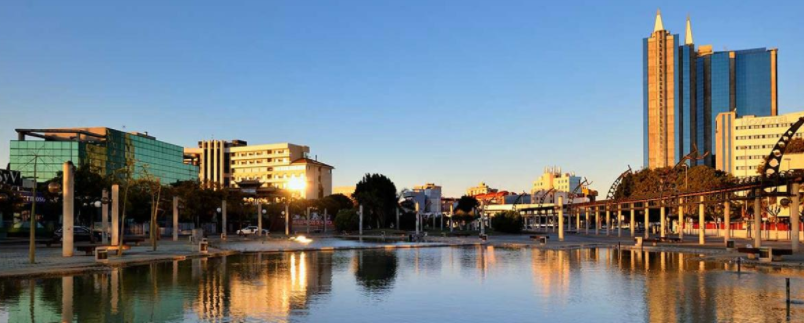
En el término municipal de Murcia hay varios teatros, entre los que destaca el Teatro Romea. Situado en la plaza de Julián Romea, fue inaugurado en 1862 por la reina Isabel II. Llamado inicialmente Teatro de los Infantes y luego Teatro de la Soberanía Popular, para finalmente adoptar su nombre actual en honor al actor murciano Julián Romea. Otros espacios escénicos destacados son el Teatro Circo, inaugurado en 1892 y que tras décadas de abandono ha vuelto a abrir sus puertas tras una profunda rehabilitación; el Auditorio y Centro de Congresos Víctor Villegas inaugurado en 1995; y el Teatro Bernal situado en la pedanía de El Palmar. La Red de Auditorios Municipales cuenta con el Auditorio de Beniaján, el Auditorio de Cabezo de Torres y el Auditorio de La Alberca, con una amplia oferta de teatro y música; a ellos hay que agregar otros dos auditorios de reciente construcción: el de Algezares y el de Guadalupe. La ciudad ha visto cómo han ido desapareciendo los cines de barrio y los situados en el centro, hasta el punto de que desde 2006 sólo permanecían abiertos al público en esta zona el cine Rex, los cines Centrofama y la Filmoteca Regional de Murcia Francisco Rabal (antiguo cine Salzillo). Años antes abrieron los primeros multicines, los de Atalayas y Zig Zag, ambos ya cerrados. En 2006 se inauguraron unos de última generación en los complejos comerciales Nueva Condomina y Thader, al norte de la ciudad. En este último se abrió la sala Xpand 6D, la primera en España que combinaba la proyección en 3D con butacas móviles SFX y efectos de lluvia, viento, luz, niebla y olor. Posteriormente se abrieron otros multicines en el centro comercial El Tiro.
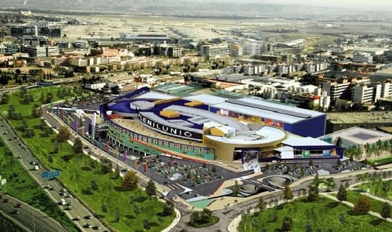
Desde abril de 2015 existe MuyBici, un Sistema de Transporte Público en bicicleta que persigue fomentar el uso de la misma como medio de transporte eficiente y saludable en la ciudad, contribuyendo a que los desplazamientos sean más sostenibles. Este es un Plan Experimental puesto en marcha por el Ayuntamiento para lograr la reducción del uso del vehículo privado y potenciar otros medios de transporte no motorizados, como el transporte público, el desplazamiento a pie o la propia bicicleta. No es un sistema público de alquiler de bicicletas para uso turístico o recreativo. Es un complemento al transporte público. Su finalidad es cubrir los pequeños desplazamiento que a diario se producen por dentro de la ciudad. Murcia cuenta con una línea de tranvía metropolitano inaugurada en mayo de 2011, cuatro años después del estreno de un tramo experimental que recorría la Avenida Juan Carlos I. La línea actualmente en servicio une la Plaza Circular con los campus de las universidades UMU y UCAM, en Espinardo y Guadalupe respectivamente, y los centro comerciales y el Estadio Nueva Condomina sitos entre las pedanías de Churra y Cabezo de Torres, formando una gran V en el norte de Murcia. Esta línea forma parte de un proyecto que incluye otras tres líneas por construir.
En torno al centro de Murcia se halla el núcleo tradicional del comercio de la ciudad, pudiéndose encontrar desde el pequeño comercio hasta las franquicias de grandes marcas. En la ciudad se pueden encontrar tres centros comerciales de El Corte Inglés, uno en la Avenida de la Libertad y otro en la Gran Vía, y otro más junto con un Hipercor en el centro comercial El Tiro, inaugurado en diciembre de 2009. Además, el municipio cuenta con el parque comercial Viapark Murcia (situado en las inmediaciones del Polígono Industrial Oeste) y con seis centros comerciales (Atalayas, ZigZag City, Nueva Condomina, Thader, El Tiro y La Noria Murcia Outlet Shopping) y tres más en construcción: Citymur y El Palmeral del Thader (estos dos últimos junto al centro comercial Thader e Ikea dentro del parque comercial Thader) y el centro comercial El Palmar. Además hay que destacar algunos centros comerciales más antiguos y pequeños, tales como el emblemático Centrofama (situado en el centro de la ciudad), centro comercial Arrixaca, o las galerías comerciales de Trapería y Boulevard Cetina, también en el centro. En febrero de 2006 se inauguró el Ikea de Murcia, convirtiéndose así en el primero de todo el levante español. En junio de 2008 abrió sus puertas el outlet La Noria, situado en la pedanía de La Ñora, uno de los únicos en toda España. Representa un pueblo mediterráneo, con sus calles, plazas, fuentes, jardines, etc. Los comercios se localizan en las casas del pueblo ficticio.
Los 10 pueblos de la provincia que no debes dejar de visitar:
Los municipios de mayor interés de Murcia son los siguientes:
1.- CARTAGENA
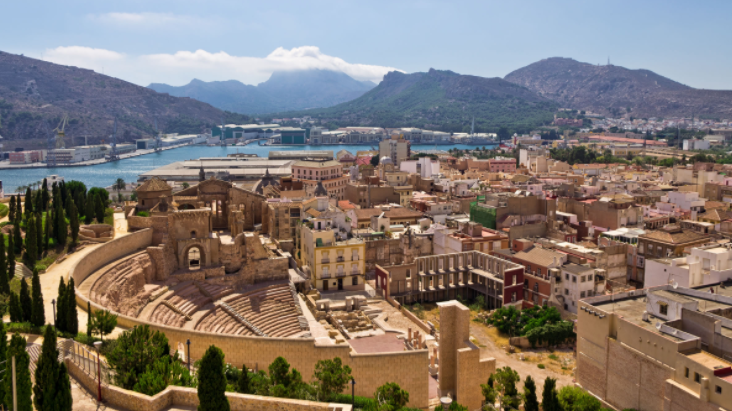
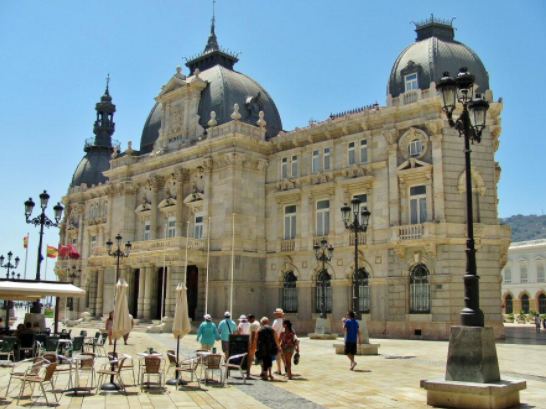
Cartagena es una ciudad con más de 2.500 años de existencia que ofrece al viajero, en cada uno de sus rincones y en cada una de sus calles y plazas, testimonios monumentales de su esplendoroso pasado histórico, siendo su máximo exponente el Teatro Romano, construido en tiempos del emperador Augusto y actualmente restaurado, diferenciando claramente lo que son materiales originales de los que son nuevos. Por otra parte, Cartagena Puerto de Culturas abre un amplio abanico de posibilidades que permiten al visitante disfrutar del patrimonio y riqueza cultural de la ciudad: conocer sus orígenes a través de los restos de la Muralla Púnica, huella de la fundación de la urbe por el cartaginés Asdrúbal en el año 227 a.C., y donde un Centro de Interpretación explicará a los visitantes esa parte fundamental de la historia y la arqueología locales. Una riqueza en la que Cartagena Puerto de Culturas desarrolla la unificación temática para que sea más accesible al viajero. Al pasear descubrimos también que la ciudad presenta una huella militar que nos remonta a época medieval, cuando se construyó el Castillo de la Concepción, lugar en el que, dada su privilegiada situación, un Centro de Interpretación ofrece un explicación de la ciudad y su historia.
2.- CABO DE PALOS
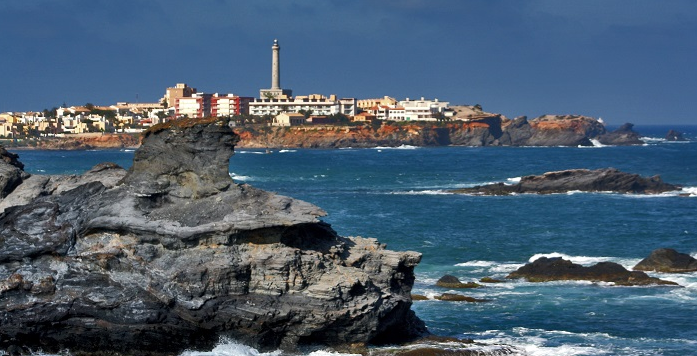
En segundo lugar, queremos hablar de Cabo de Palos, un pueblo de pescadores que pertenece al municipio de Cartagena. Situado a orillas del Mediterráneo, destaca por sus ricos fondos marinos, que forman parte de la Reserva Marina de Cabo de Palos e Islas Hormigas. Por tanto, se trata de una zona ideal para practicar el submarinismo. Además, si tienes la oportunidad de visitar este lugar no debes perderte la Iglesia de Santa María del Mar y el Faro de Cabo de Palos.
3.- AGUILAS
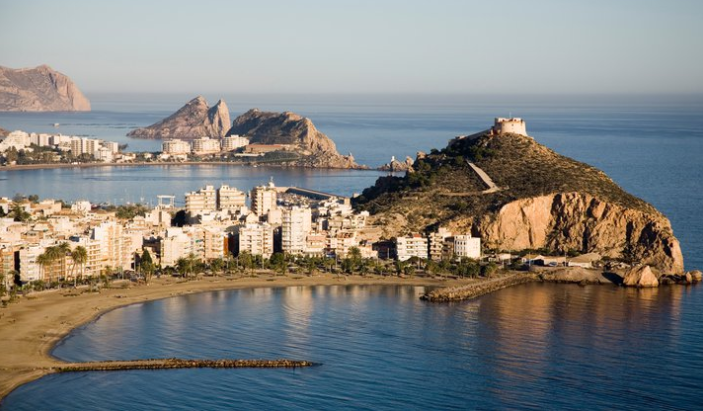
Casi lindando con Andalucía, este municipio acoge la playa la Carolina, considerada la más hermosa de la Costa Cálida. El coqueto barrio de los pescadores y el Castillo de San Juan, que ofrece unas impresionantes vistas del lugar, son otros imprescindibles de la visita.
4.- ALEDO
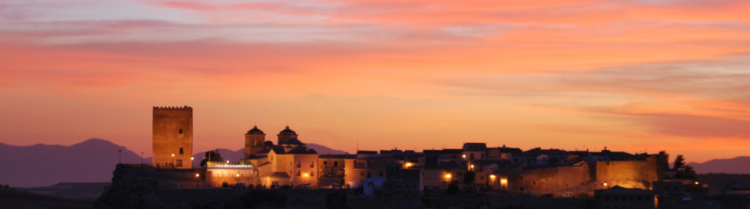
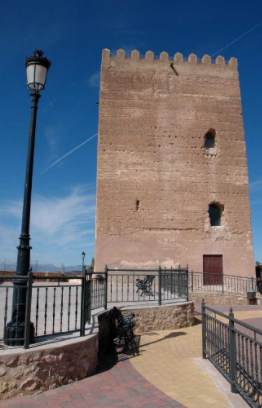
En el corazón de la región murciana se erige Aledo, situado sobre un macizo rocoso de la Sierra Espuña. El emblema indiscutible del municipio es la Torre del Homenaje, una fortificación alzada durante la Edad Media, torre principal de la muralla de Aledo.
5.- ULEA
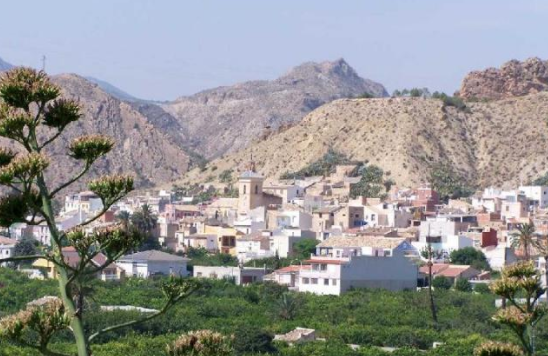
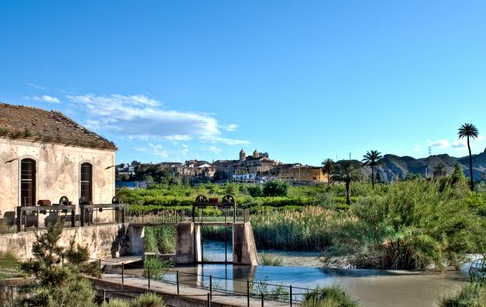
Es un municipio de unos 1.000 habitantes situado en el Valle de Ricote. El verde del entorno se funde con el colorido de espacios de gran belleza como El Gurugú, dominado por una torre del mismo nombre y monumentos emblemáticos como la vistosa Casa del Cura y la iglesia de San Bartolomé.
6.- CEHEGÍN
Cuenta con un importante patrimonio en su Casco Antiguo, declarado Conjunto Histórico-Artístico en 1982. Así, destacan las casas señoriales de diferentes estilos, el Casino, la Iglesia de Santa María, la Ermita de la Concepción o el Museo Arqueológico Municipal.Destino idóneo para disfrutar de una experiencia arqueológica, ya que a solo 3 km se halla la ciudad romano-visigoda de Begastri. En las calles de su casco antiguo llenas de casas señoriales e iglesias, te toparás con joyas como el palacio del Duque de Ahumada.
7.- MORATALLA
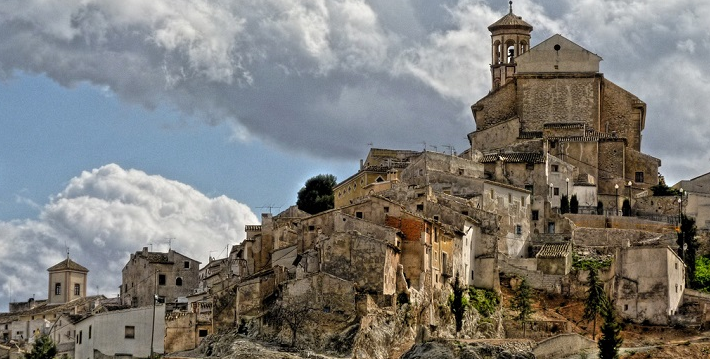
Seguimos nuestro recorrido en Moratalla, un pueblo encaramado a un hermoso cerro que está coronado por los restos de un castillo. Destaca el trazado angosto de sus empinadas calles, que están repletas de historia. Además, no faltan las manifestaciones artísticas rupestres y los asentamientos ibéricos, romanos y medievales.
8.- CALASPARRA
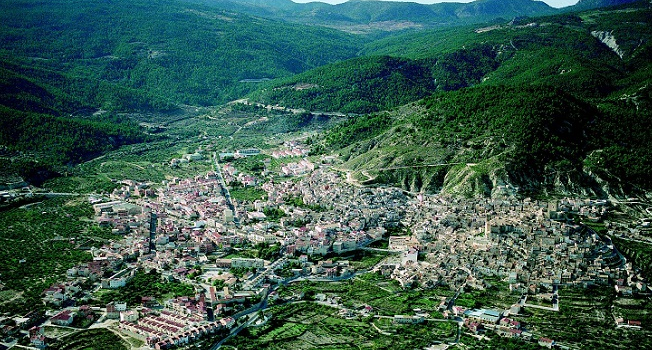
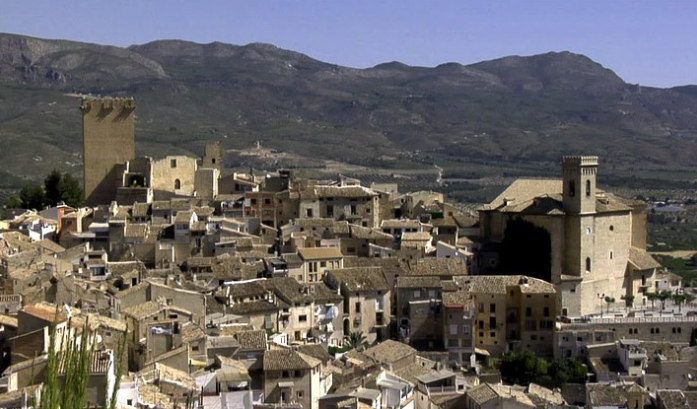
Calasparra es un pueblo bañado por cuatro ríos y dos pantanos. Sin duda, sus aguas son uno de los grandes atractivos para el viajero, y no solo por la belleza del paisaje, sino por las numerosas actividades que se pueden realizar: espeleología, barranquismo… Además, aquí también podrás contemplar pinturas rupestres y diferentes yacimientos.
9.- CARAVACA DE LA CRUZ
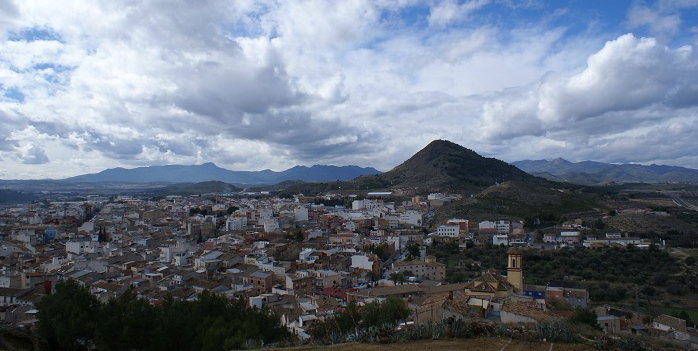
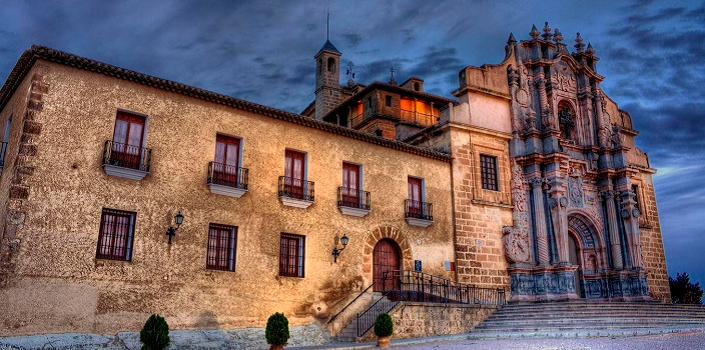
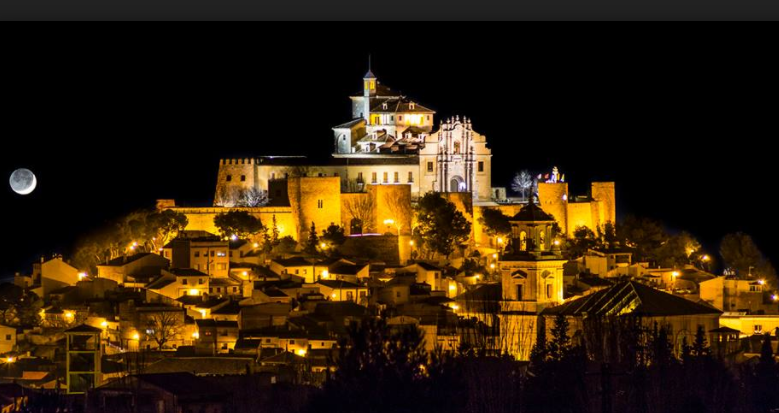
Seguimos nuestro recorrido por los pueblos más bonitos de Murcia en Caravaca de la Cruz, un pueblo situado en la frontera entre Murcia y Granada por el que han pasado iberos, romanos y musulmanes. Construida alrededor de un castillo que se levantó en el siglo XV por los Templarios, Caravaca de la Cruz es una de las cinco ciudades santas, junto a Santiago de Compostela, Santo Toribio de Liébana, Roma y Jerusalén. El Santuario de la Vera Cruz; las iglesias de la Soledad, El Salvador y la Purísima Concepción; el Convento de las Carmelitas; y el Ayuntamiento son visita obligatoria.
10.- MAZARRON
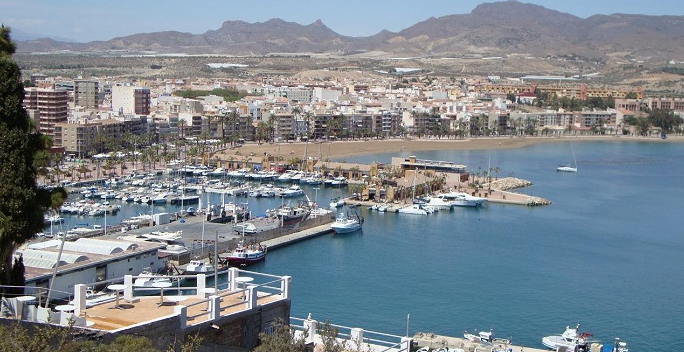
Otro pueblo que no puede faltar en la lista es Mazarrón, situado en una amplia bahía abierta del Mar Mediterráneo. Su principal atractivo son sus 35 kilómetros de litoral. De hecho, se ha desarrollado aquí una importante industria turística. Además, se ha potenciado su tradición minera y pesquera.
Algo de su gastronomía:
La gastronomía de la Región de Murcia corresponde al conjunto de platos, ingredientes específicos y técnicas culinarias de la Región de Murcia (España). La cocina murciana tiene influencias de las vecinas cocina manchega, valenciana y granadina. No obstante la región de Murcia pertenece al levante español y eso se hace ver en el carácter marinero de algunos platos, siendo su ingrediente característico el arroz y algunas preparaciones de pescado en salazón: mojamas. En el caso de Murcia se hace ver una abundante huerta en el interior (representando la cocina ribereña y hortelana), un apego por los productos del cerdo identificados con la matanza del cerdo (cocina manchega), y una abundante cocina de pescados y mariscos. Cabe destacar que los elementos básicos de la cocina murciana son el pimiento y el tomate. Una de las preparaciones más singulares es el pastel de carne murciano («regalo de gente rica y apaño de la pobre»).
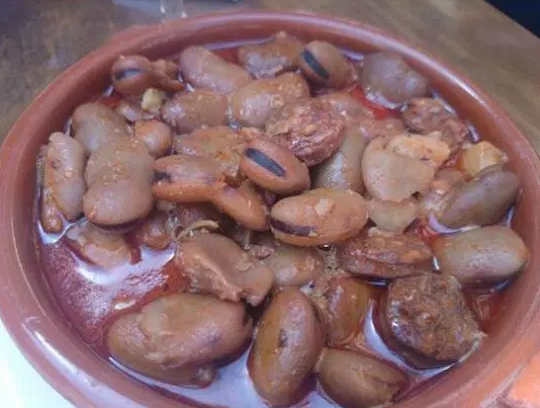
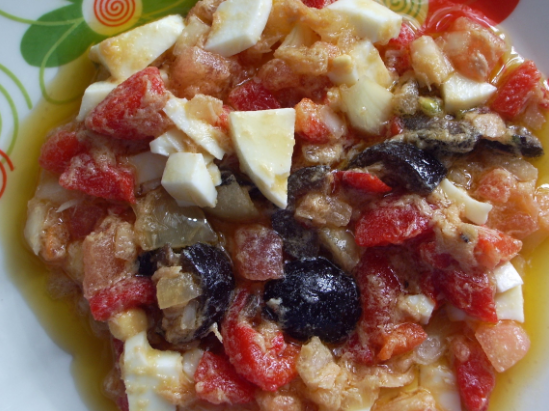
Los ingredientes de la Región Murciana poseen en algunos casos una personalidad propia. En la Región de Murcia existen ocho denominaciones de origen de productos vegetales, incluyendo el arroz de Calasparra (una variedad de arroz bomba redondo), el pimentón de Murcia, la pera de Jumilla y los quesos de Murcia y de Murcia al vino.10 Muchos de estos ingredientes pueden verse en el Mercado de Verónicas de Murcia capital. En la Huerta de Murcia, a lo largo de la cuenca del Segura, abundan las frutas (de hueso y cítricos), las legumbres y hortalizas. Entre las verduras típicas se encuentra la acelga. Se tienen las aceitunas de mesa de la variedad cuquillo. Uno de los productos más característicos de la huerta es el pimentón, elaborado a partir de ñoras. Algunos platos típicos de esta zona son la ensalada murciana, el potaje murciano o el zarangollo (revuelto de huevo, cebolla y calabacín).11 Los guisos elaborados con michirones, un tipo de habas secas, ofrecidas como un plato frecuente. Los michirones es una preparación invernal típica. Se valoran también las denominadas valvillas, una especie de habas tiernas que se sirven "en calzón" (es decir con su vaina) o con jamón. Las calabazas son muy populares dentro de la cocina murciana, se encuentran diversas variedades: la quintalera grande, la totanera de color naranja intenso, la chirigaita de rayas verdes. Las judías verdes (bajocas) participan de pasteles de verduras. Entre los platos que emplean la patata se encuentran aquellos en los que se preparan en forma de patatas asadas. Es de destacar la Ensalada Huertana. Esta ensalada propia de Murcia, es muy famosa entre los habitantes de esta ciudad. Está constituida por productos propios de la huerta. Es un plato fácil y rápido de realizar con ingredientes diarios. La ensalada Huertana se elabora con tomate, atun, huevo cocido, aceitunas negras y cebolla. Lo más importante de esta ensalada es que debemos hacerla unas horas antes de su consumo para tomarla fría a la hora de comer.
Uno de los postres murcianos conocidos en la provincia son los paparajotes, hechos con hojas de limonero una fruta de sartén en la que se recubiertas con una masa elaborada con harina y huevo que se fríen y espolvorean con azúcar y canela. Son conocidas en la zona de Abarán picardías de avellana. También son tradicionales el arrope (dulce elaborado con higos secos), el tocino de cielo, las almojábanas y el denominado pan de Calatrava. En el municipio de Totana es frecuente el garabazo, una mona para el día de San Marcos (celebrado el 25 de abril) consistente en una torta de pascua o de naranja con un huevo duro en el centro.


SOBRE EL CACHÉ
Se trata de un caché mimético, integrado en los elementos urbanísticos de la zona. Aunque el lugar es relativamente tranquilo, se ruega la maxima discrección a la hora de buscar y devolver a su sitio el caché, pues es una serie costosa y dificil de reponer.
Para mantener la esencia de los cachés y su dificultad, no se incluye ningun tipo de pista salvo en el caso de requerir alguna operación especial con alguna herramienta. Cualquier texto o foto que supongan desvelar algun elemento del caché será borrado sin previo aviso.
Gracias por buscar esta serie y esperamos que la disfruteis tanto como nosotros escondiendola
ES MUY DE DESEAR Y DE AGRADECER UN REGISTRO DE VUESTRAS VISITAS QUE SEA ALGO MAS QUE UN SIMPLE :
"TFTC ;)" o "EASY FOUND"
COLOCAR UNA SERIE DE ESTE ESTILO REQUIERE MUCHO TIEMPO, DEDICACIÓN Y DINERO, MUCHO MAS QUE EL QUE SE TARDA EN HACER UN BUEN LOG.

The Municipality of Rojales has dedicated some of its streets, to the different Spanish provinces. Serve this series to make known and invite to visit them especially the large number of foreign visitors we receive. And we want to dedicate the series precisely to those that are usually less known and deserve to be valued. It is not a question of giving an exhaustive information of each province that forms this series, for that is already the Wikipedia, but to offer a few brushstrokes that allow to whom does not know it, to obtain some useful information about the same ones.
Province of Murcia: Key facts:
The Region of Murcia is a uniprovincial Spanish autonomous community, located in the southeast of the Iberian peninsula, between Andalusia (provinces of Granada and Almería) and Valencian Community (province of Alicante), and between the Mediterranean coast and Castilla-La Mancha ( province of Albacete). Its capital is the city of Murcia, which is the seat of regional institutional bodies, with the exception of the Regional Assembly, which is based in Cartagena, which is why it is known as "legislative capital" in the preamble of law 5 / 2005, although this denomination does not appear in the autonomy statute. The total population of the Region of Murcia is 1.463.249 inhabitants (2015), of which a little less than a third live in the capital and half in the municipalities of Murcia, Cartagena and Lorca. Uniprovincial Community, is nevertheless 9ª of Spain in surface and the 10ª in population in front of Aragon or Asturias. In its condition of province is the 7 more populated of the 50 that has the country.
The Region of Murcia generally enjoys a dry Mediterranean climate that corresponds in the climatic classification of Köppen to the BS code, that of semi-arid dry climates, although the variable topography of its territory, and the distance to the sea, originates a diversity of nuances and generates important thermal and pluviometric differences between the coast and the interior. With mild winters and hot summers, the average annual temperature in the lower areas is around 18 ° C, and decreases as height is gained. The regions of the Altiplano, Northwest, highlands of Lorca, or the mountainous areas of greater height already have continental Mediterranean climate in their thermal behavior. Thus, while in the littoral the average monthly temperatures rarely fall from 10 ° C in the colder months, there are areas in the interior regions where it is not usually above 6 ° C, and the average annual temperatures are in the around 15 ° C, or even lower than 12 ° C in the higher areas. As for extreme values, these are more moderate in coastal areas, while they can exceed 40 ° C in summer and descend from 0 ° C in winter in inland areas. And even exceed the barrier of -10 ° C in the Altiplano, Northwest and higher areas. Regarding precipitation, annual accumulations are located in most of the territory around 300 mm annually, due to its orographic layout (east of the Betic Cordilleras) hinders the arrival of Atlantic storms by the Föhn Effect . The rains usually concentrate in a few days, mainly in winter, spring and especially autumn, being able to be torrential in situations of cold drop, with values greater than 100 mm in less than 24 hours, being able to cause floods and important floods. The annual accumulations are greater than 400 mm in the north-western part of the Northwest region, Sierra Espuña and nearby areas, or the north face of some mountainous groups, such as Carrascoy or El Carche, reaching rainfall values typical of the typical Mediterranean climate . And they can even surpass the average 650 mm in the wettest mountain ranges of the Northwest.
In the Region of Murcia is the largest natural lagoon in Spain, the Mar Menor lagoon. It is a saltwater lagoon located next to the Mediterranean Sea, constituting one of the largest in Europe. Its special ecological and natural characteristics make the Mar Menor a unique natural spot. In a semicircular way, it is separated from the Mediterranean Sea by a strip of sand 22 km long and between 100 and 1200 m wide, called La Manga del Mar Menor, communicating both "seas" by two natural steps and an artificial one. The lagoon has been designated by the United Nations as a Specially Protected Area of Importance for the Mediterranean. In its coastal perimeter, it has 73 km of coastline where transparent and shallow water beaches (the maximum depth does not exceed 7 meters) and 170 km² of surface area. The Mediterranean coast of Murcia, from the geomorphological point of view, presents a great wealth of forms. The rugged puzzling of reliefs and depressions of the area in question, under the action of the modeling processes that have acted over time, has given rise to the different types of coasts that can currently be contemplated. Of the 258 km of coastline, 26.19% (67.6 km) is high cliff (over 20 m high), 11.82% (30.5 km) is medium cliff (between 2 and 20 m high), 6.55% (16.9 km) is low rocky coast (less than 2 m high) and 32.62% (84.2 km) are beaches. Experts have pointed out the importance of the biodiversity of the Region of Murcia, motivated by its special geographic and climatological conditions in a relatively small territory. The existing vegetation cover is between 50 and 70 species per km2, in addition to having a high density of local endemism, including Ibero-Africanism, which led to the Natura 2000 network declaring 72 protected areas of high ecological value, total of 276 existing in Spain.
The oldest human remains found in the present territory of the Region of Murcia are located in the Strait of Encarnación (Caravaca), in the known as Black Cave, where the experts were certain to be before one of the oldest stations of Europe34 with an age of about one million years (Lower Paleolithic), with pre-Neanderthal fossil remains (Homo Heidelbergensis). Also very remarkable is the site of Cueva Victoria, a large cave located on the southern slope of the Cabezo de San Ginés (Cartagena) that, during the Lower Pleistocene, functioned as a den of hyenas. Fossils of abundant fauna have been found, although their most significant remains are small fossils that Professor Josep Gibert i Clols identified as human remains and dated in 1 200 000 years, contemporaneous with those of the Orce man from the paleontological site of Venta Micena, province of Granada. Nevertheless, the human remains of greater transcendence in the region come from the Musteriense or Middle Paleolítico, where the Neanderthal man predominated, with deposits of the Sima de las Palomas del Cabezo Gordo (in Torre Pacheco); with materials ranging from 150,000 to 35,000 a. C. The important presence of the Iberian culture in the area, dominated by the bastetanos in the western zone, the mastienos in the south and the contenders in the east, we must add the powerful Phoenician influence through the intense commercial networks and settlements coastal areas such as Punta de los Gavilanes in Mazarrón. The Carthaginians subsequently developed their most important area of peninsular performance in the Iberian Southeast. In 227 a. C. Asdrúbal the Bello founded a commercial settlement in the present Cartagena, denominating it Qart Hadasht (New Town in Phoenician) like its African counterpart, being conquered in the 209 a. C. by Scipión within the framework of the second Punic war, renaming it as Carthago Nova to differentiate it from the Carthago africana. Under the Roman domain the territory of the present Region of Murcia was part, first of the province of Hispania Citerior, later to the province Tarraconense, being constituted in the Low Roman Empire the Carthaginian Province. At this time Carthago Nova was one of the main Roman cities of Hispania.
Agriculture and livestock (and related associated industries) continue to be a major driver of development in the Region, even more so after the collapse of the construction and housing business during the 2008-2013 Economic Crisis. The primary sector of Murcia is characterized by its intensive and industrial production, historically dedicated to exports. From Calasparra to Beniel, along the axis of the river Segura, most of the traditional orchards of the Region of Murcia extend, progressively extended outside the river valley with underground flows or transferred from the River Tagus, throughout the century XX. Stone fruit, table grapes and citrus are currently the predominant crops from the entrance of the river to the Region, where there is a small but interesting rice field. Exports in this sector have been consolidated as one of the main engines of the economy of the Region of Murcia and the main engine of many companies that thus compensate the low domestic demand due to the crisis. Murcia exports have increased by 60% in 2012 compared to the previous year. Adding for the first time the 8,000 million euros in exported products, thus increasing the amount of sales abroad to almost 30% of the regional GDP. In the sector of the export also has relevance the industry, like the energetic and petro-chemical, concretely in the industrial pole of the valley of Escombreras, in Cartagena; which has plants of Repsol, Enagás, Iberdrola and Gas Natural, the first of which is the object of the largest industrial investment in the history of Spain thanks to the expansion of its refinery. Also important is the canning and food industry, which has a strong historical tradition, with important local firms such as ElPozo or Don Simón-García Carrión, or international companies such as Hero and Pepsico. Also the furniture industry (mainly in Yecla), pharmaceutical (Hefame, Bayer) or naval (centered in Navantia shipyards in Cartagena) should be highlighted.
Regarding its transport network, San Javier Airport is the main aerodrome of the Region of Murcia, located in the coastal municipality of San Javier, managed by AENA. In 2012 it had 1,181,782 passengers, 77 surpassing the volume of other Spanish airports as those of Asturias, Santander, Reus, Zaragoza or Valladolid. Although not operational, the construction of the International Airport of the Region of Murcia has recently been completed, sponsored by the Regional Government with the help of a private business initiative (called AEROMUR) in the village of Corvera. Nowadays without use, the problems between the concessionaire and the executive has been linked to the fact that its viability would be linked to a transfer of the operations from San Javier to him, something that would depend on the predisposition of AENA and the payment of compensation . The port of Cartagena occupies, at the moment, the fourth place at national level in traffic of merchandise after Algeciras, Valencia and Barcelona and in front of Tarragona, Bilbao or Huelva. 80The 60% of the exports and 80% of the imports of the Region of Murcia are made through the Port of Cartagena. The ports of the Region of Murcia are encompassed within the district of the Maritime Province of Cartagena, subdividing itself in the districts of Eagles, Mazarrón, Cartagena and San Pedro del Pinatar. Within each district are different marinas and fishing ports, including also commercial ports, the most important being the Port of Cartagena, although it is also worth noting the Port of Aguilas or the Port of San Pedro del Pinatar. The rail network of the Region of Murcia is wide but very old-fashioned; based on a single track without electrification in all its sections except for the 10 km between the Murcia-Cargas station and the end of the Murcia-Alquerías variant. All services are offered by Renfe Operadora, while the infrastructure is managed by Adif. The Region of Murcia saw its railway network decrease when in the mid-1980s the Ministry of Public Works decided to close all those sections that it considered unprofitable, abandoning hundreds of kilometers and dozens of stations; among them the railroad Murcia-Caravaca; being without rail use the term station of Murcia-Zaraiche, and the section Almendricos-Baza, leaving incomunicados to the Spanish Levante and Andalusia by direct railroad.
The capital:
Murcia is a Spanish city, capital of the municipality of the same name and the autonomous community of the Region of Murcia. It is the center of the Huerta region of Murcia and its metropolitan area. It is located in the south-east of the Iberian peninsula on the banks of the Segura river, in the so-called pre-coastal depression of Murcia, 40 kilometers in a straight line from the Mediterranean Sea. With 441,003 inhabitants, Murcia occupies the 7th place in the list of municipalities of Spain by population. The urban area of the city (or metropolitan area), although not officially established, would comprise about ten municipalities in the Region of Murcia, with a population of 643,854 inhabitants in 2013, spread over a total area of 1230.92 km2, with a population density of 515 hab / km2.5 Thus, the urban area of Murcia would occupy the 10th place in the list of metropolitan areas of Spain.
Murcia is an important service municipality in which the tertiary sector has happened to its former condition of agricultural exporter by antonomasia, thanks to its famous and fertile orchard, by which it was known with the nickname of the Garden of Europe. Among its most important industries are food, textiles, chemistry, distillation and the manufacture of furniture and construction materials, many of them located in the West Industrial Estate, considered one of the largest in the peninsula6 ( shared with the municipality of Alcantarilla). It is also an important center of great university tradition since the first university was founded in 1272. At the moment it is soothes of two universities, the public University of Murcia and the private Catholic University San Antonio, that attract about 50,000 students to the municipality.
Of uncertain origins, it is known that it was founded in 825 under the name Madīnat Mursiya (مدينة مرسية in Arabic) by order of Abderramán II, probably on an earlier settlement of Roman origin.8 During the Middle Ages, Murcia reached to be capital of the heart of Tudmir (century X), later was head of diverse kingdoms of taifas of increasing importance in centuries XI, XII and XIII and between 1243-1266 was incorporated to the Crown of Castile like capital of the Kingdom of Murcia, being also city with voting in courts and episcopal seat from 1291.
Of its historical and artistic heritage are its famous Cathedral, with baroque facade and mainly Gothic interior, the famous Casino, with sumptuous interiors; the dense sculptural heritage of Francisco Salzillo, and a large set of baroque buildings. In the cultural area it is known for its rich folklore, especially showy during the Spring Festivities and the Holy Week processions, declared of International Tourist Interest. The Council of Good Men of the Huerta de Murcia, example of customary court of irrigators of the Spanish Mediterranean, is declared Intangible Cultural Heritage of Humanity by Unesco. The most emblematic building of the city is the Cathedral of Santa Maria, seat of the diocese of Cartagena that is located in the old town, in Belluga Square. It began to be built on the old mosque or aljama in the fourteenth century, and was consecrated in 1465, although various parts were added or reformed until the end of the eighteenth century, when its famous tower was completed. For this reason presents different architectural styles, especially Gothic, Renaissance and Baroque. The Cathedral has a renovated museum (Museum of the Cathedral of Murcia) in the building that formerly was the cloister and in which the cathedral treasure is exhibited. Next to the facade of the cathedral, in the same square of Belluga, are the Superior School of Dramatic Art and Dance (Old Major Seminary of San Fulgencio) and the Episcopal Palace, both of the XVIII century. The majestic palace is divided into two parts: the central body articulated on a porticoed courtyard and the so-called Hammer, which was the viewpoint of the bishops on the Segura and its gardens and which constitutes the architectural enclosure of the adjoining Paseo del Arenal, nowadays Glorieta. A few meters from the Cathedral and Belluga, next to the river Segura, is the Plaza de la Glorieta, which has traditionally been the political center of the city. Built in the 18th century, it is a garden area where the Town Hall (19th century), with an annex building overlooking the Plaza Belluga, the work of Rafael Moneo. It is still possible to appreciate the ancient medieval urban fabric of the Andalusian period, once a division of religions and now converted into beautiful pedestrian streets, such as the Platería and the famous Trapería, which connects Plaza de la Cruz (where you can find the Cathedral tower ) with the famous Plaza de Santo Domingo, one of the meeting points most appreciated by Murcia. In the same Trapería can be observed the beautiful eclectic facade of the Casino (founded in 1847), with a sumptuous interior that combines different styles, from an Arab patio inspired by the royal salons of the Alhambra and the Reales Alcázares of Seville, passing by a Roman-Pompeian courtyard, a wonderful English library with more than 20,000 volumes and a beautiful Neo-Baroque dance hall, among other rooms. Other places with charm are the nearby Plaza de Julián Romea; where, in addition to the theater of the same name, there are some palaces such as the Vinader Palace (from the 18th century), the Plaza de las Flores, the nerve center of the tapestry in Murcia, and the adjacent Plaza de Santa Catalina; that until century XVIII was considered like the greater place of the city. Several bridges of various styles cross the river Segura as it passes through Murcia, from the oldest (from the eighteenth century) to several newly created famous contemporary authors.
Within the main parks and gardens of the city, we can highlight: Floridablanca Garden: Created in the middle of the 19th century on the old streets of the 18th century, it is the oldest park in Murcia. Located in the Barrio del Carmen, it is dedicated to the figure of the Count of Floridablanca. It has several commemorative monuments (the Count of Floridablanca, the poets Pedro Jara Carrillo and José Selgas etc.) and leafy old trees. Silk Garden: Located in the central San Antón district, it is where formerly the disappeared Convento de los Diegos was located and a later silk factory - of which a chimney is conserved today - that after being without activity was transformed into garden in the early 90's of the twentieth century. It has sports areas and a central auditorium. Garden of the Malecón: Located where formerly were the orchards of the disappeared Monastery of the Franciscans, which later served as botanical garden of the city, is located right next to the promenade of the Malecon that gives it its name. In it are installed during the Feria de Septiembre the so-called Huerto del Malecón. In its interior are numerous sculptures besides the cover of the ruined house of the Orchard of the Bombs. This cover appeared in the missing coins of 5 pesetas. Garden of the Saltpeter or the Gunpowder: Located on the grounds of which was the Royal Factory of Salitre founded in 1654. It was the only Spanish factory that during the War of Independence supplied gunpowder and bullets to the guerrillas. Between 1816 and 1849 it was leased to private companies, passing to military hands from this last date until 1964 in which was taken charge of the same the National Company Santa Bárbara. In 1987 the agreement for the transfer of land to the municipality was obtained, becoming a public garden in 1994, generating a large green space in the center of the city.124 In the remodeling works of the garden several environments were created, such as the deep garden where the Hispano-Arab gardening has been recreated, the square of the arches of the water, with a fountain with three types of arches that symbolize the three cultures that coexisted in Murcia, the labyrinth of aromatic plants or the lake. Next to the garden, and as annex to this, is the ancient orchard of the López Ferrer, traditionally called Huerto Cadenas. The orchard belonged to the mansion of the same name now restored and converted into a Museum of the City, and perimeter was walled.
<
In the municipal term of Murcia there are several theaters, among which the Teatro Romea stands out. Located in the square of Julián Romea, was inaugurated in 1862 by the queen Isabel II. Initially called Theater of the Infants and then Theater of Popular Sovereignty, to finally adopt its present name in honor to the actor Murcian Julian Romea. Other outstanding scenic areas are the Circus Theater, inaugurated in 1892 and that after decades of abandonment has reopened its doors after a thorough rehabilitation; the Víctor Villegas Auditorium and Congress Center opened in 1995; and the Bernal Theater located in the hamlet of El Palmar. The Network of Municipal Auditoriums has the Auditorium of Beniaján, the Auditorium of Cabezo de Torres and the Auditorium of La Alberca, with a wide offer of theater and music; to them must be added two more recently built auditoriums: Algezares and Guadalupe. The city has seen how neighborhood cinemas and downtown cinemas have disappeared, to the point that since 2006, only Rex cinema, Centrofama cinemas and Murcia Regional Filmoteca Francisco Rabal have remained open to the public in this area. old cinema Salzillo). Years earlier, the first multiplexes were opened, those of Atalayas and Zig Zag, both already closed. In 2006, some of the latest developments were inaugurated in the commercial complexes Nueva Condomina and Thader, north of the city. In the latter the Xpand 6D room was opened, the first in Spain that combined the 3D projection with SFX mobile seats and effects of rain, wind, light, fog and smell. Subsequently, other multiplexes were opened at El Tiro shopping center.
Since April 2015 there is MuyBici, a public bicycle transport system that aims to promote its use as an efficient and healthy means of transport in the city, contributing to a more sustainable travel. This is an Experimental Plan put in place by the City Council to achieve the reduction of the use of private vehicles and promote other non-motorized means of transport, such as public transport, walking or cycling. It is not a public bicycle rental system for tourist or recreational use. It is a complement to public transport. Its purpose is to cover the small displacements that occur daily within the city. Murcia has a metropolitan tram line inaugurated in May 2011, four years after the opening of an experimental stretch that covered Juan Carlos I Avenue. The line currently in service links Plaza Circular with the UMU and UCAM campus, in Espinardo and Guadalupe respectively, and the commercial centers and the New Condomina Stadium located between the districts of Churra and Cabezo de Torres, forming a large V in the north of Murcia. This line is part of a project that includes three other lines to be built.
Around the center of Murcia is the traditional center of commerce of the city, being able to be found from the small commerce until the franchises of great marks. In the city you can find three shopping centers of El Corte Inglés, one on Avenida de la Libertad and one on Gran Vía, and one more along with a Hipercor in El Tiro shopping center, opened in December 2009. In addition, the municipality has the commercial park Viapark Murcia (located in the vicinity of the West Industrial Estate) and with six shopping centers (Atalayas, ZigZag City, Nueva Condomina, Thader, El Tiro and La Noria Murcia Outlet Shopping) and three more under construction: Citymur and El Palmeral del Thader (the latter two next to the Thader and Ikea shopping center within the Thader commercial park) and El Palmar shopping center. In addition, there are some older and smaller shopping centers, such as the emblematic Centrofama (located in the center of the city), Arrixaca shopping center, or the commercial galleries of Trapería and Boulevard Cetina, also in the center. In February of 2006 the Ikea of Murcia was inaugurated, becoming thus the first of all the Spanish uprising. In June 2008, the La Noria outlet opened in the hamlet of La Ñora, one of the only ones in Spain. It represents a Mediterranean town, with its streets, squares, fountains, gardens, etc. The shops are located in the houses of the fictional town.
The 10 villages of the province that you should not miss:
The most interesting municipalities of Murcia are:
1.- CARTAGENA
Cartagena is a city with more than 2,500 years of existence that offers the traveler, in each of its corners and in each of its streets and squares, monumental testimonies of its splendid historical past, being its maximum exponent the Roman Theater, built in times of the emperor Augustus and currently restored, clearly differentiating what are original materials of which they are new. On the other hand, Cartagena Puerto de Culturas opens a wide range of possibilities that allow the visitor to enjoy the cultural heritage and wealth of the city: to know its origins through the remains of the Punic Wall, a footprint of the foundation of the city by the Carthaginian Asdrúbal in 227 BC, and where an Interpretation Center will explain to visitors that fundamental part of local history and archeology. A wealth in which Cartagena Puerto de Culturas develops thematic unification to make it more accessible to the traveler. When walking, we also discover that the city has a military footprint that dates back to medieval times when the Castillo de la Concepcion was built, a place where, given its privileged situation, an Interpretation Center offers an explanation of the city and its history .
2.- CABO DE PALOS
Secondly, we want to talk about Cabo de Palos, a fishing village that belongs to the municipality of Cartagena. Located on the shores of the Mediterranean, it stands out for its rich seabed, which are part of the Marina de Cabo de Palos and Hormigas Islands. Therefore, it is an ideal area for diving. Also, if you have the opportunity to visit this place do not miss the Church of Santa Maria del Mar and the Lighthouse of Cabo de Palos.
3.- AGUILAS
Almost bordering with Andalusia, this municipality hosts the Carolina beach, considered the most beautiful of the Costa Cálida. The charming fishing district and the Castillo de San Juan, which offers breathtaking views of the area, are another must-see.
4.- ALEDO
In the heart of the Murcian region stands Aledo, located on a rocky massif of the Sierra Espuña. The undisputed emblem of the municipality is the Tower of Homage, a fortification raised during the Middle Ages, main tower of the wall of Aledo.
5.- ULEA
It is a municipality of about 1,000 inhabitants located in the Ricote Valley. The green of the surroundings merges with the colorful spaces of great beauty such as El Gurugú, dominated by a tower of the same name and emblematic monuments such as the colorful Casa del Cura and the church of San Bartolomé.
6.- CEHEGÍN
It has an important heritage in its Old Town, declared Historic-Artistic Set in 1982. Thus, stand out the stately houses of different styles, the Casino, the Church of Santa Maria, the Hermitage of the Conception or the Municipal Archaeological Museum. to enjoy an archaeological experience, since only 3 km is the Roman-Visigothic city of Begastri. In the streets of your old town full of stately houses and churches, you will find jewelery like the palace of the Duke of Ahumada.
7.- MORATALLA
We continue our tour in Moratalla, a village perched on a beautiful hill that is crowned by the remains of a castle. It emphasizes the narrow layout of its steep streets, that are full of history. In addition, the artistic manifestations rupestres and the Iberian, Roman and medieval settlements.
8.- CALASPARRA
Calasparra is a town bathed by four rivers and two marshes. Without a doubt, its waters are one of the great attractions for the traveler, and not only for the beauty of the landscape, but for the many activities that can be done: caving, canyoning ... Also, here you can also see cave paintings and different deposits.
9.- CARAVACA DE LA CRUZ
We continue our tour of the most beautiful towns of Murcia in Caravaca de la Cruz, a town located on the border between Murcia and Granada through which Iberians, Romans and Muslims have passed. Built around a castle that was raised in the 15th century by the Templars, Caravaca de la Cruz is one of the five holy cities, next to Santiago de Compostela, Santo Toribio de Liébana, Rome and Jerusalem. The Sanctuary of the True Cross; the churches of Solitude, El Salvador and the Purísima Concepción; the Convent of the Carmelites; and the City Hall are a must visit..
10.- MAZARRON
Another town that can not miss on the list is Mazarrón, located in a wide open bay of the Mediterranean Sea. Its main attraction is its 35 kilometers of coastline. In fact, an important tourism industry has developed here. In addition, it has strengthened its mining and fishing tradition.
Some of its gastronomy:
The gastronomy of the Region of Murcia corresponds to the set of dishes, specific ingredients and culinary techniques of the Region of Murcia (Spain). The Murcia cuisine has influences from neighboring La Mancha, Valencian and Granada cuisine. However the region of Murcia belongs to the Spanish Levante and this is seen in the marine character of some dishes, being its characteristic ingredient rice and some preparations of salted fish: mojamas. In the case of Murcia there is an abundant vegetable garden in the interior (representing coastal and horticultural cuisine), an attachment for the pig products identified with the slaughter of the pig (Manchega cuisine), and an abundant cuisine of fish and seafood. It should be noted that the basic elements of Murcia cuisine are the pepper and tomato. One of the most unique preparations is the Murcian meat pie ("gift of rich people and the poor girl").
The ingredients of the Murcian Region have in some cases a personality of their own. In the Region of Murcia there are eight denominations of origin of vegetable products, including Calasparra rice (a variety of round pump rice), Murcia paprika, Jumilla pear and Murcia cheeses and Murcia to wine.10 Many of these ingredients can be seen in the Mercado de Verónicas de Murcia capital. In the Huerta de Murcia, along the Segura basin, fruit (bone and citrus), vegetables and vegetables abound. Among the typical vegetables is the chard. There are table olives of the variety cuquillo. One of the most characteristic products of the orchard is paprika, made from pineapples. Some typical dishes of this area are the Murcian salad, Murciano stew or zarangollo (scrambled egg, onion and zucchini) .11 Stews made with michirones, a type of dried beans, offered as a frequent dish. The michirones is a typical winter preparation. Valvillas are also valued, a kind of tender beans that are served "in calzón" (that is to say with its pod) or with ham. Pumpkins are very popular inside the Murcian kitchen, there are several varieties: the big quintalera, the orange totanera intense, the green striped chirigaita. Green beans (bajocas) participate in vegetable cakes. Among the dishes that use the potato are those in which they are prepared in the form of roasted potatoes. It is of note the Huertana Salad. This salad typical of Murcia, is very famous among the inhabitants of this city. It is constituted by own products of the garden. It is an easy and fast dish with daily ingredients. The Huertana salad is made with tomato, tuna, boiled egg, black olives and onion. The most important thing about this salad is that we must make it a few hours before its consumption to take it cold at the time of eating.
One of the murcian desserts known in the province are the paparajotes, made with lemon leaves a frying pan fruit in which they are coated with a dough made with flour and egg that are fried and sprinkled with sugar and cinnamon. They are known in the area of Abarán picardías of hazel. Also traditional are the arrope (sweet made with dried figs), the sky bacon, the almojábanas and the so-called Calatrava bread. In the municipality of Totana, the garabazo is often a monkey for St. Mark's Day (celebrated on April 25th) consisting of an easter or orange cake with a hard egg in the center.
ABOUT THE CACHÉ
It is a mimetic cache, integrated in the urban elements of the area. Although the place is relatively quiet, please do not hesitate to search and return the cache to your site, because it is an expensive series and difficult to replace.
In order to maintain the essence of the caches and their difficulty, it does not include any type of track except in the case of requiring some special operation with any tool.. Any text or photo that suppose to unveil some element of the cache will be deleted without previous warning.
Thanks for looking for this series and we hope you enjoy it as much as we hide it.
IT IS VERY TO DESIRE AND THANK A REGISTRY OF YOUR VISITS THAT IS SOMETHING MORE THAN A SIMPLE:
"TFTC ;)" or "EASY FOUND"
PLACING A SERIES OF THIS STYLE REQUIRES A LONG TIME, DEDICATION AND MONEY, MUCH MORE THAN THE ONE THAT IT TAKES TO MAKE A GOOD LOG.