
ITALIANO
La pietra fosforica di Bologna è una roccia che si trova soltanto nella zona dei calanchi del Monte Paderno, circa 10 km a sud/sud-ovest della città. La proprietà particolare di questa pietra è la sua fosforescenza , scoperta nel 1602 dal ciabattino e alchimista bolognese Vincenzo Casciarolo: dopo aver lavorato la pietra con un processo di calcinazione, notò che i cristalli della stessa avevano assorbito la luce del sole e si illuminavano al buio. Questa caratteristica attrasse gli studiosi del tempo e rese la pietra famosa in tutto il mondo, tanto che ne parlarono anche studiosi importanti come Galileo Galilei e Wolfgang Goethe.
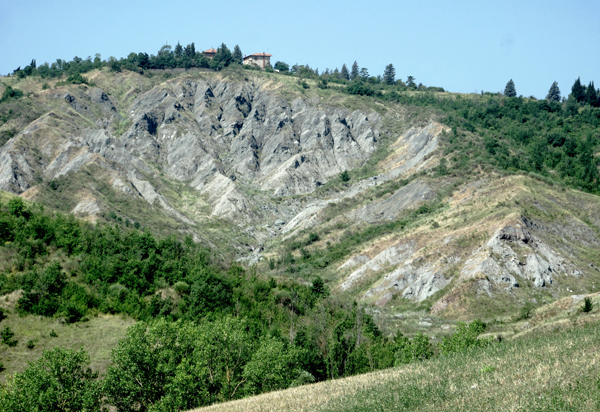
Calanchi del Monte Paderno
La pietra fosforica è una particolare tipo di barite (o solfato di bario), chiamato anche baritina. Si presenta sotto forma di noduli fibroso-raggiati, una conformazione unica per la barite, di colore bianco-grigiastro e di lucentezza madreperlacea. Un’altra caratteristica di questa pietra è l’elevato peso specifico (tanto che inizialmente fu chiamata “spato pesante”), che la distingue da minerali dall’aspetto simile, come il gesso e la calcite, altrettanto presenti nei terreni argillosi dei calanchi del Monte Paderno. La sua particolare composizione chimica vede anche la presenza di tracce di metalli, tra cui rame, che si pensa siano i responsabili della fosforescenza.
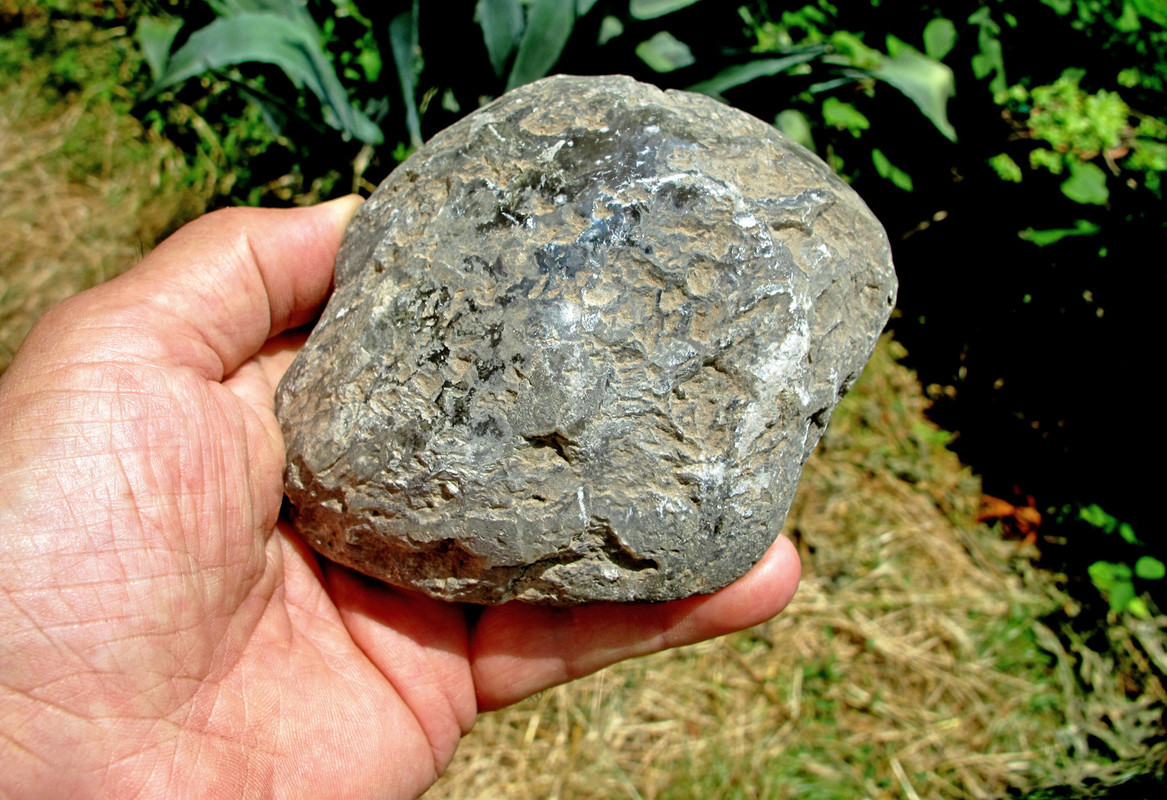
Esemplare di pietra fosforica
Il processo di calcinazione è una reazione chimica che permette alla pietra fosforica di aumentare le sue proprietà fosforescenti. Inizialmente frammenti di pietra vengono mescolati a polvere di carbone e altre sostanze, al fine di creare un ambiente riducente (cioè povero di ossigeno), che trasforma la barite in solfuro di bario. I cristalli di questo composto hanno proprietà fosforescenti maggiori: se esposto alla luce, la radiazione luminosa ecciterà gli atomi dei cristalli, facendogli emettere luce a loro volta; in poche parole, i cristalli “brilleranno” al buio!
Potete vedere un esempio della fosforescenza qui.
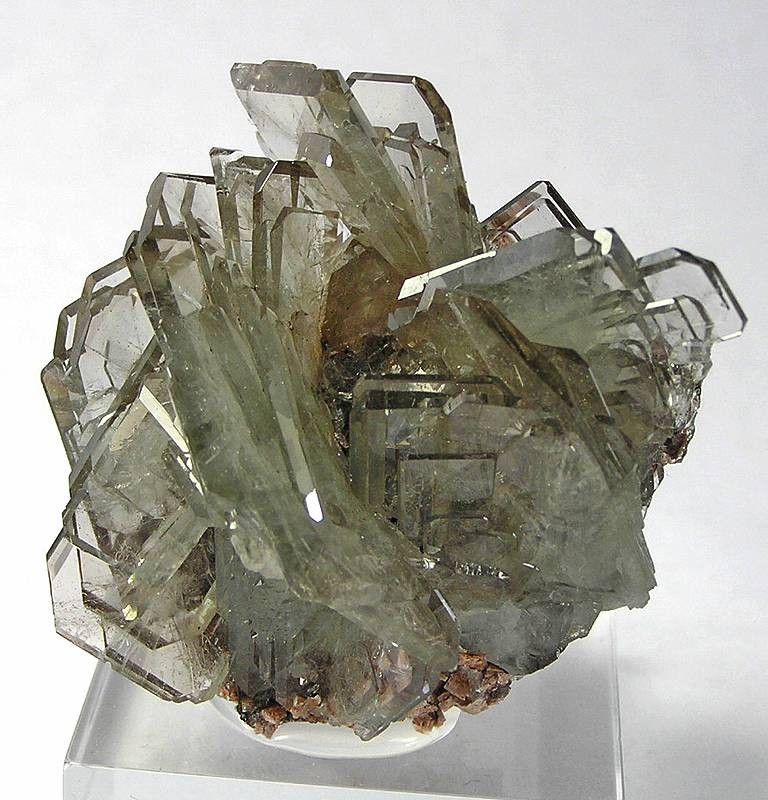
Cristalli di barite tipici
La più grande collezione di pietre fosforiche si trova presso il Museo Universitario di Mineralogia “Luigi Bombicci”: le coordinate puntano all’ingresso, dovrete recarvi lì per risolvere questa earthcache. Il museo è aperto dal martedì al venerdì dalle 9.00 alle 13.00 (da settembre a maggio) e dalle 10.00 alle 13.00 (da giugno a luglio). L’ingresso è gratuito. Talvolta il museo può essere aperto al di fuor dagli orari in caso di eventi, visite guidate o laboratori. Per maggiori informazioni potete visitare questo sito.
A sinistra dell’entrata troverete una vetrinetta che contiene diversi esemplari di questa pietra e di fronte un cartellone con tutte le informazioni su di essa. Per validare il vostro log inviatemi per mail o per messaggio private le risposte a queste domande. Solo dopo aver inviato le risposte potrete loggare, ma non è necessario che aspettiate il mio ok. Vi contatterò io nel caso ci siano errori.
1. Qual è la formula chimica della barite? Cosa diventa la barite dopo la reazione di calcinazione? Qual è la formula chimica di questo nuovo composto?
2. Osservate gli esemplari nella vetrinetta: descrivete la loro conformazione mineralogica. Sono simili ai cristalli di barite che vedete nella foto nel listing? Cosa cambia?
3. Provate a stimare il peso dell’esemplare di barite esposto nel piano più in basso della vetrinetta (ricordate che ha un alto peso specifico!).
4. Proseguendo verso la fine del museo, ci sarà una piccola cabina dove potrete vedere diversi minerali fluorescenti: postate una foto di questi minerali mentre brillano al buio. Inoltre, allegate al log le foto dei minerali del museo che più vi sono piaciuti (le foto sono obbligatorie).
Qualsiasi log contenete foto delle pietre fosforiche o delle informazioni necessarie per rispondere alle domande sarà eliminato senza preavviso!
ENGLISH
THE PHOSPHORIC STONE OF BOLOGNA
The phosphoric stone of Bologna is a rock that is found only in the badlands of Mount Paderno, about 10 km south /south-west of the city. The particular property of this stone is its phosphorescence, discovered in 1602 by the Bolognese cobbler and alchemist Vincenzo Casciarolo: after tooling the stone and calcinating it, he noticed that the crystals had absorbed the light of the sun and were lighting in the dark. This characteristic attracted the scholars of the time and made the stone famous all over the world, so much that even important scholars such as Galileo Galilei and Wolfgang Goethe spoke about it.
Badlands of Mount Paderno
The phosphoric stone is a particular type of baryte (or barium sulfate), also called barytine. It comes in the form of fibrous-rayed nodules, a unique conformation for the baryte, of greyish-white color and of pearly luster. Another characteristic of this stone is its high specific weight (so much so that it was initially called "heavy spatum"), which distinguishes it from similar-looking minerals, such as gypsum and calcite, which are also present in the clay soils of the badlands of Mount Paderno. Its particular chemical composition also shows the presence of traces of metals, including copper, which are thought to be responsible for the phosphorescence.
An example of phosphoric stone
The calcination process is a chemical reaction that increases the phosphorescent properties of the phosphoric stone. Initially, stone fragments are mixed with coal dust and other substances and then heated to high temperatures, in order to create a reducing environment (i.e. low in oxygen), which transforms the baryte into barium sulfide. The crystals of this compound have major phosphorescent properties: if exposed to light, the light radiation will excite the atoms of the crystals, causing them to emit light themselves; in short, the crystals will "glow in the dark”!
You can see an example of the phosphorescence here.
Typical crystals of baryte
The largest collection of phosphoric stones is found at the "Luigi Bombicci" University Museum of Mineralogy: the coordinates will bring you to the entrance, you will have visit it to solve this earthcache. The museum is open from Tuesday to Friday from 9.00am to 1.00pm (September to May) and from 10.00am to 1.00pm (June to July). Admission is free. Sometimes the museum can be open in other hours if there atre events, stages or guided tours. For any further information you can visit this website.
On the left of the entrance you will find a showcase containing several examples of this stone and in front of it a billboard with all the information about it. To validate your log, send me the answers to these questions by email or private message. Only after sending the answers you can log, but you do not have to wait for my ok. If there are mistakes, I will contact you.
1. What is the chemical formula of baryte? What does it become after the calcination process? What is the chemical formula of this new compound?
2. Observe the specimens in the showcase: describe their mineralogical conformation. Are they similar to the barite crystals you see in the picture in the listing? What are the differences?
3. Try to estimate the weight of the baryte specimen on the lower shelf of the showcase (remember that it has a high specific weight!).
4. Continuing towards the end of the museum, there will be a small booth where you can see different fluorescent minerals: post a photo of these minerals while they glow in the dark. Also, attach to your log pictures of the minerals in the museum that you liked the most (the pictures are mandatory).
Any log containing a picture of the phosphoric stones or the information necessary to answer the questions will be deleted without notice!