Rail Trail - Coarse Slag - Ballast
The Historic Brantford Waterloo and Lake Erie Railway
Incorporated in 1885, the new railway, Brantford Waterloo and Lake Erie (BW and LE), was to connect to the Canada Southern Railway (CSR) from Brantford to Waterford. By 1888, the company had enough funds to build the line. And, by October 1889, it had reached Brantford where trouble erupted over the route the train was to follow. The residents of Walnut Street did not want it going up their street. The terminal was then placed on the curve on Colborne Street West. Beginning on February 1, 1890, three daily round trips were made from Brantford to Waterford passing through Mount Pleasant, Scotland and Vanessa with a small 4-4-0 steam engine pulling a flat car with attached side railings for baggage and a coach car. By 1892, the BW and LE line had ceased operations.
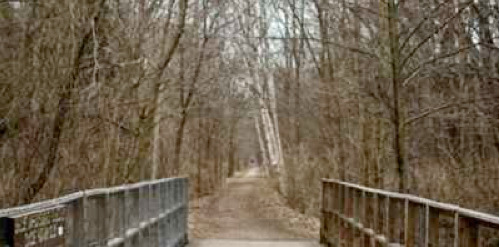
Rails to Trails - The T.H.&B. Rail Trail
The TH&B trail runs from Brantford to Waterford. It was completed in 2010 and became part of the Trans Canada Trail. Brantford is a trail hub from which trail users can go north to Kitchener, east to Hamilton and south on the TH&B, off road to Port Dover in Lake Erie. This new trail, was constructed along the rail line through the area, and as such, use the original rail bed of the train lines.
Now, for the History of Slag
With the increased production of pig iron, steel producers needed a location to dispose of the large quantities of slag they were producing while smelting iron ore. Steel producers began to investigate possible uses of this byproduct.
Slag was found to be suitable for many purposes, and soon became known as “the all purpose construction aggregate” becoming an important material in constructing: road base, asphalt and Portland cement, concrete aggregate, hydraulic fill, glass manufacture, sewage treatment, and railroad ballast. On possible use of Railway Ballast, was here, in the rail beds of the T.H.&B. Rail lines that are here, in the trail below where you are currently standing.
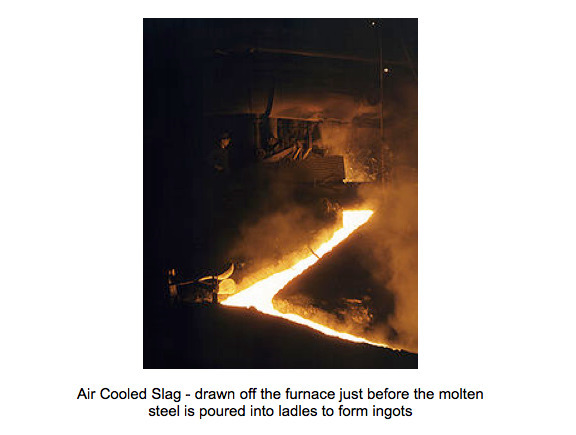
What is Ballast Slag?
Slag is the stony waste matter separated from metals during the smelting or refining of ore. Slag consists mostly of mixed oxides of elements such as silicon, sulfur, phosphorus, and aluminum. During the smelting process, slag floats on the surface of the molten metal, protecting it from oxidation by the atmosphere and keeping it clean.
Blast furnace slag is either air-cooled (slow cooling in the open, forming large chunks) or granulated (formed by quenching molten slag in water to form sand-sized - glass-like particles).
Because slag formed from lava-like melted rock, it's sort of like an igneous rock -- but because humans made the melt, it's not a true igneous rock. It could be called a pseudo-igneous rock (pronounced "SUE-doe ig-NEE-us). That means "fake igneous rock."
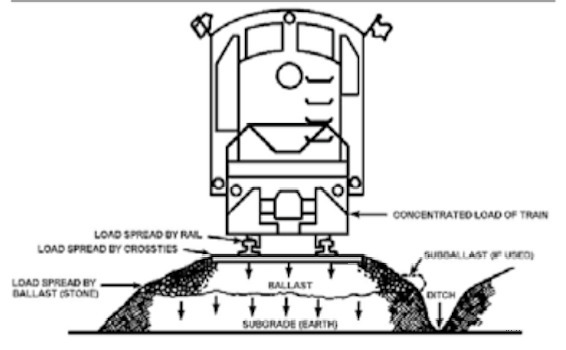
Why use Ballast Slag in a railway bed:
The term “Ballast” gets its origin from ocean transportation, where stones and other weight were used to stabilize a ship during loading and transportation. Slag, a heavy pseudo-igneous rock, is highly suited for use as ballast.
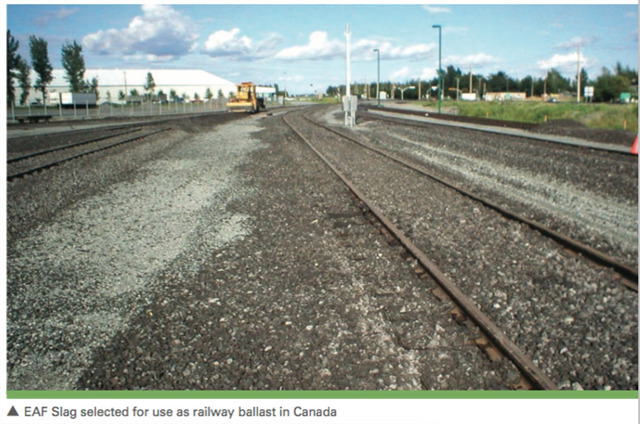
Benefits of Ballast Slag in a Railway Bed:
Distributes the weight of the trains from the track
Keeps the track from moving under the weight of the trains
Provides adequate drainage for the track
Maintains proper track leveling and alignment
Retards growth of vegetation
Reduces dust build up which may lead to uneven support to the rail
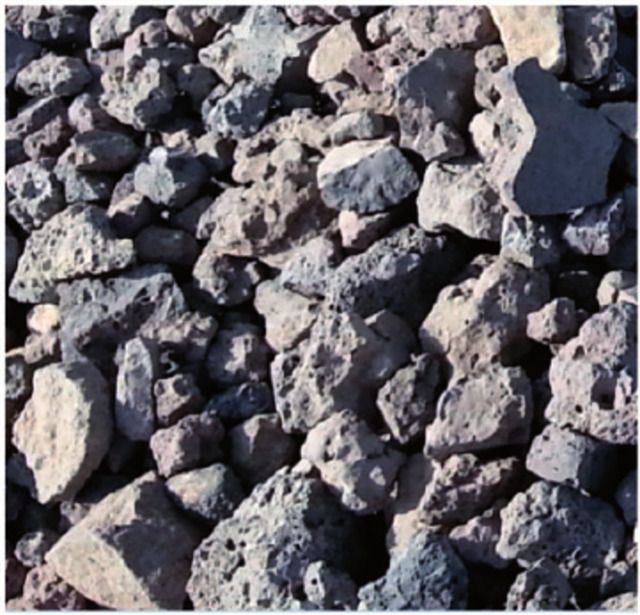
How to Recognize Slag
Slag can be black, gray, whitish, or reddish -- and some spots may shine with the colors of the rainbow.
Some pieces of slag have rounded bubble holes, but these are often mixed with crumbly and smooth glassy spots
Some pieces of slag fizz in acid or vinegar.
To log this EarthCache, please answer the following questions, and send your answers to the CO.
1) According to the sign at GZ, what 2 locations are believed to be the source of the slag found on the TH & B rail trail.
2) Using the description of Ballast Slag provided on the cache page, find a large piece of slag along this rail trail (GZ is a good place to look, but not the only location), and describe why you believe this is a piece of slag. Describe its size, shape, texture and any other features typical of Coarse Slag.
3) Do you believe the Slag found in the rail bed was created by an air cooled process or by being quenched in water? Explain why you think this is so. (Refer to the Cache Page for Assistance)
4) While walking the trail, describe where you see most of the slag, you will likely need to leave the rail trail to get a closer look at the sides of the rail trail as well.
5) Post a photo of your favourite piece of slag, you found while walking the trail. (optional)
Sources of Information:
http://www.saltthesandbox.org/rocks/slag.htm
https://en.wikipedia.org/wiki/Slag
http://www.ccaa.com.au/imis_prod/documents/Library%20Documents/Tech%20Note%2075%20Railway%20Ballast%20LR.pdf
http://www.nationalslag.org/sites/nationalslag/files/documents/gen_info_sheet.pdf
https://www.britannica.com/technology/slag
https://en.wikipedia.org/wiki/Construction_aggregate
http://www.brantfordexpositor.ca/2013/06/28/all-aboard-exploring-brantfords-rail-history