
Questa cache fa parte della serie Geo Summer Games 2018.
This cache take part to the Geo Summer Games 2018.
La cache ovviamente continuerà ad essere disponibile anche dopo i Geo Summer Games 2018!
The cache of course will keep on to be available after the end of the Geo Summer Games 2018!
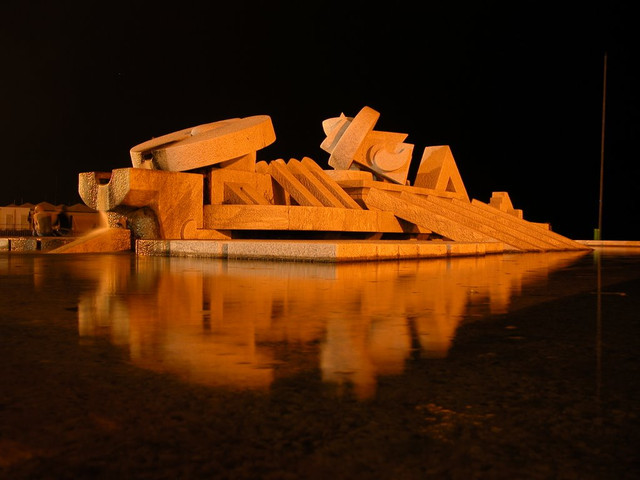
La fontana “La Nave” di Cascella è un’opera scultorea dell’artista pescarese Pietro Cascella e rappresenta il principale monumento cittadino di Pescara: donata dall’artista al Comune , si decise di collocarla nel 1987 a ridosso dell’arenile sul lungomare della città.
La fontana è costituita da una vasca rettangolare, contenente una nave stilizzata che rimanda alla galea, antica imbarcazione a remi. Il richiamo è volutamente ispirato alla grande tradizione marinaresca della città, ma non mancano altre interpretazioni che considerano la Nave una rievocazione dei patimenti subiti dai carcerati pescaresi rinchiusi nella Fortezza Borbonica, impiegati come rematori sulle navi spagnole fino al 1859.
In quest’opera, come in gran parte della sua produzione artistica, Cascella predilige una dimensione monumentale in grado di imprimere un senso di potenza ed energia.
La nave di Cascella è fatta di marmo, una roccia metamorfica.
Le rocce metamorfiche sono rocce che hanno subito processi di metamorfosi legati all'esposizione ad alte temperature e pressioni. Questo processo prende il nome di metamorfismo.
Questo tipo di roccia può derivare dalla trasformazione di rocce sedimentarie (ad esempio il marmo, che deriva dal calcare), oppure da rocce magmatiche, o ancora da altre rocce metamorfiche.
Gli atomi dei minerali in condizioni di alta temperatura e pressione, si ridispongono in modo da formare nuovi reticoli cristallini.
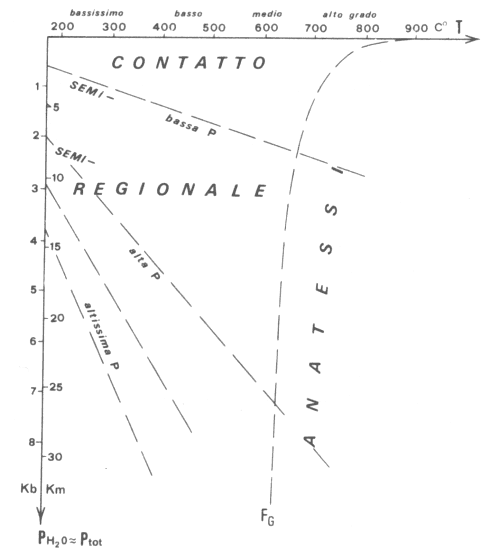
Le rocce metamorfiche si possono formare in 4 modi: Metamorfismo di contatto, metamorfismo regionale, metamorfismo di seppellimento, dinamo-metaformismo. Il marmo si forma con il processo di Metamorfismo di contatto: avviene a causa dell'aumento di temperatura, cioè quando rocce ignee o sedimentarie entrano in contatto con rocce magmatiche ancora calde.
Il marmo utilizzato nella nave di cascella è il marmo di Carrara, uno dei più pregiati, che si estrae nelle alpi Apuane, in zona Carrara.
Le Alpi Apuane sono una catena montuosa situata nel nord-ovest della Toscana, facente parte del Subappennino toscano
La catena delle Alpi Apuane si differenzia dal vicino Appennino per la sua morfologia aspra e incisa, da cui appunto l'appellativo di Alpi.
L'energia del rilievo è molto elevata, si passa da poche decine di metri sopra il livello del mare agli oltre 1800 metri in meno di 7 km.
I marmi apuani sono comunemente considerati, dal punto di vista microscopico, come un esempio di materiale naturale che ha subito un completo processo di annealing cioè di ricristallizzazione statica post-deformazione
Sono presenti diverse microstrutture dei marmi Apuani, ma i 2 principali sono:
-microfabric di tipo A
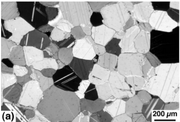
Caratterizzato da una microstruttura granoblastica poligonale, ovvero da un aggregato di cristalli equigranulari con limiti granulari diritti o leggermente curvi che terminano in punti tripli con angoli prossimi a 120°;
-microfabric di tipo B
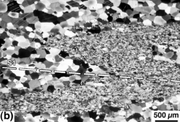
microstrutture con cristalli di calcite con limiti granulari molto irregolari (suturati) e da una forte orientazione preferenziale critallografica, o microstrutture caratterizzate da un’associazione di cristalli di calcite in genere più minuti e con limiti granulari dritti o debolmente curvi, dalla quale spiccano cristalli di maggiori dimensioni. Anche in questo caso è evidente una forte orientazione preferenziale di forma e cristallografica.
Per loggare questa earthcache, inviatemi per messaggio privato le risposte di queste semplici domande:
1. A che temperatura e pressioni si forma il marmo in relazione al grafico?
2. Ricerca quali sono i più comuni minerali che possono trovarsi all'interno di quel particolare marmo? (Elencarne almeno 3)
3. Osservando la nave, noti che è formata anche da altri materiali?
4. Che angoli formano i microcristalli nel marmo di tipo microfabric A?
5. Mi farebbe piacere una vostra foto davanti alla fontana (non obbligatorio)
ENG
This cache is part of the geo summer game 2018
Cascella's "La Nave" fountain is a sculptural work by the Pescara artist Pietro Cascella and is the main monument in Pescara: donated by the artist to the Municipality, it was decided to place it in 1987 close to the seafront of the city.
The fountain consists of a rectangular basin, containing a stylized ship that refers to the galley, an ancient rowing boat. The call is deliberately inspired by the great seafaring tradition of the city, but there are other interpretations that consider the ship a reenactment of the sufferings suffered by the prisoners of Pescara locked up in the Bourbon Fortress, used as rowers on Spanish ships until 1859.
In this work, as in most of his artistic production, Cascella prefers a monumental dimension able to give a sense of power and energy.
The Cascella ship is made of marble, a metamorphic rock.
Metamorphic rocks are rocks that have undergone metamorphosis processes linked to exposure to high temperatures and pressures. This process is called metamorphism.
This type of rock can derive from the transformation of sedimentary rocks (for example marble, which derives from limestone), or from magmatic rocks, or from other metamorphic rocks.
The atoms of the minerals in conditions of high temperature and pressure, are rearranged in such a way as to form new crystalline lattices. Metamorphic rocks can be formed in 4 ways: Contact metamorphism, regional metamorphism, burial metamorphism, dynamo-metaformism.
Marble is formed by the process of contact metamorphism: it occurs because of the increase in temperature, ie when igneous or sedimentary rocks come into contact with still warm magmatic rocks.
The marble used in the cascella ship is the Carrara marble, one of the finest, which is extracted in the Apuane Alps, in the Carrara area.
The Apuane Alps are a mountain range located in the north-west of Tuscany, part of the Tuscan Subappennino
The chain of the Apuan Alps differs from the nearby Apennines due to its rough and incised morphology, from which the name of the Alps is noted.
The energy of the relief is very high, ranging from a few tens of meters above sea level to over 1800 meters in less than 7 km.
The Apuan marbles are considered important, from the microscopic point of view, as an example of a natural material that has undergone a complete annealing process, ie post-deformation static recrystallization
There are several microstructures of the Apuan marbles, but the 2 main ones are:
-microfabric of type A
Characterized by a polygonal grain-block microstructure, that is an aggregate of equigranular crystals with straight or slightly curved granular limits ending in triple points with angles close to 120 °;
-microfabric of type B
microstructures with calcite crystals with very irregular granular limits (sutured) and a strong preferential cretallographic orientation, or microstructures characterized by an association of calcite crystals in genus more minute and with straight or weakly curved granular limits, from which crystals of greater dimensions stand out. Also in this case a strong preferential orientation of form and crystallographic is evident.
To log in this earthcache, please send me the answers for these simple questions by private message:
1. At what temperature and pressure does marble form in relation to the graph?
2. Research which are the most common minerals that can be found in that particular marble? (List at least 3)
3. Looking at the ship, do you notice that it is also made of other materials?
4. Which angles form the microcrystals of marble in the microfabric type A?
5. I would like a photo of you in front of the fountain (not mandatory)