Welcome to Satun (Thai: สตูล, pronounced [sā.tūːn])
Satun is a town (thesaban mueang) in southern Thailand, capital of the Satun Province. Satun lies 985 km south of Bangkok. And it near border to Malaysia. As of 2005 it has a population of 21,498.
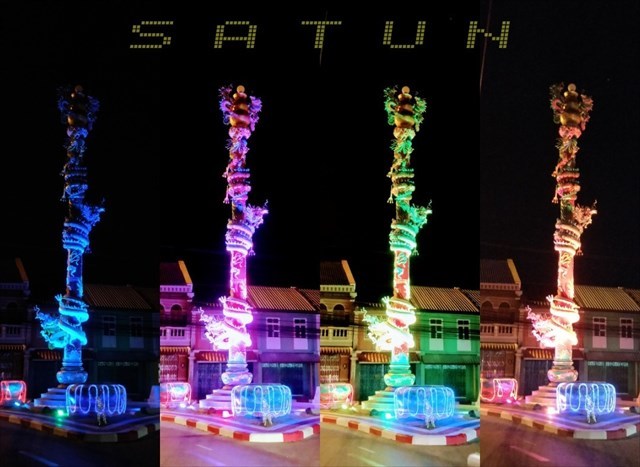
The cache is hide in a little international place where Thailand, England and Italy meet.
The name Satun is a Thai version of its original Malayname, Setul (santol, or wild mangosteen tree).
Until 1916 Satun was a small Malay state known as Kingdom of Setul Mambang Segara, closely related to Kedah Sultanate. After that date it was administered by a governor sent from Nakhon Si Thammarat. In 1897 Satun became part of Monthon Syburi (now Kedah), which in 1909 was divided between British Empire and Siam as part of Anglo-Siamese Treaty of 1909. While most of Kedah was ceded to Britain, Satun was awarded to Siam because it had a relatively large Thai population. Satun was then incorporated into Monthon Phuket. The monthon system was ended in 1933, and Satun Province became a first-level subdivision of Thailand.
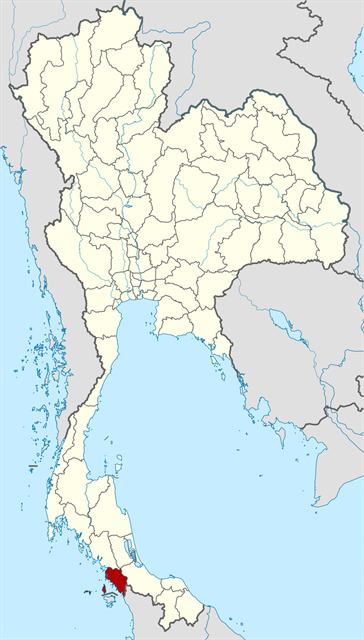
The province was to have been the site of the Pak Bara Deep-seaport in La-ngu District.
Symbol
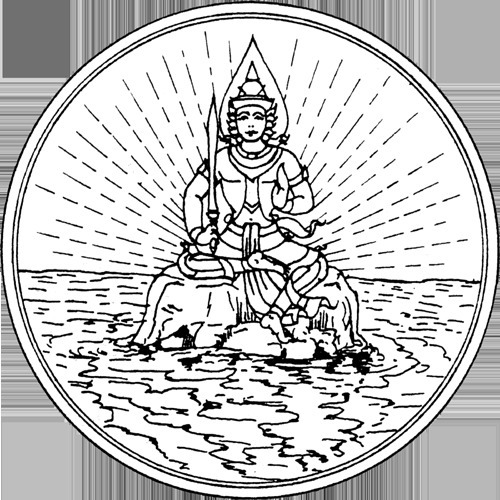
The provincial seal shows Pra Samut Thewaa sitting on a rock in the sea, with the sunset behind. Pra Samut Thewaa is a spirit who guards the sea. The rock is his divine vehicle. The sunset symbolizes the Andaman Sea, which lies to the west of the province.
The provincial tree is the Thai Rosewood or Pha-yungklaep (Dalbergia bariensis), and the provincial flower is the Snowy Orchid Tree (Bauhinia acuminata). The province's motto is Peaceful, clean, and pure nature.