 ITALIANO
La cache è un piccolo contenitore trasparente.
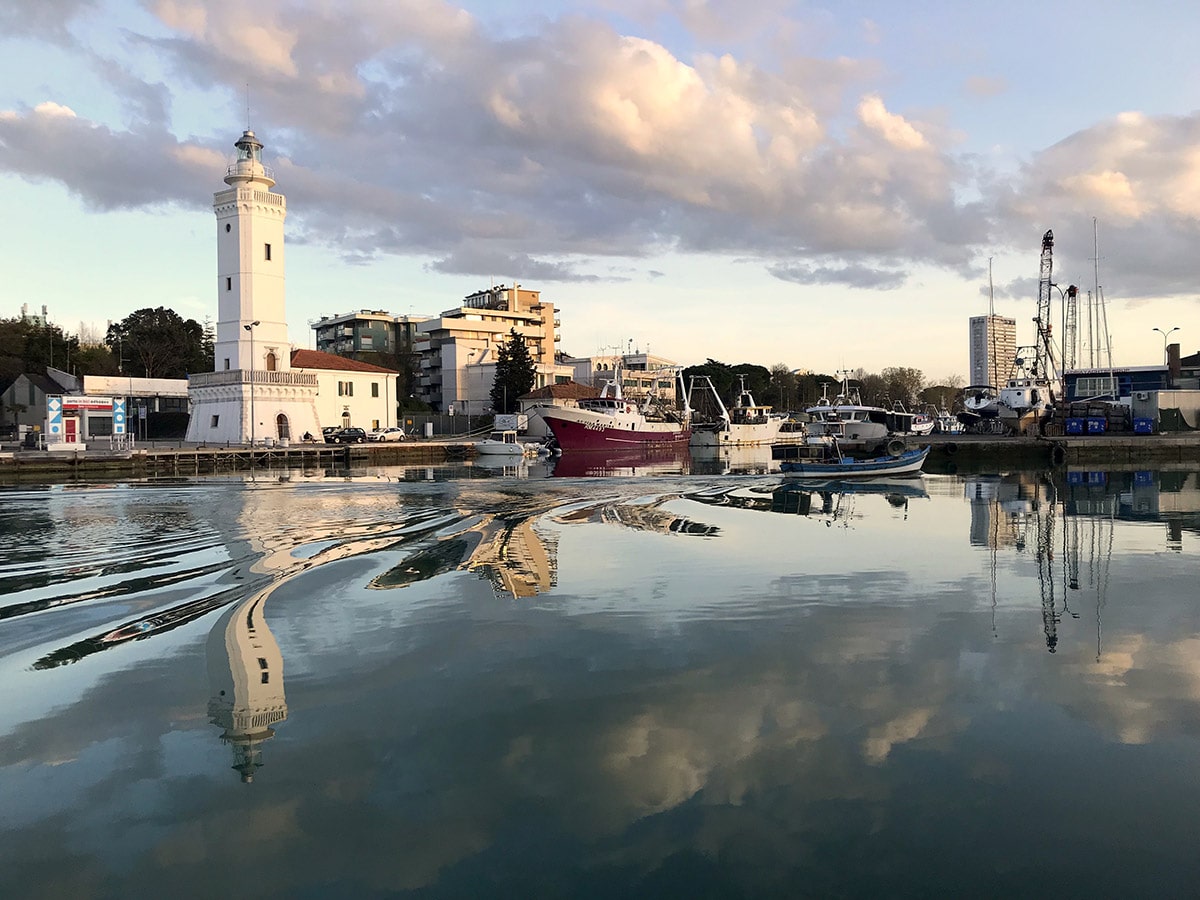
La prima lanterna della città di Rimini di cui si ha notizia fu eretta nell’antico porto dell’Ausa, nel corso del 1000 DC. A causa dell’interrimento e di alcune forti mareggiate l’antico porto scomparve, la foce del Marecchia venne deviata più a nord e la lanterna fu posizionata su una torre nei pressi dell’attuale chiesa di San Nicolò.
Nel corso del 1200 DC, a causa della continua avanzata della linea di costa, la lanterna fu trasferita sulla chiesa di Sant’Antonio da Padova in via Destra del Porto, ormai scomparsa.
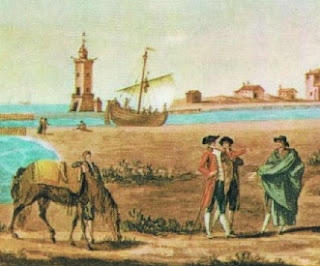
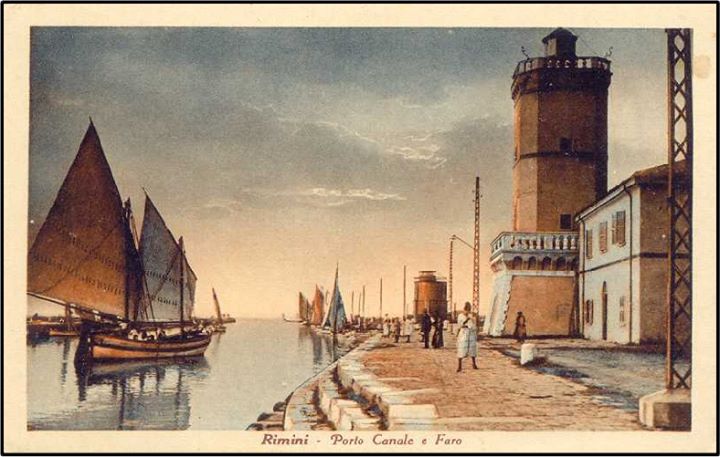
L’attribuzione della costruzione del faro attuale è molto controversa, tanto che ci sono cinque possibili autori tra cui si ha incertezza. La responsabilità è dovuta alla mancanza della documentazione storica a riguardo, fatta sparire all’epoca per poter occultare brogli finanziari. Tuttavia, si crede che il faro sia stato costruito su progetto dell’architetto Luigi Vanvitelli nel 1733, per volere di Papa Clemente XII, che intendeva costruire un faro/fortino a difesa del porto in sostituzione della vecchia lanterna, e che nel 1754 G.F. Buonamici, costruttore della torre dell’orologio in piazza Cavour, lo completò.
Nel 1900 la combustione a olio venne sostituita con quella a gas che, nel 1930, fu a sua volta modificata con la corrente elettrica e nel 1932 si provvide ad alzare la lanterna di altri 9 metri.
Durante la seconda guerra mondiale il faro venne distrutto nel corso di un bombardamento alleato che lasciò intatta solo la base; fu ricostruito tra il 1946 e il 1947 erigendolo all’altezza odierna di 27 metri sul livello del medio mare. La sorgente luminosa ora è una comune lampada ad incandescenza da 1000 watt che grazie all’effetto della lente di Fresnel, viene ingrandita rendendola visibile fino a un massimo di circa 27 chilometri di distanza.
Durante il suo esercizio, la luce viene controllata 3 volte: all’accensione, una volta durante la notte, e al suo spegnimento. L’interno del faro è zona militare ed è possibile entrare solo chiedendo l’autorizzazione alla Marina che li gestisce.
 ENGLISH
The cache is a small transparent container.
The first lantern of the city of Rimini was erected in the ancient port of Ausa, during the eleventh century. Due to silt and some strong storms, the ancient port disappeared, the mouth of the Marecchia was diverted further north and the lantern was placed on a tower near the current church of Saint Nicolò.
During the thirteenth century, due to the progression of the coast line, the lantern was transferred to the church of Saint Anthony of Padua in Via Destra del Porto, now disappeared.
The construction’s responsibility of the current lighthouse is controversial so that there are five possible authors; this it is due to the lack of hystorical documentation, made vanished due to financial fraud. Anyway, it seems that the lighthouse has been built on the project of Luigi Vanvitelli in 1733, at the behest of Pope Clememte XII, that wanted to build a lighthouse/blockhouse in defence of the port and in sostitution of the old lantern, and that in 1754 GF Buonamici, builder of the clock tower in Cavour square, finished it.
In 1900 the oil combustion was replaced by a gas, in 1930 it was replaced with an electric current and in 1932 the lantern was raised by another 9 meters.
During the second world war the lighthouse was destroyed due to an allied bombing that left only the base intact; it was rebuilt between 1946 and 1947, and this brought to the today's height of 27 meters above sea level. The light source is a common 1000 watt incandescent lamp that, thanks to the effect of the Fresnel lens, is enlarged making it visible up to a maximum of about 27 kilometers away.
During its operation, the light is checked 3 times: on start, once during the night, and when it is switched off. The interior of the lighthouse is a military zone and it is possible to enter only by requesting authorization from the Navy that manages them.
