español deutsch english
Logbedingung:
Jeder Cacher, der einen EarthCache besucht und die Aufgaben per Email oder via Message Center beantwortet hat, kann einen EarthCache sofort loggen. In den EarthCache-Guidelines ist bewusst nicht vorgesehen, dass auf eine Logfreigabe seitens des Owners gewartet werden muss. Wer erst später antwortet hat die Möglichkeit einer "write Note"
Log condition:
Any cacher visiting an EarthCache and answering the tasks via email or message center can immediately log EarthCache. The EarthCache Guidelines deliberately do not intend to wait for a log release from the owner. Who answers later has the possibility of a "write note"
Condición del Registro:
Cualquier persona que visite EarthCache y responda a las tareas por correo electrónico o centro de mensajes puede iniciar sesión en EarthCache inmediatamente. Las directrices de EarthCache a propósito no tienen la intención de esperar un lanzamiento del propietario. Cualquiera que conteste más tarde tiene la opción de escribir una nota.
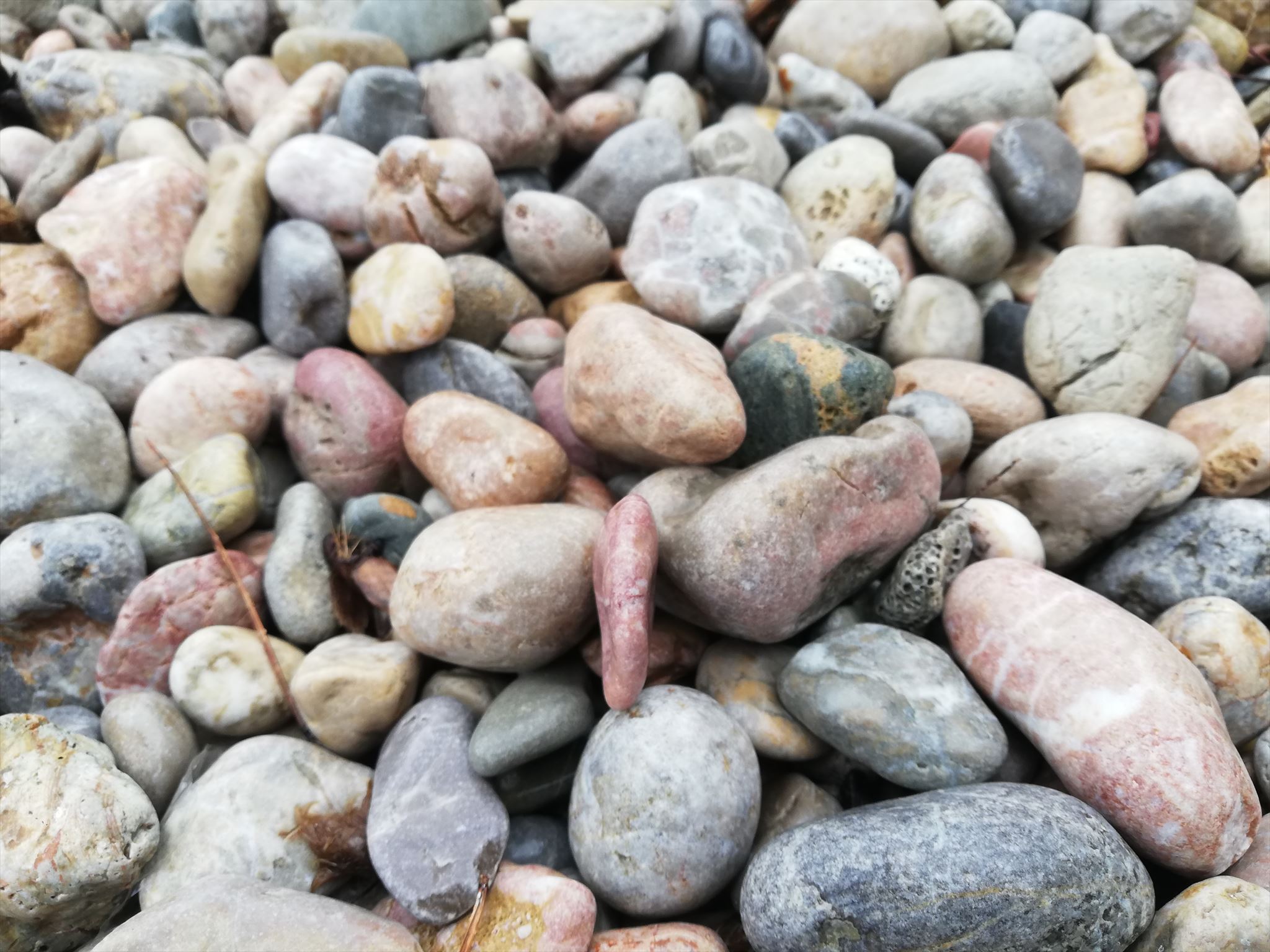
playa de piedra
Mallorca tiene muchas playas hermosas para ofrecer. En este Earthcache debe rodear esta playa de piedra.
Una playa es una franja costera o costera de arena o cantos rodados. Una playa de arena de grano grueso a fina en diferentes colores se llama playa de arena.
En su mayoría estas playas son marrones o blancas. También hay playas de arena negra (en islas volcánicas) y (muy raramente) rosadas. Una playa de escombros se llama una playa de piedra.
Los cantos rodados o guijarros (chinas o chinarros, cuando son de pequeño tamaño) son fragmentos de roca pulidos y sueltos, susceptibles de ser transportados por medios naturales, como las corrientes de agua, los corrimientos de tierra, etcétera. Aunque no se hace distinción de forma, en general, un canto rodado adquiere una morfología más o menos redondeada, subredondeada u oblonga, sin aristas y con la superficie lisa, debido al desgaste sufrido por los procesos erosivos durante el transporte, generalmente causados por la corrosión o las corrientes de agua (erosión hídrica).
| Los cantos rodados |
Tipo |
Definición |
| rocas cristalinas |
pórfido |
solidificados de los flujos de lava en la superficie de la tierra, en la matriz hay minerales más grandes |
| |
granito |
solidificados en lo profundo de la corteza terrestre, los minerales típicos son feldespato, cuarzo y mica, tamaño de grano uniforme |
| |
gnéisico |
Rocas de transformación, minerales alargados, capas, plegadas o incluso bandas |
| rocas sedimentarias |
arenisca |
Está formado por pequeños granos que son claramente visibles, capas fácilmente reconocibles, diferentes colores. |
| |
caliza |
El origen de los restos de caparazón calcáreo de animales marinos, a menudo fósiles incluidos, se originó hace unos 480 millones de años, se puede rascar |
| |
el sílex |
Gris oscuro, negro con corteza blanca, hecho de ácido silícico, duro pero quebradizo |
En principio, uno diferencia:
pedregal fluvial Los pequeños escombros en el lecho de un río se llaman grava
Pedregal marino
pedregal glacial: morrenas y cantos rodados
Escombros, la forma mixta de escombros y escombros que se acumula como un pie (Talus) alrededor de torres rocosas, a lo largo de las paredes de roca y en Karen y Steiltälern; estos se encuentran en el Schutt Grenzwinkel, una cantera fresca no puede permanecer tendida y rodando como un desprendimiento de rocas hacia el valle. En sí mismo, el astrágalo se mueve lentamente por el trabajo de las heladas.
pedregal conectado por tierra suelta
rocas piroclásticas
Ahora a las tareas:
Adjunte a su registro en línea una foto suya o un trozo de papel con su apodo y la fecha de la visita en las coordenadas de la lista.
Qué tipo de pedregal está aquí?
Por qué la mayoría de las piedras son redondeadas aquí?
Determine al menos 2 rocas en la playa y hable brevemente sobre el color, la superficie y la dureza.
Mallorca hat viele schöne Strände zu bieten. Heute soll es in diesem Earthcache um diesen Steinstrand gehen.
Ein Strand ist ein flacher Küsten- oder Uferstreifen aus Sand oder Geröll.
Ein Strand aus grobkörnigen bis feinem Sand in unterschiedlichen Farben wird als Sandstrand bezeichnet. Meistens sind diese Strände bräunlich oder weiß. Daneben gibt es auch Strände aus schwarzem (auf Vulkan-Inseln) und (sehr selten) rosa Sand.
Im Unterschied zu Stränden aus Kies oder Geröll (Steinstrand) gelten (insbesondere weiße) Sandstrände als wichtiges Merkmal für Urlaubsorte und Ferienhotels. Oft finden sich an Sandstränden Sanddünen.
Geröll (zu rollen) besteht aus Steinen, also Gesteinstrümmern, die beim Transport durch Wasser, Erdrutsche, Muren oder sonstige Bodenbewegungen zu Tal bewegt werden und deren Bruchkanten dabei mehr oder weniger abgerundet wurden.
Die Größe der Steine liegt überwiegend zwischen 2 und 20 Zentimetern, nach DIN 4022 ist Geröll größer als 63 mm, allgemein zumindest größer als 2 mm (Psephite), Blockgeröll größenmäßig darüber bis Hausgröße. Kleinere Korngrößen nennt man Kies.
| Geröll |
Art |
Erklärung |
| Kristalline Gesteine |
Porphyr |
-erstarrte aus Lavaflüssen an der Erdoberfläche, in der Grundmasse liegen größere Mineraleinsprenglinge, |
| |
Granit |
-erstarrte tief in der Erdkruste, typische Minerale sind Feldspat,Quarz und Glimmer, gleichmäßige Körnung |
| |
Gneis |
-Umwandlungsgestein, längliche Minerale, geschichtet, gefaltet oder auch gebändert anzusehen |
| Ablagerungsgesteine |
Sandstein |
-setzt sich aus kleinen Körnchen gut sichtbar zusammen, git erkennbare Schichtungen, verschiedene Färbungen |
| |
Kalkstein |
-Ursprung kalkige Schalenreste von Meerestierchen, oft Fossilien eingeschlossen, entstanden vor ca. 480 Mio Jahren, ritzbar |
| |
Feuerstein |
-dunkelgrau, schwarz mit weißer Rinde, entstanden aus Kieselsäure, hart aber spröde |
Prinzipiell unterscheidet man
- fluviatiles Geröll (Flussgeröll)
Kleingeröll in einem Flussbett wird als Kies bezeichnet; nahe am Wasser ist seine Bewegung als leises Rieseln oder Singen zu hören. Es bildet oft große Kies- bzw. Schotterbänke, die wegen ihrer gleichmäßigen Zusammensetzung der Korngrößen als wichtige Rohstoffe für das Bauwesen dienen. Einzelne Großblöcke nennt man dort Schroppen. Kleinere Rollsteine bezeichnet man in Süddeutschland und darüber hinaus als Wacken.
- marines Geröll (Brandungsgeröll)
- glaziales Geröll: Moränen, Findlinge und Geschiebe
- Schuttgeröll, die Mischform aus Schutt und Geröll, die sich als Fuß (Talus) rund um Felstürmen, entlang der Felswände und in Karen und Steiltälern anlagert – diese liegen am Schuttgrenzwinkel, frischer Steinbruch kann nicht liegen bleiben und rollt als Steinschlag zu Tal. In sich wird der Talus durch Frostarbeit langsam weiterbewegt.
- Rieselfluh, durch lockere Erde verbundenes Geröll
- pyroklastische Gerölle.
Jetzt zu den Aufgaben:
Füge Deinem Online Log ein Foto von Dir oder einem Blatt Papier mit Nicknamen und Besuchdatum an den Listingkoordinaten bei!
Was für Art Geröll ist hier?
Warum sind die meisten Steine hier abgerundet?
Bestimme mindestens 2 Gesteine am Strand und gehe kurz auf Färbung, Oberfläche und Härte ein.
Mallorca has many beautiful beaches to offer. In this Earthcache it should go around this stone beach.
A beach is a shallow coastal or shore strip of sand or boulders. A beach of coarse-grained to fine sand in different colors is called sandy beach. Mostly these beaches are brownish or white. There are also beaches of black (on volcanic islands) and (very rarely) pink sand.
Unlike beaches made of gravel or boulders (stone beach) are considered (especially white) sandy beaches as an important feature for tourist resorts and holiday hotels. Sandy dunes are often found on sandy beaches. Scree (to roll) consists of stones, so rock debris, which are moved to the valley during transport through water, landslides, mudslides or other ground movements and the breaking edges
| gravel |
type |
explanation |
|
crystalline rocks
|
porphyry |
solidified by lava flows on the earth's surface, in the matrix are larger minerals |
| |
granite |
solidified deep in the earth's crust, typical minerals are feldspar, quartz and mica, uniform grain size |
| |
gneiss |
Transformation rocks, elongated minerals, layered, folded or even banded view |
| sedimentary rocks |
sandstone |
is made up of small grains that are clearly visible, with recognizable layers, different colors |
| |
limestone |
Origin of calcareous shell remains of marine animals, often fossils included, originated about 480 million years ago, scratchable |
| |
flint |
dark gray, black with white bark, made of silicic acid, hard but brittle |
In principle one differentiates:
scree slopes
Small debris in a river bed is called gravel; Near the water you can hear his movement as a gentle trickle or singing. It often forms large gravel or gravel banks, which serve as important raw materials for the construction industry due to their uniform grain size composition. Individual large blocks are called there Schroppen. Smaller tusks are called in South Germany and beyond as Wacken
Marine scree (surf scree) glacial scree: moraines and boulders
Debris, the mixed form of debris and rubble that accumulates as a foot (Talus) around rock towers, along the rock walls and in Karen and Steiltälern - these are at the Schutt Grenzwinkel, fresh quarry can not remain lying and rolls as a rockfall to the valley. In itself, the talus is slowly moved by frost work
Rieselfluh, scree connected by loose soil
pyroclastic rocks.
Now to the tasks:
Attach a photo of yourself or a piece of paper with nickname and date of visit at the listing coordinates to your online log!
What kind of scree is here?
Why are most stones rounded here?
Determine at least 2 rocks on the beach and briefly talk about color, surface and hardness.