FTF: Nero37 & ibleedhope & sozioma congrats!

In imediata apropiere a Pieţei Unirii se află clădirea care a găzduit, din anul 1752, hanul şi ospătăria „La Trompetist”, care era considerat un hotel de lux, fiind cea mai căutată modalitate de cazare şi loc de a petrece timpul din oraş. Numele hanului provine de la proprietarul casei, maiorul Anton Seltman, care a fost trompetist în Armata Imperială.
Aflat pe colţul străzilor Pacha şi Eugeniu de Savoya, hanul se bucură de o poziţionare foarte bună deoarece la această intersecţie se află şi staţia poştalionului care asigura cursele regulate între Viena şi Sibiu. În timp, hanul şi-a schimbat denumirea în Hotelul Trompetă. Cu o vechime de peste 150 de ani a devenit rapid cel mai vestit loc de odihnă din oraş, datorită condiţiilor moderne pentru acea perioada, având băi cu apă curentă, 50 de camere elegante dispuse pe două etaje. Printre clienţii hotelului erau reprezentanţi din înalta societate a vremii, moşierii bogaţi şi străini cu pretenţii. Nu doar cazarea era pe placul clienţilor pretenţioşi, ci şi restaurantul careservea mese îmbelşugate.
Printre oaspeţii hanului de altădată s-au aflat şi împăratul Francisc I şi fiul său, Carol (anul 1807), Alexandru Ioan Cuza, Domnul Unirii de la 1859, care pleca în exil în Europa Centrală (7-8 martie 1866) şi poetul Mihai Eminescu, aflat în turneu cu trupa de teatru Pascaly .La data construcţiei, în 1747, clădirea avea un singur etaj, cel de-al doilea fiind adăugat în 1899.
Din punct de vedere al stilului arhitectural, clădirea a fost ridicată iniţial în stil baroc, în prezent remarcându-se stilul eclectic, istoricist. Ferestrele sunt încadrate de pilaştri de factură ionică la etajul 1 şi de factură corintică la etajul 2. În partea superioară, acestea sunt încoronate de decoraţiuni neobaroce.
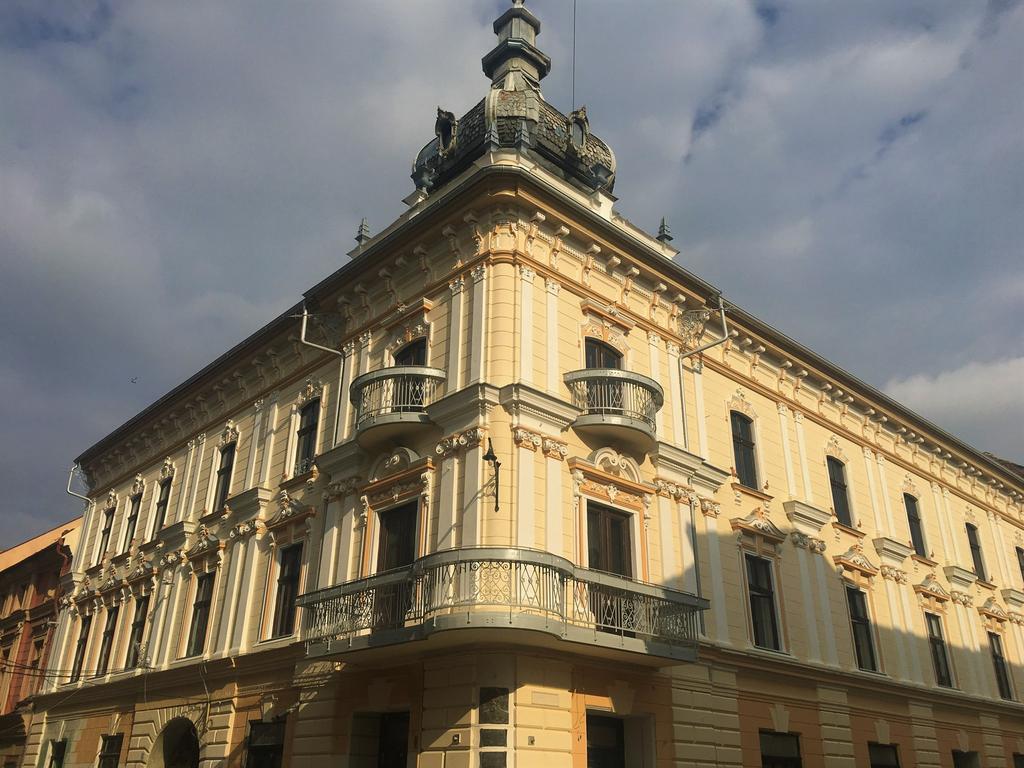

In the immediate vicinity of the Unirii Square there is the building that hosted the inn and restaurant "La Trompetist", which was considered a luxury hotel since 1752, being the most sought after accommodation and a place to spend time in the city. The name of the inn comes from the owner of the house, Major Anton Seltman, who was trumpet player in the Imperial Army.
Situated on the corner of the Pacha and Eugeniu de Savoya streets, the inn enjoys a very good location because at this intersection there is also the post office station that provides regular transports between Vienna and Sibiu. Over time, the inn changed its name to Trumpet Hotel. With more than 150 years of experience, it has quickly become the most famous resting place in the city, thanks to the modern conditions for that period, with its baths with hot water, 50 elegant rooms spread over two floors. Among the guests of the hotel were representatives of the high society of the time, wealthy and foreign landlords. Not only the accommodation was to the liking of the demanding customers, but also the restaurant that had plenty of tables.
Among the guests of the former inn were Emperor Francis I and his son, Carol (1807), Alexandru Ioan Cuza (who initiated a series of reforms that contributed to the modernization of Romanian society and of state structures.) , who went into exile in Central Europe (March 7-8, 1866) and the poet Mihai Eminescu, on tour with the Pascaly theater bandAt the time of construction, in 1747, the building had one floor, the second one was added in 1899.
From the point of view of the architectural style, the building was originally built in the baroque style, and now it is the eclectic, historicist style. The windows are framed by ionic pillars on the first floor and corinthian on the 2nd floor. In the upper part, they are crowned by neo-classical decorations.
