Welcome to the William Willett Sundial Memorial
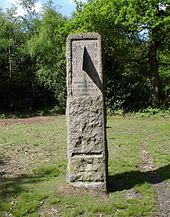
Here you will find a pillar of Granite in the middle of the woods. These woods that you are now within were purchased in a tribute to William Willett
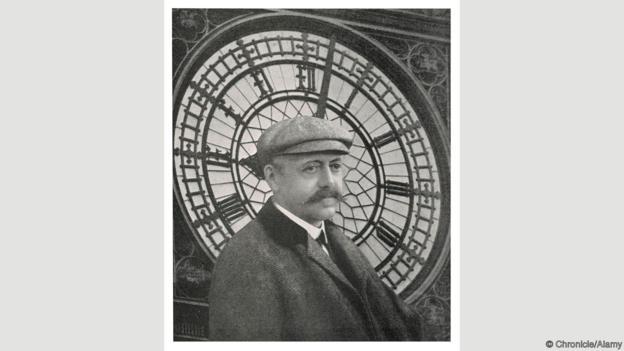
William Willett
William was a builder who lived locally in Chislehurst and noticed how other people had shutters closed in summer to keep the sunlight out and that in the warm spring and autumn, evenings where the light faded early were wasted. He believed that people were missing the "great outdoors". (Something Geocaching helps with also) He thought if only he could persuade people out of bed earlier in the morning and then they would get more day, and daylight to enjoy...
His solution was to change the nations clocks!
Granite
Granite is a hard, igneous rock, made up of quartz, feldspar and biotite mica. Granite is formed within the depths of the Earth’s surface as molten lava was cooling. And the slower the cooling the larger the crystals of the minerals are within the granite. Granite can take thousands to millions of years to cool and form.
Granite is nearly always lacking any internal structures, hard and tough and so is a great rock to use for construction. Its decorative qualities are also very sought after. Granite is widely found throuought the world within the crust of the earth. Although the occurrence of granite is often in very small areas (less than 100km2)
The pictured granite has three main minerals in its makeup.
Pink - Potassium Feldspar (it’s the potassium which gives it the pink colour)
Clear/Glassy - Quartz
Black - Biotite Mica

Shap granite is a coarse grained igneous rock with porphyritic texture.
An igneous rock is one which formed by the cooling of lava. The name igneous derives from the Latin ignis meaning fire.
Porphyritic means that some of the crystals in the rock are significantly larger than the surrounding crystals. These larger crystals are called phenocrysts. The phenocrysts in the Shap granite are formed as the molten rock cooled very slowly, deep underground.
At some point the molten rock migrated upwards towards the surface and started to cool much more quickly. This two stage cooling process results in the formation of the much smaller crystals which surround the larger phenocrysts.
The smaller crystals tend to be more cramped together, resulting in less regular or defined crystal shapes.
Questions
1. Please look at the memorial, describe the makeup of the granite, please include colours of the different minerals, suggest %’s of the minerals, and the feel or texture of the surface.
2. Please describe or measure the size of the crystals, how big or small are the different colour minerals. And which one is the largest crystal mineral present?
3. Looking at the pictured example of granite, please describe any differences can you see to the memorial.
4. Looking at the rock do you believe the rock formed in one cooling process? What have you observed to make you answer the way you have?
Please submit answers via the message centre or by email, (links at top of the page)
Hope you enjoy this EarthCache.
