The Oak Knoll Sanctuary in Attleboro should more appropriately be called Oak Knolls. As you make your way down Woody’s Way you will find yourself ascending and descending a number of small knolls, all covered in oak trees (hence the name of the Sanctuary). Once you reach GZ you’ll be at the Sanctuary’s highest elevation. What a beautiful view of Talaquega Lake and many small knolls on two sides of the lake! You’ll find a bench there…good for taking a moment to enjoy the view!
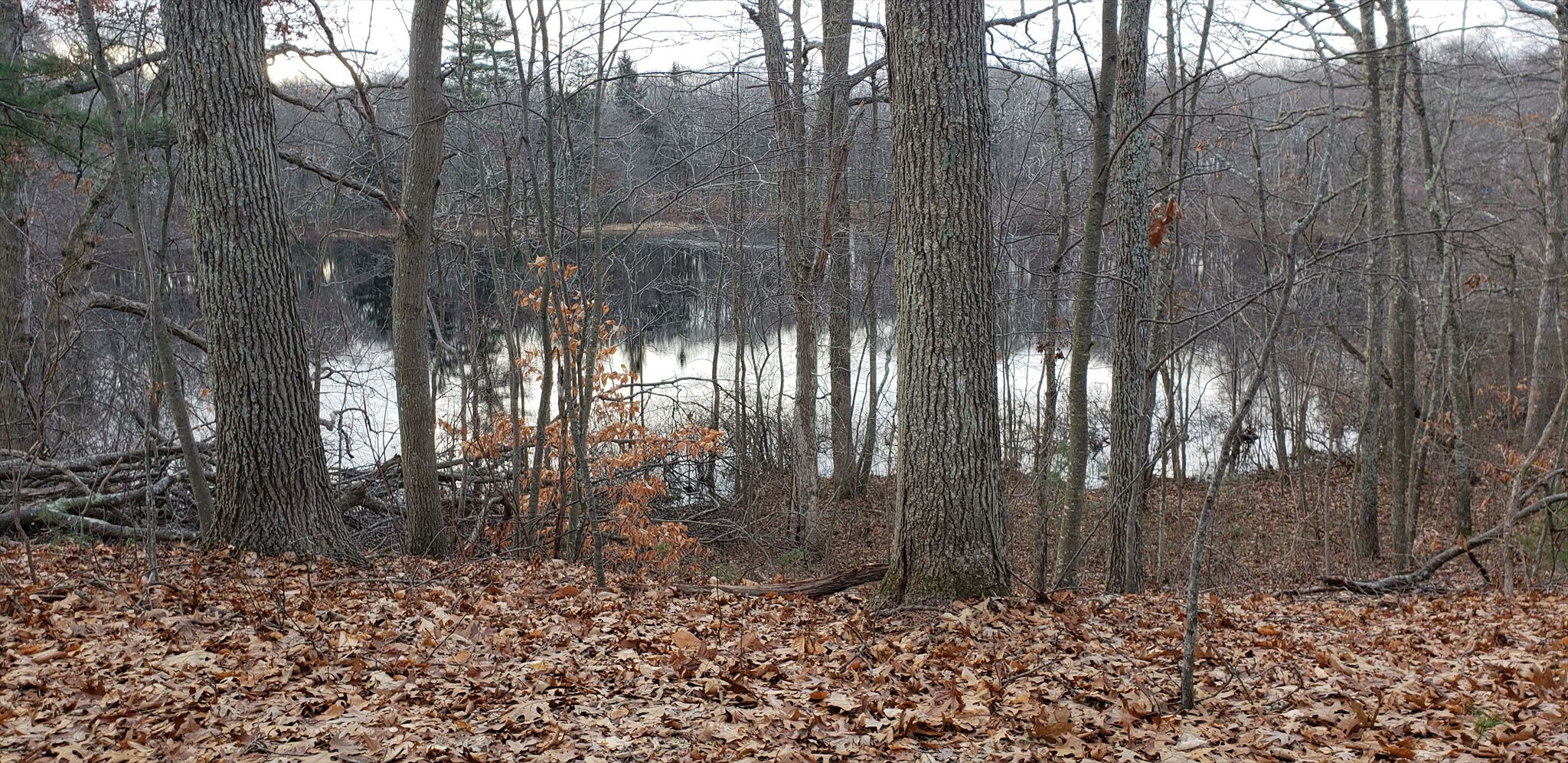
About 300 feet past GZ (at the second waypoint) you’ll see several large boulders on the right that are most likely glacial erratics; debris left by the retreating glacier. (I tell my grandchildren they are glacier poops! That usually gets a chuckle and an “OOOO Pepere, that’s gross!”)
Geologically Speaking………
A knoll can be formed by the process of weathering or erosion or a combination of both and the impact that these processes have on the variation in the hardness of different parts and types of rocks. The softer parts of the rock erode away leaving the harder part protruding. The part that is more resistant to weathering and erosion is left topographically higher than the surrounding.
In colder climates such as that which we have in New England, knolls are typically formed when glaciers push down on granite or gneiss rock. In other regions, knolls form when glaciers melt and shift down a sloping ground. The force leads to digging up of the loose debris, leaving a hard surface which forms into small rounded mounds. With time, the mounds are shaped by weathering agents to form knolls.
Resistant (harder) rocks include basalt, conglomerate (aka puddingstone), limestone, sills, lava flows, quartzite, and sandstone. An example of a weaker type of rock is shale which is easily eroded by agents of weathering.
Some helpful definitions:
1. Knoll: is another term for hillock: a small, low, round natural hill or mound.
2. Intrusive igneous rock: cool from magma slowly because they are buried beneath the surface, so they have large crystals. (Example; granite)
3. Extrusive igneous rocks: cool from lava rapidly because they form at the surface, so they have small crystals. (Example; basalt)
4. Basalt: a dark-colored, fine-grained, igneous rock composed mainly of minerals. It most commonly forms as an extrusive rock, such as a lava flow.
5. Conglomerate rocks: a sedimentary rock made of rounded pebbles and sand that is usually held together (cemented) by silica, calcite or iron oxide. Also known as Puddingstone.
6. Glacial Erratic: a piece of rock that differs in size and type native to an area that were carried by the glacier over distances of many hundreds of miles and dropped in place as the glacier retreated. Erratics can range in size from pebbles to large boulders.
7. Gneiss: a high-grade metamorphic rock, meaning that it has been subjected to higher temperatures and pressures. It is formed by the metamorphosis of granite, or sedimentary rock
8. Granite: a light-colored rock with grains large enough to be visible with the unaided eye. It forms from the slow crystallization of magma below Earth's surface.
9. Limestone: a sedimentary rock, composed mainly of skeletal fragments of marine organisms such as coral, forams and mollusks. Its major materials are the minerals calcite and aragonite, which are different crystal forms of calcium carbonate
10. Quartzite: a hard, non-foliated metamorphic rock which was originally pure quartz sandstone. Sandstone is converted into quartzite through heating and pressure usually related to tectonic compression within orogenic belts.
11. Sills: a tabular sheet intrusion that has intruded between older layers of sedimentary rock, beds of volcanic lava or tuff, or along the direction of foliation in metamorphic rock.
12. Sandstone: a sedimentary rock composed of sand-size grains of mineral, rock, or organic material. It also contains a cementing material that binds the sand grains together and may contain a matrix of silt- or clay-size particles that occupy the spaces between the sand grains.
13. Shale: a fine-grained, clastic sedimentary rock composed of mud that is a mix of flakes of clay minerals and tiny fragments (silt-sized particles) of other minerals, especially quartz and calcite.
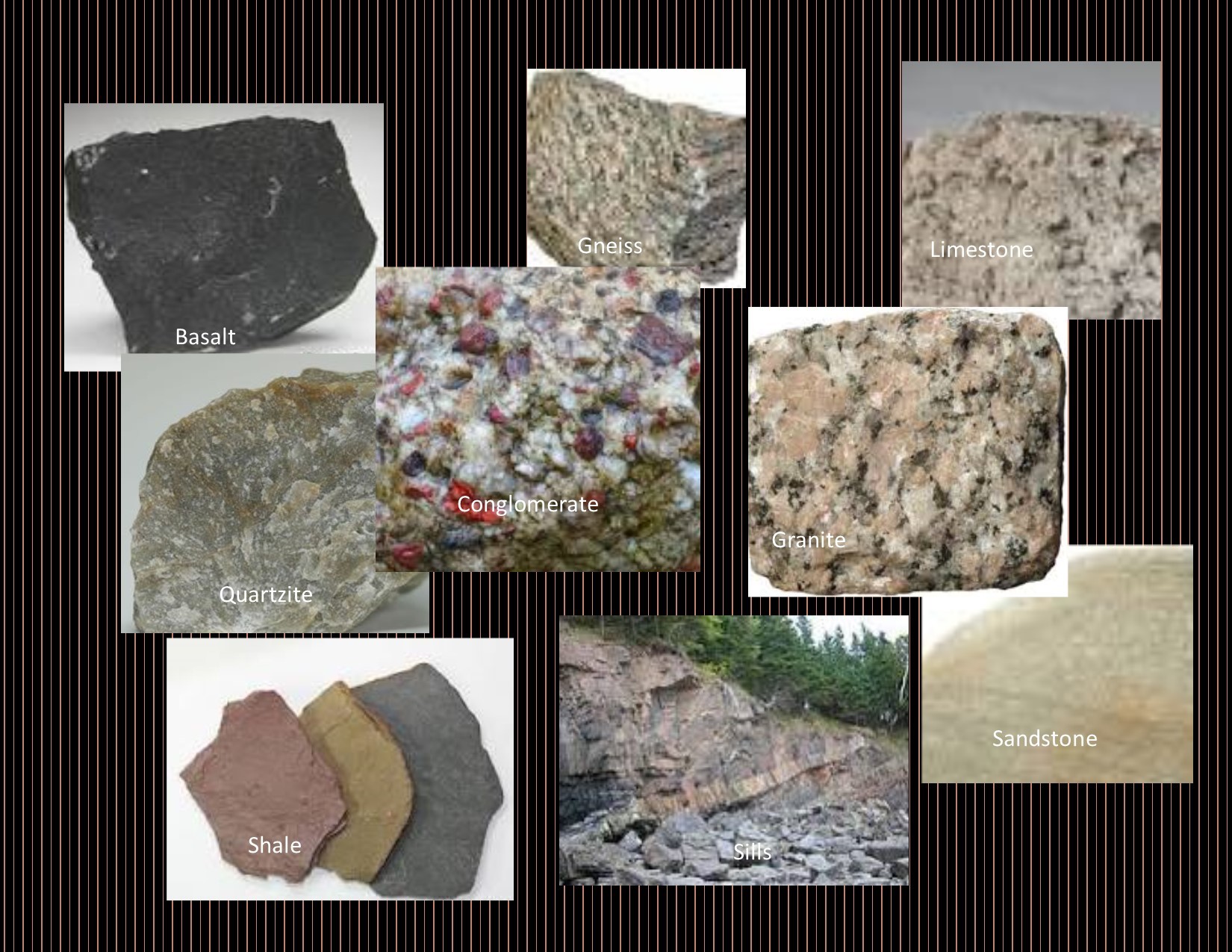
Your assignment is as follows:
1) Looking at the numerous knolls located on all sides of the hill at GZ, what would you surmise is the process that created the knolls in this area, and what evidence led you to that decision?
2) The remaining questions are based on your observations of the rocks and boulders that are located just beyond GZ. The above list of definitions and accompanying photos should help you in answering the questions.
a. What features of the boulders beyond GZ support the likelihood that these are glacial erratics?
b. What type of rock are those erratics?
Please submit your answers and claim your smiley! Do not post the answers to these questions in your log; send them separately via a message to the CO. You will only hear from the CO if there are problems with your responses.