To log this earthcache, please don’t stress about answering the questions. Simply send your best attempts in a private message to me, (the cache owner), and then go ahead and log it as found.
You don’t need to wait for my approval. All attempts will be accepted.
Go ahead and have fun learning! 
- [REQUIRED] Please post a photo in your log of yourself or a personal item with the Viola Desmond monument, the Alexander Keith monument, or the Joseph Howe monument. (No photos of the Zinc monument please.)
- As "creeping" is a big problem with zinc monuments, do you see any evidence on this one?
- Compare the weathering of the white bronze monument to those around it. In terms of readability and resistance to lichens and discolorations, which markers are holding up the best?
- Is the zinc monument solid or hollow? Try tapping lightly.
This earthcache is part of the Nova Scotia Zinc earthcache series and is in the heart of downtown Halifax. This cemetery is of particular note historically as it hosts the graves of Viola Desmond, the Canadian civl-rights icon, Alexander Keith, the famous maker of Keith's beer, and Joseph Howe, Nova Scotian Premiere and journalist.
THE HISTORY OF THE CEMETERY:
Viola Desmond Location - N 44° 38.573' W 63° 35.207'
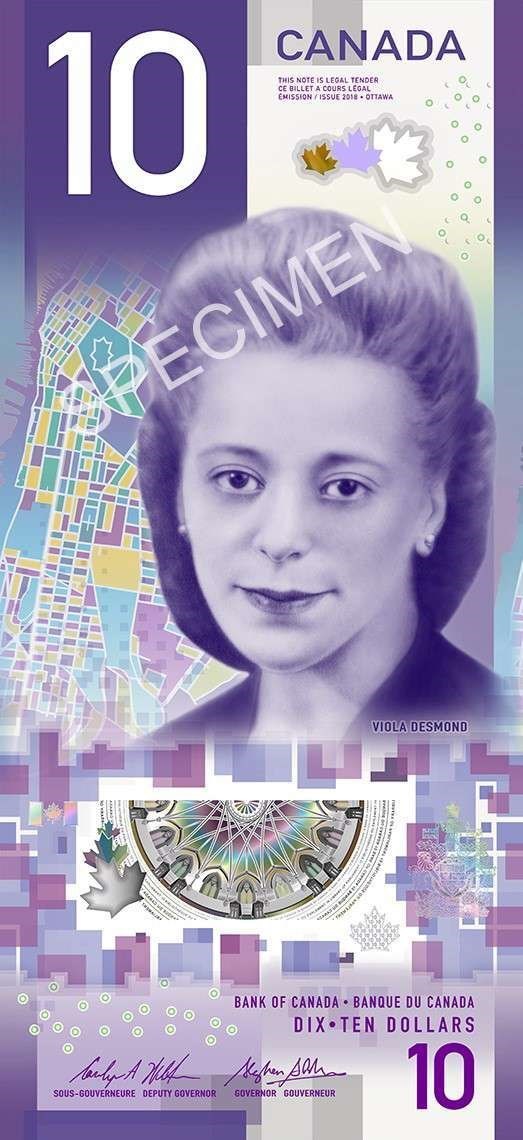
Viola Desmond was a Canadian civil rights activist and businesswoman of Black Nova Scotian descent. In 1946 she challenged racial segregation at a cinema in New Glasgow, Nova Scotia by refusing to leave a whites-only area of the Roseland Theatre. For this, she was convicted of a minor tax violation for the one-cent tax difference between the seat she had paid for and the seat she used, which was more expensive. Desmond's case is one of the most publicized incidents of racial discrimination in Canadian history and helped start the modern civil rights movement in Canada. Ms. Desmond was sold a ticket to the balcony unaware of the segregation and, being nearsighted, went to sit in the floor section to be close to the screen. When she was asked to move, she realized what was happening, and refused to move because she had a better view from the main floor there. Then she was forcibly removed from the theater causing an injury to her hip and also was arrested for 12 hours in jail, and had to pay a $20 fine. The tax on the balcony price of 20 cents was two cents; the tax on the floor price of 40 cents was three cents. She was convicted of depriving the government of one cent in tax. Desmond was kept in jail overnight and was never informed about her right to legal advice, a lawyer, or bail. In March 2018, the Canadian federal government unveiled the vertical banknote design featuring Desmond's portrait and a map of her north-end Halifax neighbourhood. The bill went into circulation in November. In 2019, the International Bank Note Society announced the Desmond bill won the coveted International Bank Note of the Year Award for 2018, beating out top designs from places like Switzerland, Norway, Russia and the Solomon Islands.
Joseph Howe Location - N 44° 38.564' W 63° 35.127'
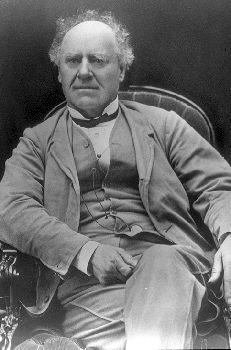
Joseph Howe. This cemetery hosts other important historical figures, including Joseph Howe, former Premier of Nova Scotia. Joseph Howe was a Nova Scotian journalist, politician, public servant, and poet. Howe is often ranked as one of Nova Scotia's most admired politicians and his considerable skills as a journalist and writer have made him a provincial legend.
Alexander Keith Location - N 44° 38.583' W 63° 35.132'
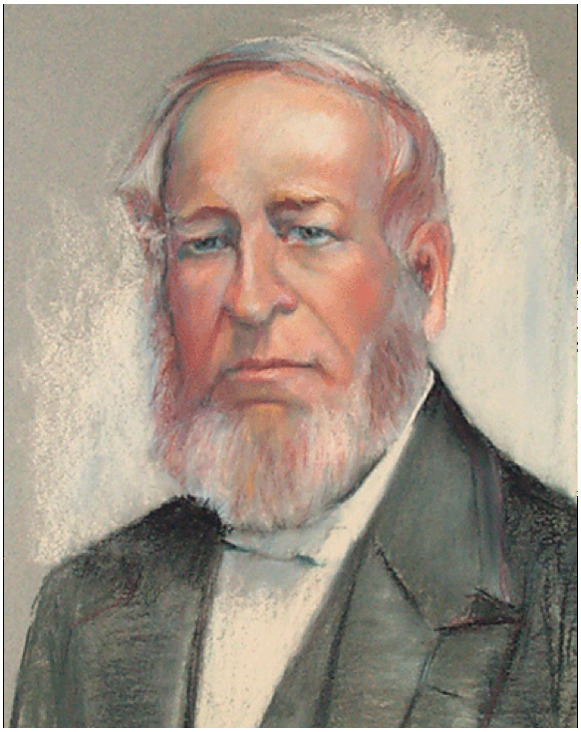
The Alexander Keith monument is almost right next to the Zinc monument at GZ. In addition to creating Keith's beer, Alexander Keith was a Canadian politician, Freemason and brewer. He was elected mayor of the city of Halifax three times, and was a Conservative member of the provincial legislature, and the founder of the Alexander Keith's Nova Scotia Brewery.
The earthcache:
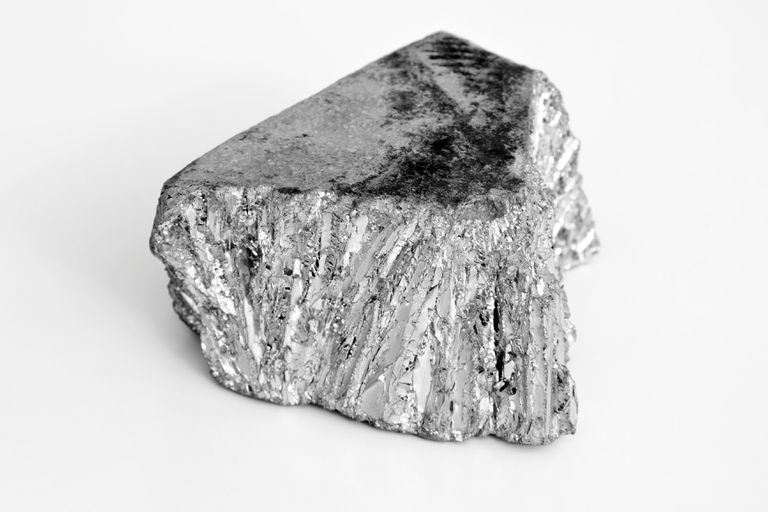
This earthcache, like the others in the series, will teach you about the properties of zinc. Zinc is a ubiquitous element occurring in many rocks in Earth’s crust and as a trace constituent in the oceans and the atmosphere. Zinc is commonly found in mineral deposits along with other base metals, such as copper and lead, and is produced mainly from three types of deposits: sedimentary exhalative, Mississippi Valley type, and volcanogenic massive sulfide. Sphalerite, a zinc sulfide mineral, is the primary ore mineral for zinc and has been the source for most of the world’s production.
Zinc is never found as the free metal. It makes up about .0075% of the Earth's crust, making it the 24th most abundant element. Soil contains 5–770 ppm of zinc with an average of 64 ppm and it is the fourth most common metal in use, trailing only iron, aluminium, and copper with an annual production of about 13 million tonnes.
Zinc is a chemical element. Zinc is the 24th most abundant element in Earth's crust and has five stable isotopes. The most common zinc ore is sphalerite (zinc blende), a zinc sulfide mineral. The largest workable lodes are in Australia, Asia, and the United States. Zinc is refined by froth flotation of the ore, roasting, and final extraction using electricity (electrowinning).
Zinc is a bluish-white, lustrous, metal, though most common commercial grades of the metal have a dull finish. Zinc metal was not produced on a large scale until the 12th century.
Zinc ores are recovered by many mining techniques, ranging from open-pit mining (mainly in the case of oxidized ore bodies, which are located closer to Earth's surface) to the normal underground methods (used for the more deeply located sulfide ores).
Zinc resources total about 1.9 billion tones worldwide. The three top producing countries of zinc in the world are China, Peru and Australia followed by India, USA and Canada. At the current rate of consumption, one source has estimated these reserves could be depleted sometime between 2027 and 2055. About 346 million tonnes have been extracted throughout history to 2002, and one estimate found that about 109 million tonnes of that remains in use.
It is commonly found in association with other mineral deposits such as copper and in various ores. and is most commonly used as an anti-corrosion agent. The main zinc ore mineral is called sphalerite, which is a zinc sulphide. Sphalerite is also known as zinc blende and contains 67% zinc when pure. The main deposit type that is mined for zinc is silver-lead-zinc strataform and strata-bound deposits.
Using Zinc as Tombstones
White Bronze monuments were made for only 40 years. Unlike traditional gravestones and markers, there were not any stores where you could go to see or purchase a white bronze monument. These were only sold through company catalogs and in person by a sales agent. If you wanted to see a white bronze marker, you would have to go to a cemetery. You could choose the designs for the attached panels.
The monuments were made up and then the names and other personalization were added when sold. They were easier to construct than traditional stone monuments, as well as, cheaper to produce and ship. Sales hit their peak in the 1880s. Some people however, thought the monuments cheap imitations and banned them. By WWI, production was shut down as all zinc was needed for the war effort.
To construct the monument a mold was constructed just like for granite or marble monuments. After the mold was finished, the zinc was heated beyond its melting point to ensure a better fuse then traditional soldering. The monument was then sandblasted and chemically oxidized to resemble granite and receive its bluish cast. When exposed to the carbon dioxide in the atmosphere, zinc naturally covers itself in a layer of zinc carbonate This prevents further reaction with air and water. Strong acids, or even acid rain, however will still trigger a chemical reaction.
One problem that cemeteries has is weathering of stones or the breakdown of rock in situ, that is without moving, and should not to be confused with erosion. Weathering varies by location based on a host of variables, but a study in Yorkshire, England found that the average marble stone became difficult to read after 70-80 years while igneous rocks, like granite, lasted up to 100-150 years in comparison.
Traditional stones are made of granite, limestone, or marble. Marble tends to be a very soft stone and weathers quickly. Granite tends to take a while longer, but still fades over time. Limestone is affected by acid rain but will last rather a long time.
Although white bronze monuments weathered well, they have one flaw know as creep or bend. This occurs when the weight of the top of the monument bears down onto the base and it begins to bow or bulge-very slowly, over the years. This creeping action may also cause tiny cracks on some of the monuments. The only way to rectify this is to place a stainless steel armature inside the base to help support the upper weight. Obviously, smaller markers do not exhibit this problem. Proper seating/mounting on concrete bases was important to reduce creep & corrosion from prolonged contact with the soils.
In an attempt to boost sales, the Monumental Bronze Company changed the "finish" on the metal base so it would resemble stone. The sandblasting roughened the surface and speed up the natural formation of protective oxide coating. Many pre 1879 monuments are smooth with a grayish colour while the post 1879 monuments have rough surface and are more bluish-silver in colour.