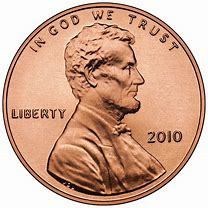
 A Penny for Your Thoughts
First things first…this is a mystery/puzzle cache, therefore, the cache is not located at the given coordinates. You must solve this puzzle to get the correct coordinates and find the cache. There’s a small prize for FTF on this cache. I hope you enjoy the story and puzzle, and the search earns you a smiley. Good Luck!
In today's world, the penny has lost a lot of its value and usefulness to people. Some countries, like Canada, have completely quit making one cent coins. While I've discovered many businesses in the U.S. will round off your change or bill to eliminate having to give out or receive a couple of pennies.
I'd like to take a moment to rekindle your interest and knowledge of the US Penny and its history. I'm using quotation marks for excerpts from this web site and its linked sites. I also did some random searches on Bing. https://coins.thefuntimesguide.com/us_penny/
The History of the U.S. Penny
"While it may no longer be able to buy its own candy (remember penny candy?), a shot at a game or glimpse of a short film in a penny arcade (do those even exist anymore?) or other fun things… the penny still at least helps us pay for sales tax when buying items at the store…and are a great way to start teaching kids about money and counting!"
I remember how pictures representing money (although not real pictures of coins and currency like you see today) were used to teach us to count by ones, fives, tens and twenty-five.
"The U.S. Mint opened for full-time coin production in 1793, and the one-cent coin was among the very first coins struck at the U.S. Mint that year. The first pennies struck at the U.S. Mint were much larger than the modern one-cent coins we are accustomed to using today. (They were actually called Large cents.) The large one-cent coins made from 1793 to 1857 measured nearly the diameter of a modern half-dollar!
As the value of the one-cent coin dropped, so did Americans’ tolerance of carrying around a bunch of heavy, large one-cent coins in their pockets and purses. In 1856, a limited number of small cents with a Flying Eagle design on the obverse (heads side) were made. In 1857, millions of Flying Eagle cents were made and by the end of 1857, the large cent was a thing of the past — because the small cent had arrived."
The first penny design I'm old enough to remember is the Indian Head Penny. "The Indian Head Penny which in many years was made by the tens of millions remain highly common today — even though they haven’t been seen in circulation with any bit of frequency for decades. Indian Head cents were first struck in 1859 and they circulated for many years after the last ones were made in 1909. Through the years, lots of people hung onto their Indian Head pennies — storing them away in drawers, boxes, and trunks. While Indian Head pennies are generally not considered rare, there are scarce dates of Indian Head pennies worth keeping an eye open for! These scarce dates range in value from $25 up to hundreds of dollars or more."
The Modern U.S. Penny
"In 1909, the famous Abraham Lincoln portrait was first used on the obverse (heads) of the U.S. penny. It’s the longest-running coin design ever in the United States.
Victor David Brenner designed the Lincoln cent. He also designed the wheat stalks that appeared on the reverse of Lincoln cents made from 1909 through 1958 — until the Lincoln Memorial appeared on the U.S. penny (1959-2008).”
Were you even aware that the U.S. penny changed in 2009? What about 2010? I noticed the funny looking shield design on the backs of the new pennies I'd been receiving in my change the last couple of years, but I hadn't noticed anything else. Then one evening in the spring of 2019 I was playing Pokeno with friends. Pokeno, if you haven't played it, is similar to BINGO, except instead of numbers, the playing card has images of the faces of a deck of cards. We were using pennies to cover our cards when suddenly I noticed I had a penny with a very different reverse image. It was an image that related to Lincoln, but I hadn’t previously seen it.
"With seemingly everybody — including certain lawmakers — talking about getting rid of the U.S. cent (it’s not actually called a "penny," by the way), you would think coin collectors probably don’t much like pennies either. At least the serious collectors, right? Wrong.
In fact, Lincoln cents have always been a highly popular coin to collect — even for veteran coin collectors because of the 2009 Lincoln Bicentennial series. With four special designs honoring Lincoln’s private and public life and a permanent, new reverse (tails) design starting in 2010.”
Trivia about the U.S. Penny:
I bet you've heard stories about lead pennies being used during WWII - don't believe everything you hear or read, but there was something unique about the 1943 penny.
"One of the most frequently asked questions that a numismatist gets is "How rare is my 1943 silver penny?" It is perfectly understandable since most pennies that people see are made out of copper. So when they find an old penny that is not made out of copper, they think they have something rare and valuable"
The Lincoln Bicentennial Penny:
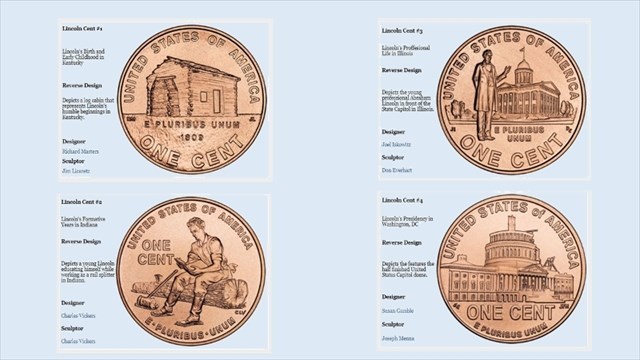
Coin Name/Description Release Dates
Birth and Childhood in Kentucky February 12, 2009
Formative Years in Indiana May 14, 2009
Professional Life in Illinois August 13, 2009
Presidency in Washington, DC November 12, 2009
The rail splitter coin is the one I saw and I immediately knew it was a picture of Lincoln. Did you? I also found the Log Cabin and the Illinois Capital building, although I didn’t know what building that was until I did this research. As I’m writing up this cache description, I’m still looking for my first U.S. Capital reverse image coin.
Keep your eyes open and you might get lucky.
Find the answers to the following questions and plug the numbers into the coordinates to determine the location of the cache. All but one question are multiple choice and the final question is a fill in the blank. Use your best geo/puzzle sense to plug in the missing numbers to get the coordinates.
N 26 CD.GFB W 098 CG.EAB
A. The US Penny goes back to 1787 and was first designed by:
a. Thomas Jefferson
b. Benjamin Franklin
c. Paul Revere
d. George Washington
B. The first one cent coin was called:
a. Franklin Cent
b. Fugio Cent
c. Sun Dial
d. Mind Your Business
e. Ring
f. All of the Above
g. None of the Above
C. The first small one cent coin, The Flying Eagle, was minted from:
a. 1856-1858
b. 1856-1859
c. 1856-1857
D. The most valuable of the rarest Indian Head Pennies was minted in the year:
a. 1909
b. 1873
c. 1888
E. The first Lincoln One Cent coins had a reverse image of:
a. U.S. Flag
b. Lincoln Memorial
c. Buffalo
d. Wheat Stalks
F. In 1943, due to the war effort, the penny was minted out of:
a. Lead
b. Silver
c. Bronze
d. Nickel
e. Steel
G. In the 1860 Presidential election, one state, North Carolina, didn’t hold a public ballot at all. How many other states left Lincoln's name off the official ballot? ___ (#)

You can validate your puzzle solution with certitude.