To log this earthcache, please don’t stress about answering the questions. Simply send your best attempts in a private message to me, (the cache owner), and then go ahead and log it as found.
You don’t need to wait for my approval. All attempts will be accepted.
Go ahead and have fun learning! 
- [REQUIRED] Please post a photo in your log of yourself or a personal item at the outcrop to prove you visited the site.
- At the coordinates for GZ, look for volcanic bombs embedded into the rocks. Describe the colour and texture of the bombs as compared to the rock it is embedded in.
- Do the bombs look like they were embedded into the layers, or did the layers form on top of the bombs? (If the layers wrap over the bombs, the bomb was there first and the sediment layered on to it. If the bomb looks like it punctured through the layers, then the bomb was embedded after the layers already built up.)

Ancient volcano at Louisbourg Lighthouse
Volcanic rock
This earthcache will focus on volcanic rocks. Volcanic rocks are usually fine-grained or aphanitic to glassy in texture. This is the only area in Nova Scotia which shows Avalonian volcanic rocks of this age.
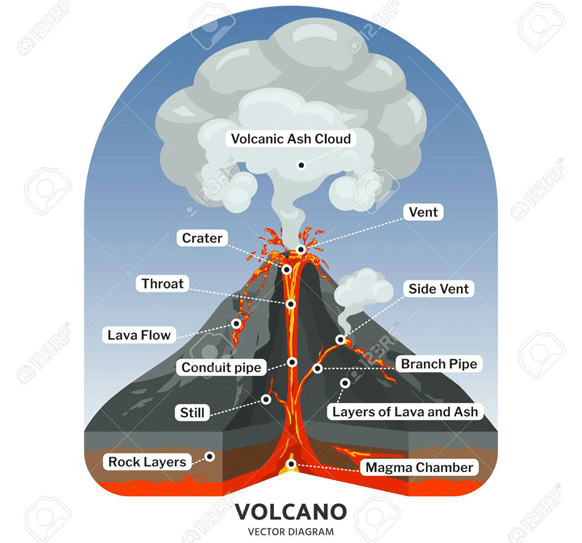
As you walk from the parking lot across the rocky ridge toward the water, you are walking along the edges of layers that accumulated quickly, even catastrophically. As nearby volcanoes erupted violently, this pyroclastic debris sifted and splashed into the water of lakes that filled intervening valleys. Originally horizontal or nearly so, the layers were later steeply tilted by folding.
Volcanic Bombs
Some outcrops include visible rock fragments that fell to earth after being ejected into the ash cloud. These are volcanic bombs.

A volcanic bomb is a mass of molten rock (tephra), ejected from a volcano during an eruption. They cool into solid fragments before they reach the ground. Because volcanic bombs cool after they leave the volcano, they are extrusive igneous rocks.

In some outcrops along the ridge, subtle bands of contrasting colour distinguish one pulse of ash from another. Many rock fragments within the ash matrix are rounded. Some of these volcanic bombs erupted as blobs of liquid and cooled while travelling through the air (in contrast to angular fragments of pre-existing rock).
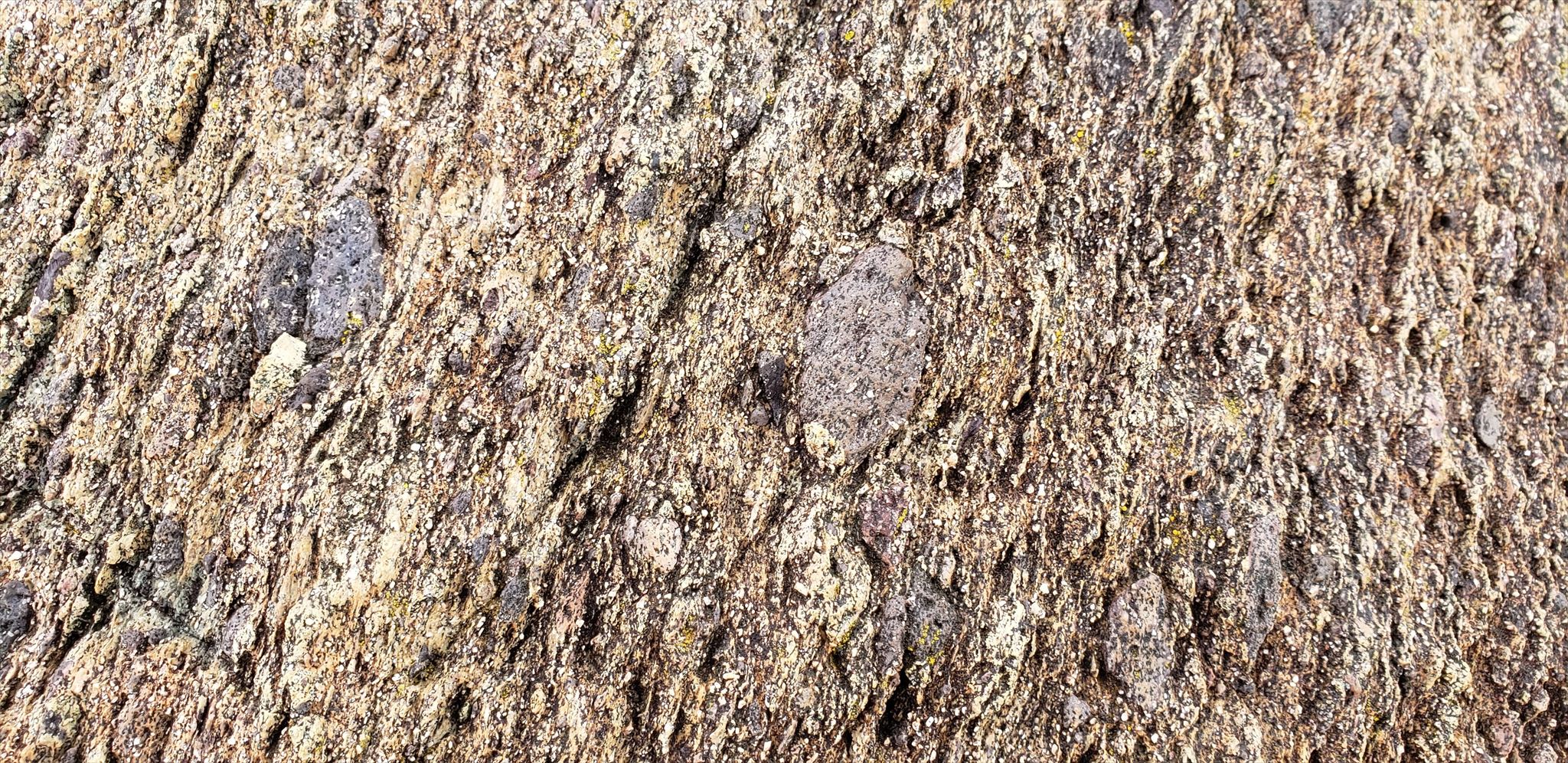
Since the layers are tilted on edge, you may see examples where the ash layers drape around a fragment, the layers below were displaced when it fell, and those above later covered it.