We visited this wonderful UNESCO site this year (2019)and noted there was no geocache! How can that be?
The Caribbean islands have seen so much geological action in their past and so are ideal for Earthcaches, as there are so many different geological examples to see and to learn from.

Panoramic view of Falmouth Harbour
In the early eighteenth century, the British Royal Navy recognized the strategic importance of English Harbour in protecting ships from hurricanes and in its position at the south of the island for monitoring French naval activity. Throughout the eighteenth century, the dockyard grew in importance, as it was the only harbour in the Eastern Caribbean large enough for safe naval ship repairs. From 1784 through 1787, the British Hero of Trafalgar, Horatio Nelson, served as the captain of the H.M.S Boreas, sent to Antigua to enforce British laws in the colonies. When the restoration of the dockyard began in the 1950s, it was renamed Nelson’s Dockyard in honour of the years he spent in Antigua.
Here is the Geology!
Antigua and Barbuda is part of the Lesser Antilles volcanic island arc. Both islands are the above water limestone "caps" of now inactive volcanoes. The two islands are the top of or surface features of the undersea Barbuda Bank and have karst limestone landscapes.
Barbuda is mostly flat and formed from coral reefs. The oldest rocks on the island are limestone, rising 120 feet above sea level.
.
Antigua is divided by the low central belt into nearly three equal parts. The southwestern part is hilly and rough with many peaks rising from 1,000-1,300 feet. The highest point is Boggy Peak, at 1,330 feet. The central region is lower and flatter and is indented at one end by St. John's Harbor and at the other by Falmouth and Willoughby bays. The northeastern part is rolling, with low ridges and hills of limestone marl. Since the geology of the island is different in each of these districts they may be further considered separately.
The southwestern part is generally known as the volcanic portion, and though many of the hills have the appearance of extinct volcanic cones, closer examination reveals little if any evidence of rock of recent volcanic origins. The rock is however, much metamorphosed and contains weathered and transported particles that are apparently of volcanic derivation.
The central portion extends diagonally across the island and is underlain by thin-bedded mudstones, volcanic sandstones, and conglomerates. Their lithology from point to point is variable and there is evidence that shows some of it is of marine origin. Locally, there is evidence of faulting and of folding, which features point to the complex crustal disturbances which have affected the island. When volcanoes erupt, they may emit a variety of materials, such as lava, gases, and pyroclastic rocks, which may vary greatly in size from sand-like particles to sizable boulders. If accumulations of the sand-sized grains become lithified over time, the material that results is often referred to as volcanic sandstone.
The northeastern belt is the limestone area of Antigua. The overlying soil is fertile, tractable, and marly; the region is rolling, and there are a few hills and ridges ranging from 100-400 feet above the sea. The unweathered limestone is fairly pure, crystalline, and hard. Its is Oligocene in age as the fossils attest, hence it is much older than the white limestones of Barbados.
TO GAIN YOUR EARTHCACHE
Please do not post your answers for all to see in your log, but send them to the CO using either the message system or email link at the top of this page.
Go to GZ and provide your answers on area as shown in photo below.

PLEASE NOTE:- You May experience problems with the gps signal, it is therefore suggested you
Go to the area as shown in photo above, for the questions required.
1.Stand and look at the geological action in front of you. Describe what you see. What is this called geologically?
2. Use the information above.Are we standing in the southwestern region, central region or the northeastern region ?
3.Feel the rock in front of you. What sort of rock do you think it is? Do you think this action happened when it was sedimentary or metamorphic rock?
This web page may help https://en.wikibooks.org/wiki/High_School_Earth_Science/Stress_in_the_Earth's_Crust
4. Photo is not obligatory, but adds to the Fun of finding this Cache. Your photo can be posted on your log.
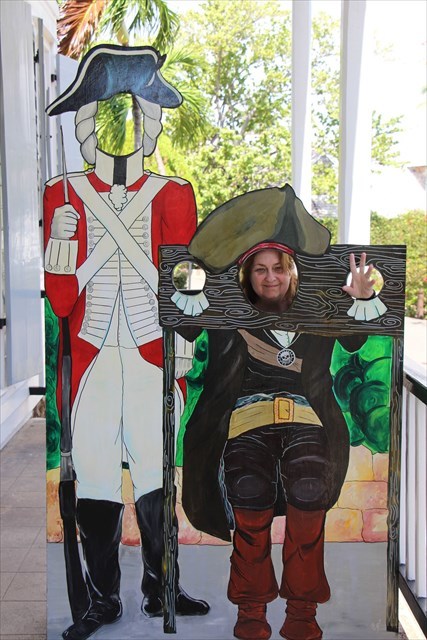
Fun photo for Question 4 taken at Museum
👍👍🌎👍👍melonthego1 and Bsharwood were First To Find This Earthcache !👍👍🌎👍👍