
Le schiste rouge de Pont-Réan
Rappel concernant les Earthcaches :
Il n'y a pas de conteneur à rechercher ni de logbook à signer. Après avoir été sur les lieux pour chercher les réponses aux questions, loguez cette cache "Found it" et envoyez-moi vos propositions de réponses, en précisant le code GC de la cache, soit via mon profil, soit via la messagerie geocaching.com (Message Center), et je vous contacterai en cas de problème.
Questions :
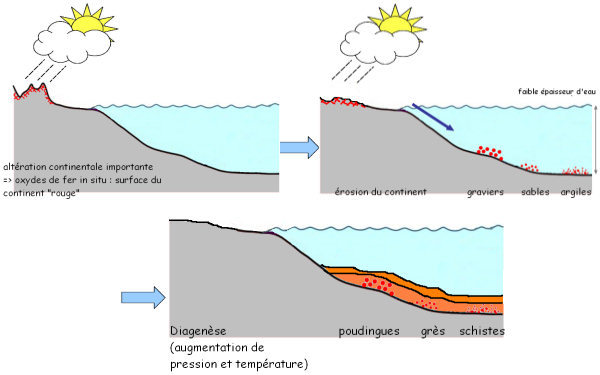
1- Quel est le phénomène qui permet la transformation des sédiments en roche ?
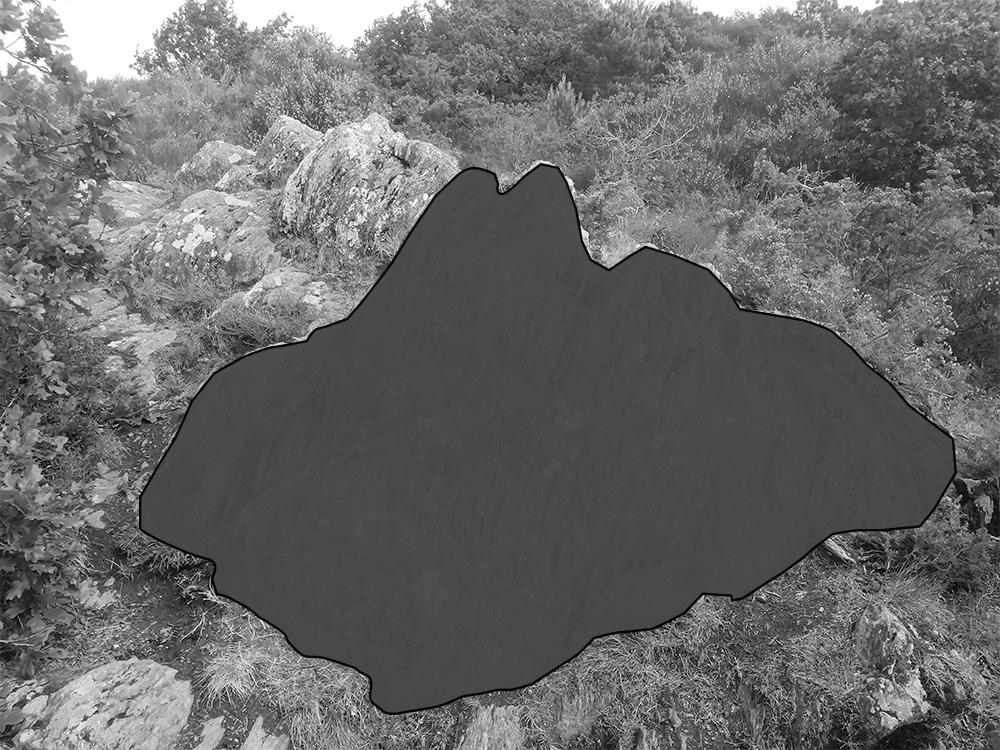
2- Aux coordonnées, et avec l'aide de la photo, décrivez-moi la roche en face de vous (couleur, taille des grains, aspect)
3- D'après vous, qu'est-ce qui permet de dire que c'est du schiste ?
Descriptif de l'earthcache
Qu'est-ce qu'un schiste ?
Un schiste est une roche qui a pour particularité d'avoir un aspect feuilleté, et de se débiter en plaques fines ou « feuillet rocheux ». On dit qu'elle présente une schistosité. Il existe deux types de schiste :
- Le schiste argileux sédimentaire : il s'agit d'une roche formée d'argile ayant sédimenté au fond d'une eau calme. Les schistes argileux sont les seuls qui puissent contenir des gaz combustibles (les gaz de schiste).
- Le schiste métamorphique : le schiste métamorphique provient d'une argile qui sous l'action de la pression et de la température présente un feuilletage régulier en plans parallèles.
Formation du schiste de Pont-Réan
Pont-Réan est situé dans un vaste bassin sédimentaire constitué de sédiments détritiques essentiellement silto-gréseux issus de l'érosion de la chaîne cadomienne et accumulés sur plus de 15 000 m d'épaisseur. Le schiste de Pont-Réan s'est aggloméré sous la mer à l'Ordovicien (il y a environ 470 millions d'années) sous la forme de sédiments argileux riches en oxyde de fer. Ensuite sous l'effet de la diagenèse, les sédiments sont transformés en roches sédimentaires. Le schiste s'est ainsi formé. Puis la mer s'est retirée il y a 250 millions d'années, ce qui a permis à la roche de prendre son aspect et sa couleur actuel. La teinte rouge du schiste qui caractérise si bien le schiste de Pont-Réan est liée à la présence d'un oxyde de fer dans la roche, il s'agit ici d'hématite (Fe2O3).

Red schist of Pont-Réan
Reminder about Earthcaches:
There are no containers to search or logbooks to sign. Once you've been to the site to look for the answers to the questions, log this cache “Found it” and send me your suggested answers, specifying the cache's GC code, either via my profile or via geocaching.com (Message Center), and I'll contact you if there's a problem.
Questions :
1- What is the phenomenon that allows the transformation of sediments into rock?
2- At the coordinates, and with the help of the photo, describe me the rock in front of you (color, grain size, aspect)
3- What do you think makes it possible to say that it is schist ?
Earthcache description
What is a schist ?
A schist is a rock that has the particularity of having a laminated appearance, and to be sold in thin plates or "rocky sheet". It is said to have schistosity. There are two types of shale:
- Sedimentary schist : it is a rock formed of clay sedimented in the bottom of a calm water. Schists are the only ones that can contain combustible gases (schist gas).
- Metamorphic schist : the metamorphic schist comes from a clay that under the action of pressure and temperature has a regular lamination in parallel planes.
Formation of the schist of Pont-Réan
Pont-Réan is located in a vast sedimentary basin composed of mainly silty-sandstone detritic sediments resulting from the erosion of the Cadomian chain and accumulated over more than 15 000 m thick. The Pont-Réan schist coalesced under the Ordovician sea (about 470 million years ago) in the form of clayey sediments rich in iron oxide. Then under the effect of diagenesis, the sediments are transformed into sedimentary rocks. Schist was formed. Then the sea retreated 250 million years ago, which allowed the rock to take on its present appearance and color. The red shade of schist that characterizes the Pont-Réan schist so well is linked to the presence of an iron oxide in the rock, this is hematite (Fe2O3).